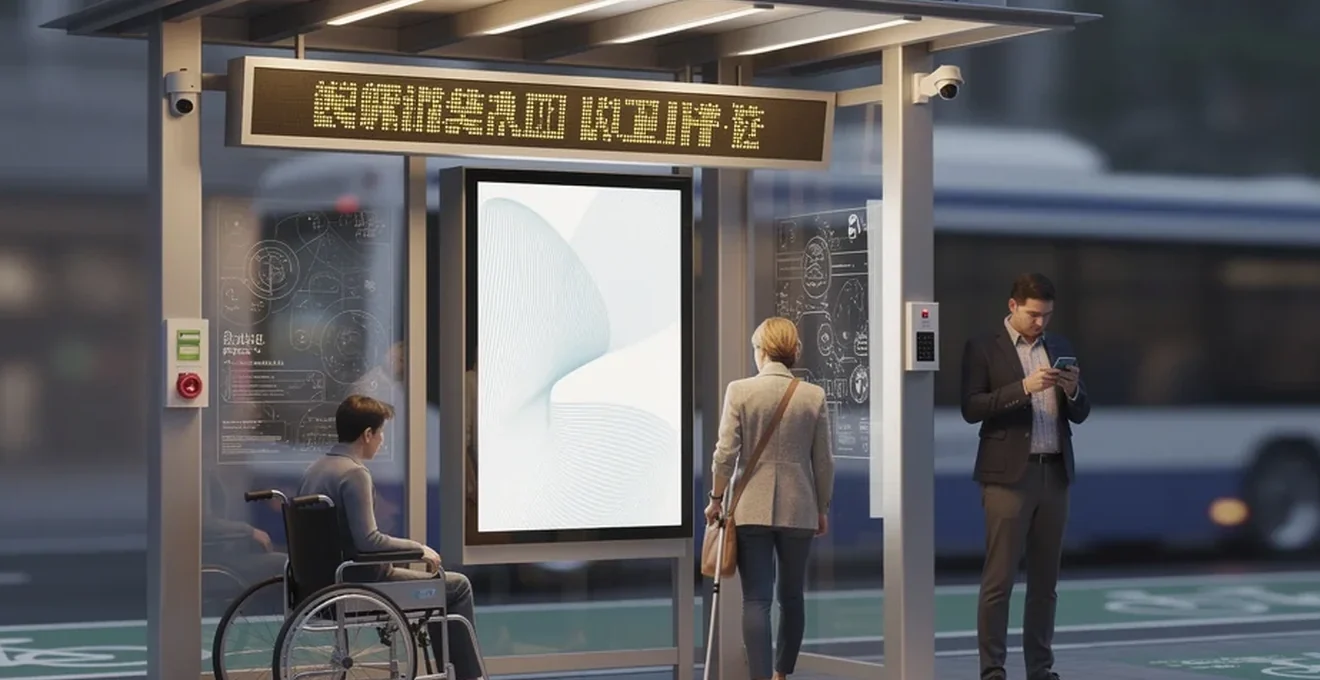
Bus stops are often treated as an afterthought, yet they shape how people feel about bus travel before they even board. A stop with no timetable, poor lighting or nowhere to sit sends a clear message about the reliability of the service it represents. Research from the Campaign for Better Transport found that only 31% of people had an up-to-date timetable at their nearest bus stop, and just 16% had access to real-time information. These gaps matter because good information and comfortable facilities give passengers the confidence to travel, particularly those who are new to a route or unfamiliar with the area. This article looks at how digital information, shelter design, accessibility standards, safety measures, sustainable materials and thoughtful placement can work together to raise the standard of bus stops across the country.
Real-time passenger information systems and digital signage
Clear, reliable information is the foundation of a good bus stop. The Campaign for Better Transport’s Better Bus Stops report is explicit on this point: as a minimum, every stop should have a printed timetable and a weblink or QR code leading to online real-time information, provided mobile signal allows it. Digital signage builds on this baseline by giving passengers live updates rather than static schedules, which is particularly valuable when services are delayed or disrupted.
LED displays and countdown timers at transport for london (TfL) stops
Countdown displays showing the number of minutes until the next bus arrives are one of the most recognisable forms of real-time information in UK cities. These LED screens reduce uncertainty at the stop, allowing passengers to judge whether they have time to nip into a nearby shop or whether they should stay put. For infrequent users especially, this kind of visible reassurance can make the difference between choosing the bus and choosing another mode of transport.
Gps-based tracking integration with apps like citymapper and moovit
Real-time information isn’t limited to screens fixed to the shelter. Many passengers now check bus locations on their phones before they even leave home, using apps that draw on GPS tracking data from the bus fleet. Integrating this data with popular journey-planning apps extends the reach of real-time information beyond the physical stop, meeting passengers wherever they are in their journey.
Rnib-compliant audio announcements for visually impaired passengers
Information at bus stops needs to work for everyone, not just those who can read a screen or a printed timetable. Audio announcements that confirm route numbers, destinations and estimated arrival times help visually impaired passengers travel independently and with confidence. Building this kind of provision into the wider push for better information ensures that improvements to bus stops genuinely serve the full range of people who rely on the network.
QR code ticketing and contactless payment terminals
QR codes already have a role to play in linking printed timetables to live online information, and the same technology can support ticketing. Contactless payment terminals and scannable codes at the stop itself can speed up boarding and reduce queuing, contributing to a smoother overall journey from the moment a passenger arrives at the stop.
Shelter design and weather protection infrastructure
Protection from the weather is one of the most basic comforts a bus stop can offer, and in a country where rain is rarely far away, it’s also one of the most valued. A well-designed shelter with a durable roof and sturdy frame keeps passengers dry and out of the wind, making the wait genuinely more bearable rather than something to be endured.
Cantilevered roofing systems and rainfall diversion engineering
Roof design has a direct impact on how well a shelter performs in bad weather. Cantilevered structures, which avoid the need for front-facing support posts, allow rainfall to be channelled away from the waiting area without obstructing the space where passengers stand. This kind of engineering detail is easy to overlook but makes a tangible difference to comfort during heavy downpours.
Wind-resistant glazing materials used in clear channel and adshel structures
High-quality polycarbonate panelling is widely used in bus shelters because it combines durability with weather resistance, standing up to wind and impact far better than glass while remaining transparent. Transparent panels also serve a safety purpose, keeping the shelter visible from the street and helping passengers see approaching buses clearly.
Heated seating and climate control in nordic bus stop models
In colder climates, some bus stop designs go further than basic weatherproofing by incorporating heated seating or other climate control features. While such measures remain uncommon in the UK, they illustrate how shelter design can be adapted to local conditions, and they point to the direction further innovation in passenger comfort might take.
Universal accessibility and inclusive design standards
A bus stop is only genuinely useful if everyone can reach it, wait at it and board safely from it. Accessibility isn’t a bonus feature; it’s central to whether a stop functions at all for a significant proportion of passengers, including wheelchair users, people with visual impairments and those with mobility difficulties.
DDA compliance and kerb height regulations for wheelchair access
Raised kerbs at the correct height allow buses to pull in close enough for ramps to deploy safely and for wheelchair users to board without a large step or gap. Good access to and from the stop itself, including clear, level paving, is equally important; a stop that meets every information standard is still a poor stop if passengers cannot physically get to it.
Tactile paving systems aligned with guide dogs UK guidelines
Tactile paving gives visually impaired passengers a physical cue about where the boarding point is and where the kerb edge lies. Consistency in how this paving is applied across different stops and different local authorities helps passengers build confidence, since they can rely on the same cues wherever they travel.
Low-floor boarding platforms and ramp gradient specifications
Boarding platforms that sit level, or nearly level, with the bus floor reduce the physical effort needed to get on and off. Where ramps are used instead, their gradient needs to be manageable for wheelchair users and those with pushchairs or luggage. These details, though often invisible to able-bodied passengers, are essential to making the bus a realistic option for a wider range of people.
Safety features and crime prevention through environmental design (CPTED)
Feeling safe while waiting for a bus is just as important as being informed or comfortable. A stop in a well-lit, visible location with good sightlines naturally discourages anti-social behaviour, while poorly lit or enclosed stops can leave passengers feeling exposed, particularly after dark.
CCTV surveillance networks linked to local police control rooms
Visible surveillance can act as a deterrent at busier or higher-risk stops, giving passengers reassurance that the area is monitored. Positioning shelters in locations with good natural visibility from the surrounding street complements this kind of technology rather than relying on it alone.
Anti-loitering lighting and Solar-Powered illumination systems
Good lighting is one of the simplest and most effective safety measures at a bus stop. It improves visibility for both passengers and drivers, helps deter crime and vandalism, and makes waiting after dark far less intimidating. Solar-powered lighting also offers a practical solution for stops in locations without easy access to mains electricity.
Emergency SOS buttons and direct helpline connectivity
For passengers who feel unsafe or need urgent assistance, a direct means of contacting help can make a real difference. Emergency buttons connected to a helpline or control room add a further layer of reassurance, particularly at more isolated stops or during quieter hours of the day.
Sustainable materials and green infrastructure integration
As local authorities work towards wider environmental targets, bus stop design is increasingly expected to reflect sustainability goals rather than sit apart from them. This extends from the materials used in construction to how shelters generate or use energy.
Living roof bus shelters piloted in leicester and their biodiversity impact
Green roofs planted with vegetation have been trialled on bus shelters as a way of supporting local biodiversity, offering a small but meaningful habitat for pollinators in urban areas. These installations also help soften the visual impact of street furniture, blending infrastructure more naturally into the surrounding environment.
Recycled composite materials in bench and panel manufacturing
Using recycled materials in benches, panels and other shelter components reduces the environmental footprint of manufacturing while still meeting the durability requirements of street furniture that has to withstand constant use and exposure to the elements.
Solar panel integration for Off-Grid power supply
Solar panels fitted to shelters can power lighting, digital displays and other electronic features without requiring a connection to the mains grid. This is particularly useful for stops in more remote locations, and it aligns bus stop infrastructure with broader efforts to reduce carbon emissions and encourage sustainable transport choices over private car use.
Urban planning and multimodal connectivity strategies
Bus stops don’t exist in isolation. Their value depends heavily on how well they connect with the wider transport network and how effectively they’re positioned within the urban environment. Getting placement right, and linking bus stops with other modes of travel, is central to making public transport a convenient choice.
Bus rapid transit (BRT) hub integration with cycle lanes and E-Scooter docks
Where bus stops are integrated with cycle lanes and e-scooter docking points, passengers can more easily combine modes of transport for a single journey, cycling or scooting to a stop before continuing by bus. This kind of multimodal hub reduces reliance on private cars and supports the wider aim of decongesting cities while cutting emissions.
Placement optimisation using footfall data and GIS mapping
Deciding where a stop should go, and which category of facilities it warrants, benefits from a data-led approach. Detailed audits of existing infrastructure, of the kind carried out across more than 4,800 bus stops for authorities including Cambridgeshire and Peterborough Combined Authority, Warwickshire and West Northamptonshire, help identify which stops fall short of expected standards. Prioritisation tools can then use this audit data, alongside factors such as population density, deprivation, low car ownership or proximity to key destinations, to determine where improvements will have the greatest impact. This ensures that investment is directed where it’s needed most, rather than spread thinly across every stop regardless of usage or condition.