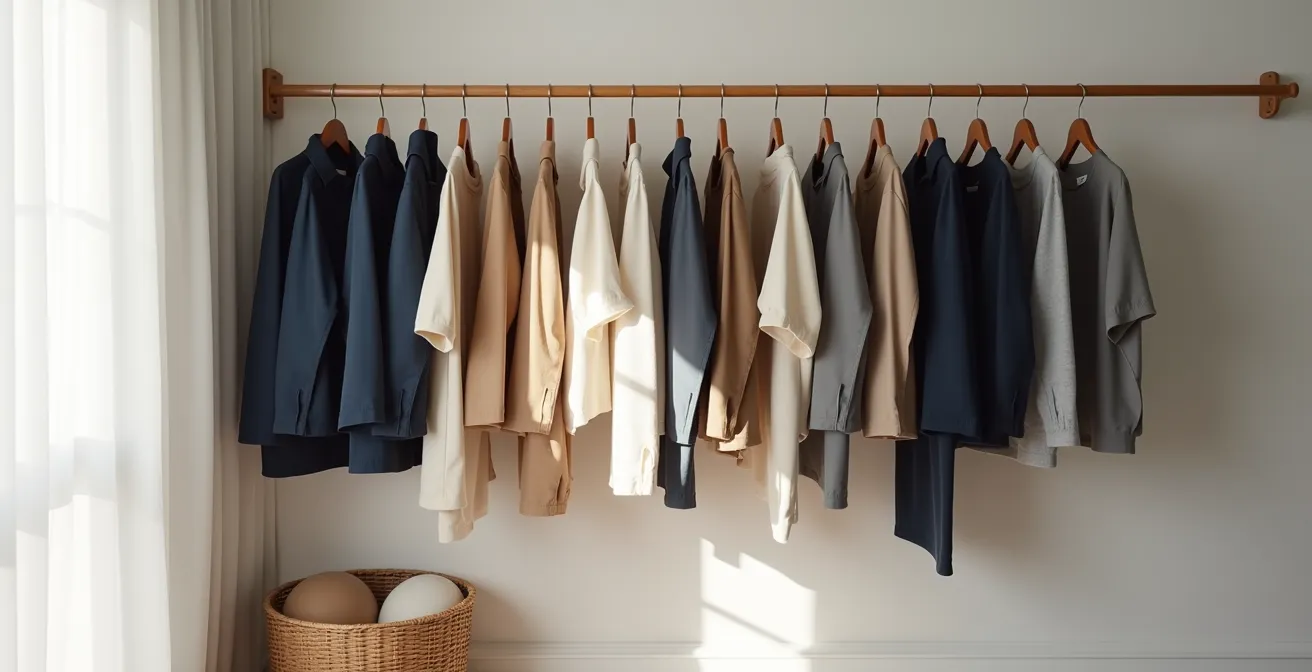
A 30-piece capsule wardrobe succeeds not by restriction, but by a strategic focus on perfect fit and maximizing the value of every single item.
- Fit is non-negotiable; a tailored budget piece will always outperform an ill-fitting luxury one.
- Strategic color choices, like navy over black, and versatile accessories are key to avoiding the “uniform trap”.
Recommendation: Start by auditing your current wardrobe not for what to remove, but for what can be elevated through tailoring and smart styling.
That familiar feeling of a closet packed with clothes, yet absolutely “nothing to wear,” is a modern paradox. It signals a collection of items, not a functional wardrobe. The standard advice often involves a ruthless decluttering and a rigid shopping list of so-called “timeless classics.” While well-intentioned, this approach often misses the fundamental reason closets fail: a lack of strategy. The goal isn’t just to own fewer things, but to make every item work harder for you.
The true key to a successful capsule wardrobe lies beyond minimalist aesthetics. It’s a shift in mindset from simply acquiring clothes to building a cohesive, efficient system. This requires moving past the generic advice and understanding the core principles that create versatility and style. It’s about maximizing the “cost per wear” of each piece, where a perfectly tailored, affordable blazer becomes more valuable than a poorly fitting designer one.
But what if the secret wasn’t in the items themselves, but in the strategic intelligence behind them? This guide moves beyond the prescriptive lists to reveal the underlying system. We will explore how a nuanced approach to color can unlock more combinations, why decluttering should be a process of evaluation rather than regret, and how the art of tailoring can make high-street pieces look like luxury investments. Prepare to build a wardrobe that is not just smaller, but infinitely more effective.
This comprehensive article will guide you through the essential strategies for building a truly versatile and stylish capsule wardrobe. The following sections break down everything from foundational color theory to the secrets of elevating your final look.
Summary: Mastering the Art of the 30-Piece Wardrobe
- Why Navy Is a Better Base Color Than Black for Certain Skin Tones?
- How to Declutter Your Wardrobe Without Regretting It Later?
- Classic Trench vs Modern Cut: Which One Fits Your Body Type?
- The “Uniform” Trap That Makes Capsule Wardrobes Feel Restrictive
- When to Swap Your Capsule: Timing the Transition from Winter to Spring
- Why a $50 Blazer Tailored to Your Body Looks Better Than a $500 One off the Rack?
- How to Photograph Used Clothes to Sell Fast on Vinted or Depop?
- Secrets to Elevating Every Fashion Ensemble: How to Look Expensive on a High Street Budget?
Why Navy Is a Better Base Color Than Black for Certain Skin Tones?
For decades, black has been the undisputed champion of the capsule wardrobe, praised for its perceived versatility. However, its harshness can wash out many skin tones, particularly those that are very fair or have soft, cool undertones. Navy blue offers a more sophisticated and forgiving alternative. It possesses the same formal authority as black but with a subtle warmth and depth that enhances a wider spectrum of complexions. This isn’t just a stylistic opinion; recent market data shows a 40% surge in navy fashion sales in 2024, signaling a major consumer shift towards this versatile neutral.
The strategic advantage of navy lies in its superior ability to pair with other colors. As fashion experts at Kettlewell Colours UK point out, its slightly lower intensity makes it a more harmonious partner for both vibrant hues and delicate pastels.
Unlike harsh black, navy complements a wider range of skin tones and pairs beautifully with more colours thanks to being slightly less intense, easier to mix and match with all four colour palettes.
– Kettlewell Colours Fashion Experts, Kettlewell Colours UK
This visual difference is subtle but powerful. The texture of a navy wool appears more dimensional under light, revealing complex undertones, whereas black can often look flat and absorb light, obscuring the quality of the fabric. Choosing navy as your primary dark neutral can instantly elevate the perceived quality of your entire wardrobe and open up a richer, more nuanced color story.

As the image illustrates, the fibers in navy fabric often catch the light in a way that creates visual interest, making it a more dynamic foundation for your outfits. This small shift from black to navy is a foundational step in building a capsule wardrobe that feels intentional and expensive, rather than merely functional.
How to Declutter Your Wardrobe Without Regretting It Later?
The first step in building a capsule wardrobe is creating space, but the common advice to “be ruthless” often leads to decluttering regret. The process shouldn’t be about hasty purging; it should be an informed audit. Considering that research data shows people own an average of 144 pieces of clothing, a systematic approach is essential to avoid feeling overwhelmed. Instead of making snap decisions, implement a temporary “quarantine” system to gather real-world data on what you actually wear.
One of the most effective, low-risk methods is the 30-Day Hanger Method. It removes guesswork and bases decisions on behavior, not emotion. This simple technique provides clear, visual evidence of the items that are truly part of your daily life versus those that are just taking up space.
- Turn all your hangers backward at the beginning of the month.
- When you wear an item, return it to the closet with the hanger facing forward.
- After 30 days, visually assess the hangers that remain backward.
- Items on backward hangers are strong candidates for donation or sale, as they haven’t been reached for in a full month of daily life.
- For seasonal or special-occasion items, apply a “one-year rule”—if you haven’t worn it in the last 12 months, it’s time to let it go.
This method transforms decluttering from a painful, emotional chore into a logical, evidence-based process. It protects you from discarding an item you might need later by giving you a 30-day trial period. The goal isn’t to get rid of the most clothes, but to confidently identify the clothes that no longer serve your current lifestyle, making space for a more intentional and versatile collection.
Classic Trench vs Modern Cut: Which One Fits Your Body Type?
Once you’ve created space, the focus shifts to selecting foundational pieces. The trench coat is a capsule wardrobe icon, but choosing between a classic, belted style and a modern, straight-cut version is critical for maximizing its value. The right choice depends entirely on your body type and personal style identity. A classic trench, with its defined waist and double-breasted structure, is ideal for creating or emphasizing an hourglass figure. In contrast, a modern, open-front or single-breasted cut with minimal hardware often flatters straighter or more athletic builds by creating a long, clean line.
Case Study: The Professional’s Time-Saving Wardrobe
A Manhattan-based style consultant found that her clients, from startup founders to executives, are increasingly adopting capsule principles. They gravitate towards foundational pieces like classic trenches that project authority and eliminate decision fatigue. One financial analyst reported that switching to a 30-piece capsule wardrobe saved her 20 minutes each morning, allowing her to focus on high-stakes presentations rather than outfit choices. This demonstrates how a single, well-chosen piece like the right trench can streamline a professional’s entire routine.
Understanding the key differences in silhouette and style longevity is crucial before investing. A comparative analysis shows that while both are valuable, they serve different strategic purposes within a wardrobe.
| Feature | Classic Trench | Modern Cut |
|---|---|---|
| Silhouette Longevity | 10+ years timeless | 3-5 years trend-adjacent |
| Best For Body Types | Balanced proportions, defined waist | Straight/athletic builds |
| Style Identity Match | Timeless, Preppy, Traditional | Minimalist, Edgy, Contemporary |
| Investment Value | High – transcends seasons | Medium – style-dependent |
As this comparison from fashion authority ELLE UK highlights, the decision goes beyond simple aesthetics. The classic trench is a long-term investment in timeless style, while the modern cut offers a contemporary edge that may have a shorter lifespan. Choosing the one that honors your body shape and aligns with your style identity is the key to ensuring it becomes a true wardrobe workhorse.
The “Uniform” Trap That Makes Capsule Wardrobes Feel Restrictive
The most common fear associated with a capsule wardrobe is the “uniform trap”—the feeling of being stuck in a boring, repetitive cycle of outfits. This happens when the focus is solely on minimalist basics without a clear strategy for creating variety. As ELLE UK Style Expert Lucy Alston notes, the restrictive feeling is a real risk, but one that is easily overcome with the right approach. The solution isn’t to add more clothes, but to master the art of strategic elevation through high-impact accessories.
Versatile accessories are the engine of a successful capsule wardrobe. A simple combination of a white shirt and trousers can be transformed into five distinct looks with the right additions: a silk scarf for a touch of elegance, a statement belt to cinch the waist and change the silhouette, minimalist gold jewelry for a polished finish, a structured leather bag for a professional context, or casual sneakers for a weekend vibe. These pieces require minimal storage space but provide maximum styling leverage.
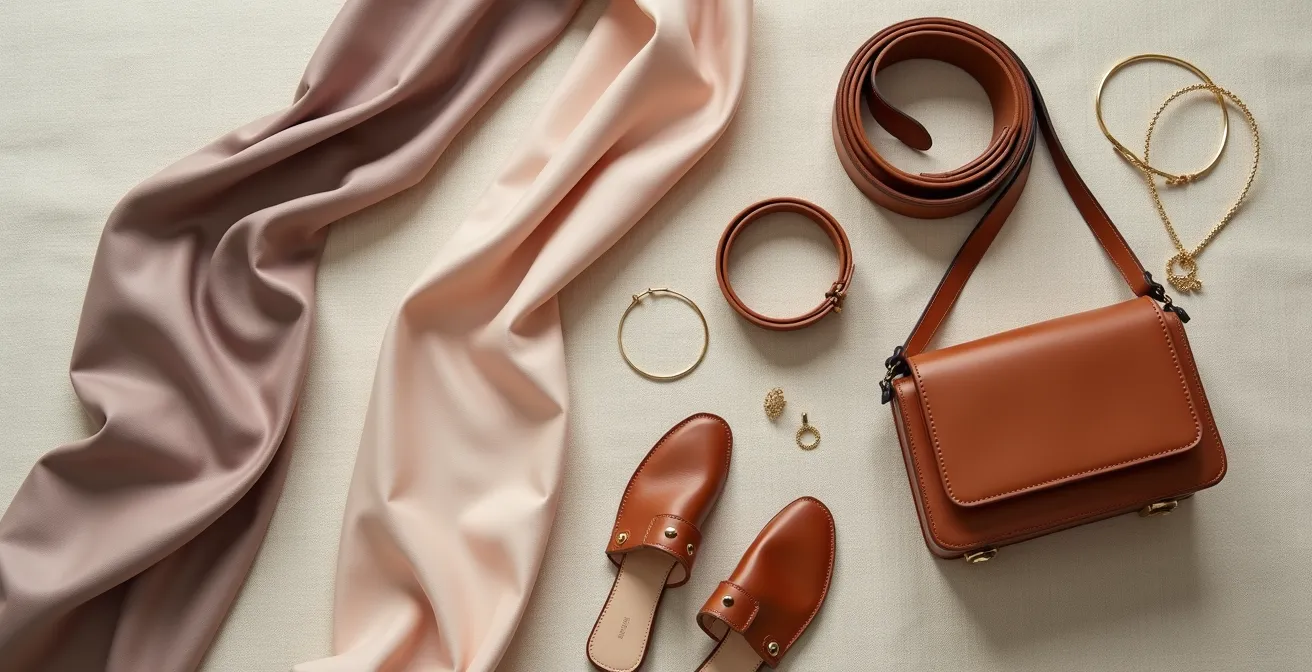
The key is to invest in accessories that have their own character and quality. A beautifully crafted leather belt, a scarf made from natural fibers, or a well-designed handbag can elevate the entire look, making high-street basics appear more luxurious. Rather than thinking of accessories as an afterthought, view them as essential multipliers for your core items. This mindset shift is what separates a restrictive uniform from a highly efficient and endlessly adaptable style system.
When to Swap Your Capsule: Timing the Transition from Winter to Spring
A capsule wardrobe is a living system, not a static collection. One of the most critical aspects of maintaining it is managing the seasonal transition. Swapping your entire wardrobe in one go can be overwhelming. A more effective method is a “rolling transition,” where you gradually introduce pieces for the upcoming season while slowly packing away off-season items. This typically begins 2-3 weeks before the weather officially turns, allowing for a flexible response to unpredictable temperatures.
Case Study: The Rolling Seasonal Transition
Fashion blogger at Stitch & Salt successfully implemented a 30-piece fall capsule built around transitional fabrics. Her collection included 11 tops, 5 jackets, 8 bottoms, and 6 pairs of shoes. Instead of a hard swap, she employed a rolling transition method. As spring approached, she began integrating lighter blouses and footwear while systematically cleaning and storing heavy wool sweaters and winter boots. This gradual process made the seasonal shift feel manageable and prevented the “what do I wear now?” panic that can accompany a total wardrobe overhaul.
The end of a season is the perfect time to conduct a health check on your capsule. This isn’t just about storage; it’s a strategic audit to assess performance, identify gaps, and plan for the future. This ensures your wardrobe evolves with your needs and that you’re not carrying unworn items into the next year. This audit is the key to refining and perfecting your collection over time.
Your 5-Step Seasonal Wardrobe Audit
- Inventory and assess usage: Create a clear list of what was actually worn versus what remained untouched from the past season to identify true workhorses and underperformers.
- Check for quality issues: Inspect every item for pilling, fading, stains, or needed repairs. A capsule wardrobe’s success depends on every piece being in excellent condition.
- Assess fit and comfort: Try on key pieces like trousers, blazers, and dresses. Bodies change, and an item that no longer fits properly has lost its value in the capsule.
- Identify wardrobe gaps: Note any missing links. Did you find yourself constantly wishing you had a smart casual jacket or a more versatile pair of shoes?
- Plan strategic purchases: Based on your identified gaps, create a targeted shopping list of no more than 3-5 items for the upcoming season to ensure every new addition is intentional.
By cleaning and properly storing your out-of-season items (using cedar or lavender to protect them), you not only extend their lifespan but also create a clean slate for the new season, ensuring your capsule remains both functional and inspiring.
Why a $50 Blazer Tailored to Your Body Looks Better Than a $500 One off the Rack?
The single most important principle for an expensive-looking wardrobe is not brand or price, but impeccable fit. An off-the-rack garment, no matter how luxurious, is designed for a generic fit model. A skilled tailor, however, can transform an affordable high-street piece into something that looks bespoke. This “fit imperative” is the core secret to elevating your entire wardrobe and is a major driver behind the growing $3.41 billion capsule wardrobe market, which is projected to reach $9.44 billion by 2033 as consumers prioritize value and versatility over fast fashion trends.
When you factor the cost of tailoring (typically $20-$70) into a budget-friendly blazer, the total investment is still a fraction of a luxury brand’s price tag, yet the result is often superior. A perfect fit communicates intention and quality more effectively than any logo. Certain alterations provide the most significant impact, transforming a good piece into a great one.
- Shoulder adjustment: This is the most critical fit point. The seam of the blazer should sit exactly at the corner of your natural shoulder.
- Sleeve length: A small but powerful detail. Sleeves should be hemmed to show about 1/4 to 1/2 inch of your shirt cuff.
- Waist suppression: Taking in the side seams creates a defined silhouette, preventing a boxy look.
- Jacket length: Adjusting the hem to hit at the most flattering point on your hip can dramatically improve your proportions.
- Button stance: In some cases, repositioning the main button to align with your natural waist can completely redefine the garment’s shape.
Investing in tailoring is investing in the longevity and versatility of your wardrobe. It ensures that every piece you own is working its hardest to flatter your specific shape. This is the ultimate expression of the “cost-per-wear” philosophy: a garment that fits perfectly will be worn more often and with more confidence, drastically reducing its effective cost over time.
How to Photograph Used Clothes to Sell Fast on Vinted or Depop?
A capsule wardrobe is a dynamic system, which means items will eventually be edited out. Selling these pre-loved pieces on platforms like Vinted or Depop is a sustainable way to fund new, strategic purchases. However, in a crowded marketplace, the quality of your photographs is the single most important factor for a quick sale. Buyers can’t touch the fabric or try on the item, so your photos must do all the work of communicating quality, fit, and style.
Case Study: The Power of Keywords in Resale
Influencer Emma Chamberlain’s journey with her capsule wardrobe highlighted the full lifecycle of clothing. After decluttering thousands of items, she discovered a key selling strategy on resale platforms. Items with detailed, keyword-rich descriptions using specific terms like ‘Y2K minimalist,’ ‘100% cashmere,’ or ‘wide-leg’ sold significantly faster. This is because search-optimized listings directly matched what motivated buyers were actively looking for, proving that good photography must be paired with smart SEO.
To make your listings stand out and sell quickly, adopt the techniques of a professional merchandiser. It’s not about having a fancy camera; it’s about being thorough and thoughtful in your presentation. A few simple rules can dramatically increase your chances of a fast and profitable sale.
- Use natural daylight: Always shoot near a window. Artificial light distorts color and can make fabrics look cheap.
- Show the item in context: Whenever possible, style the item on a person or a mannequin rather than a flat lay. This helps buyers visualize the fit and drape.
- Be comprehensive: Include a minimum of 4-5 photos: a clear shot of the front, the back, a close-up of the fabric or a unique detail, and the brand/size label.
- Highlight special features: Capture close-ups of interesting buttons, quality stitching, or unique textures. These details justify your price.
- Be honest about flaws: If there’s a small pull or faint stain, photograph it clearly. Honesty builds trust and prevents disputes later.
By treating each listing as a mini-editorial, you not only sell your items faster but also build a reputation as a trustworthy seller, making future decluttering efforts even more fruitful.
Key Takeaways
- The Fit Imperative: A perfect fit, achieved through tailoring, is more valuable than a brand name or high price tag.
- Strategic Elevation: Use high-quality accessories, nuanced color, and tonal dressing to multiply your outfit combinations and avoid the “uniform trap.”
- Maximize Cost-Per-Wear: The goal is not just to own less, but to own pieces that deliver maximum value through frequent and confident use.
Secrets to Elevating Every Fashion Ensemble: How to Look Expensive on a High Street Budget?
The ultimate goal of a capsule wardrobe is to create a collection that looks polished, cohesive, and far more expensive than its individual components. This is achieved not through spending more, but through a series of deliberate, strategic choices. The entire philosophy is perfectly captured by Stitch Fix Stylist Alicia Lloyd’s observation that a capsule wardrobe is about “maximizing the cost per wear.” This principle is gaining traction, as recent data from Stitch Fix reveals that 88% of its clients cited “wardrobe builders” as the trend they were most likely to try, indicating a mass-market desire for foundational, versatile pieces.
One of the most powerful techniques for achieving a high-end look is tonal dressing—building an outfit from varying shades of a single color. A combination of cream, camel, and beige, for example, creates an effortlessly chic and harmonious look that a high-contrast outfit rarely achieves. This method relies on the interplay of textures (like pairing a silk blouse with wool trousers) to create depth and visual interest.
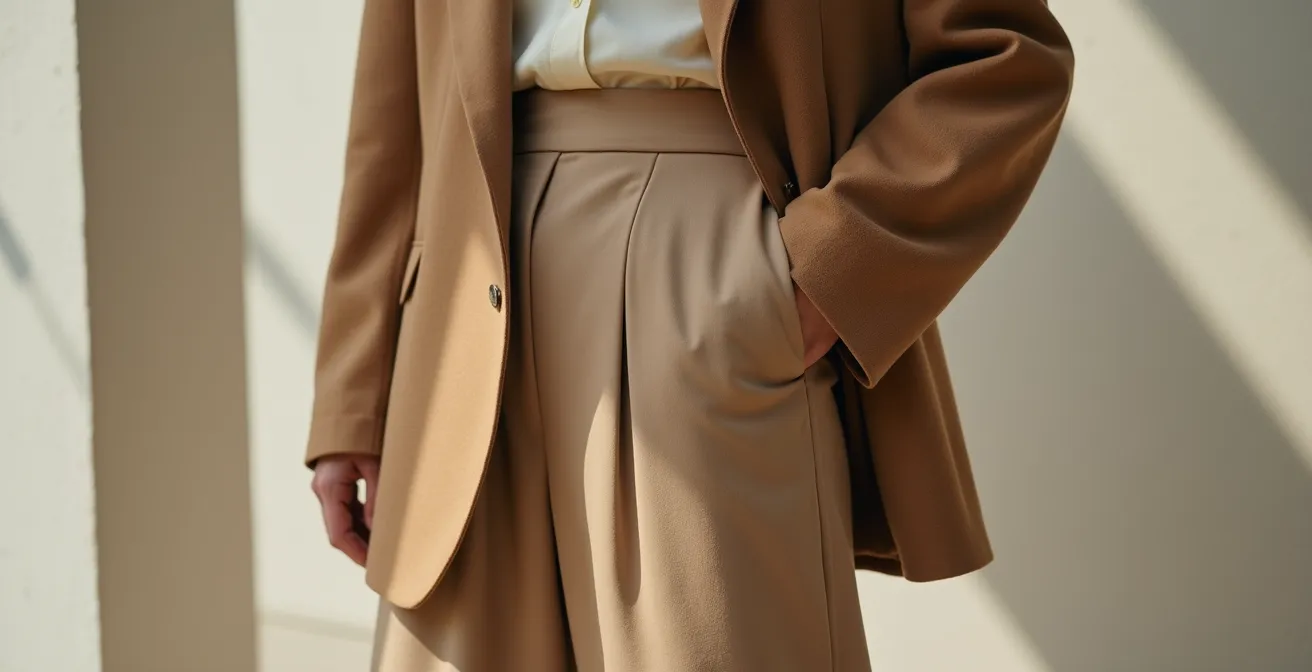
Beyond color and fit, the final secret to an expensive look is meticulous maintenance. A high-street blazer that is perfectly pressed and free of pilling will always look better than a wrinkled luxury one. This means investing time in steaming your clothes, using a fabric shaver to remove pills, and storing items correctly. It’s the small, unseen efforts that have the biggest visual impact. Ultimately, looking expensive is an illusion created by a symphony of details: perfect fit, thoughtful color harmony, quality fabrics, and impeccable care.
By applying these principles of strategic ownership, you can transform your relationship with your closet. Start today to build a wardrobe that empowers you with clarity and confidence, proving that true style comes from intelligence, not excess.