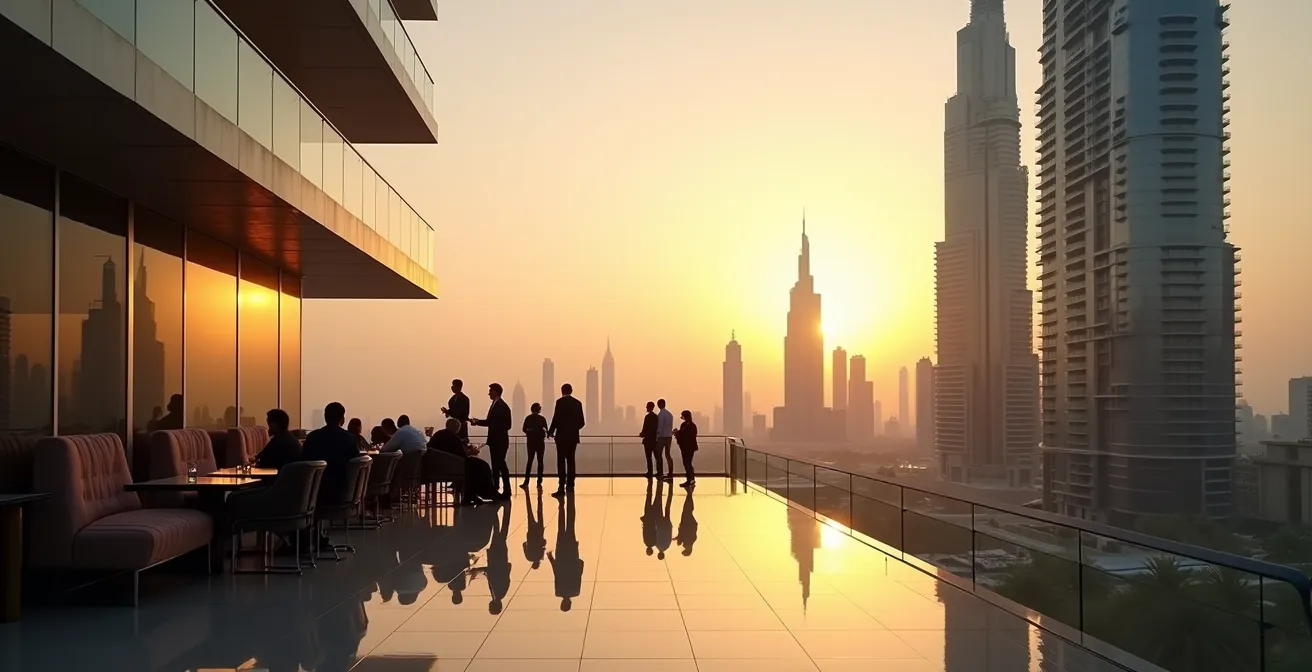
Contrary to popular belief, accessing Dubai’s A-list lifestyle isn’t about unlimited expense accounts, but about mastering the city’s unique systems of value.
- The baseline for “5-star” in Dubai includes amenities and space that are costly extras in cities like New York or London.
- Strategic timing (like the Holy Month of Ramadan) and leveraging professional relationships unlock exclusive experiences that money alone cannot buy.
Recommendation: Shift your focus from cost-cutting to “value arbitrage”—identifying where Dubai’s hyper-competitive market offers disproportionate luxury for a standard corporate price point.
The Dubai expense report often presents a paradox for corporate finance departments. It reads like a ledger of pure extravagance—five-star hotels, rooftop lounges, client dinners at world-renowned venues. Yet, for the seasoned business traveler, it represents something else entirely: strategic efficiency. The common advice for saving money in the UAE—stay in older districts, use the metro, eat in mall food courts—misses the entire point of being there. It sacrifices the very VIP experience that facilitates high-level business and networking.
The real secret isn’t about spending less; it’s about spending smarter by understanding the city’s unique economic and social architecture. Dubai’s luxury market is so competitive that exceptional value is often hidden in plain sight, accessible to those who know the system. What if the key to unlocking elite hospitality wasn’t a bigger budget, but a better strategy? What if you could leverage the city’s own rules to gain access to exclusive clubs, secure superior hotel experiences, and acquire bespoke items for a fraction of their perceived cost?
This guide moves beyond generic travel tips. We will deconstruct the mechanics of value in Dubai’s premium sector. We’ll explore how the definition of luxury itself differs here, how to navigate exclusive social circles, how to leverage cultural moments for business advantage, and ultimately, how to build a bespoke itinerary that delivers a VIP experience on a standard corporate budget. This is not about saving money; it’s about reallocating it for maximum impact.
This article provides an insider’s framework for navigating the city’s premium offerings intelligently. The following sections break down the core strategies for maximizing luxury value across every aspect of your business trip.
Summary: Your Guide to Navigating Dubai’s Luxury Landscape
- Why 5-Star in Dubai Is Different from 5-Star in New York?
- How to Get on the Guest List for Palm Jumeirah Clubs Without a Membership?
- Abu Dhabi vs Dubai: Which City Offers Better Cultural Luxury?
- The Dining Mistake Tourists Make During Holy Month
- When to Book a Desert Safari: Sunset vs Sunrise for Best Photos?
- Pottery Wheel vs Painting Class: Which Is Better for Socializing?
- Prêt-à-Porter vs Couture: Is the Quality Gap Really Worth the Price Difference?
- Finding the Bespoke Itinerary to Suit Wanderlust: How to Plan a Trip That Matches Your Personality Type?
Why 5-Star in Dubai Is Different from 5-Star in New York?
The term “five-star” is not a globally standardized measure; it’s a reflection of local market expectations. In established markets like New York or London, legacy hotels operate within physical and economic constraints, where space is the ultimate luxury and amenities are often à la carte. In Dubai, a city built on the promise of the superlative, the baseline for luxury is fundamentally elevated. Competition is the driving force, compelling hotels to include services and features as standard that would be premium, add-on costs elsewhere.
This creates a significant opportunity for value arbitrage. A standard corporate hotel budget allocated for a 40-square-meter room in Manhattan can secure a 60-square-meter suite in Dubai with complimentary spa access and a level of proactive, personalized service that is simply not part of the Western five-star package. The airport transfer isn’t just a car; it’s often a statement vehicle like a Bentley or Rolls-Royce, included in the room rate for premium suites. This isn’t extravagance for its own sake; it’s a calculated part of the city’s brand, and savvy travelers can leverage it.
Understanding this difference is the first step in smart planning. You are not just booking a room; you are accessing an ecosystem of built-in value. The table below illustrates the tangible differences in standard inclusions, highlighting where the real value lies before you even make a special request.
| Feature | Dubai 5-Star Standard | New York 5-Star Standard | Value Difference |
|---|---|---|---|
| Average Room Size | 55-65 sqm | 35-45 sqm | +45% larger |
| Pool Complex | Multiple pools, beach access | Single indoor pool (if any) | 3-5x amenity value |
| Spa Access | Often complimentary | $150-300/day extra | $750+ weekly savings |
| Airport Transfer | Rolls-Royce/Bentley included | Standard sedan ($100+) | Premium experience |
| Concierge Service | 24/7 personalized, proactive | Request-based, business hours | Anticipatory vs reactive |
How to Get on the Guest List for Palm Jumeirah Clubs Without a Membership?
The exclusive beach clubs and nightlife venues of Palm Jumeirah are cornerstones of Dubai’s social and business scene. For the uninitiated, they appear to be impenetrable fortresses, accessible only to members or through exorbitant minimum spends. However, this is a misconception. These establishments are businesses that thrive on a curated crowd, and there are systemic access points for those who understand the city’s professional etiquette.
The primary mistake is approaching access as a tourist. The key is to leverage your professional status. The hotel concierge is your most powerful asset, but you must approach the right one. The ‘tourist desk’ concierge books desert safaris; the business concierge maintains relationships with the city’s top maître d’s. Framing your request as “critical client entertainment” rather than personal leisure immediately changes the dynamic and elevates the urgency.
Another powerful strategy is the restaurant-to-club pipeline. Many exclusive clubs are attached to high-end restaurants. Securing a dinner reservation often guarantees seamless entry into the club afterward, bypassing queues and scrutiny at the door. It’s a sophisticated way to pay for access that also provides a valuable client-facing opportunity. Building a rapport with front-of-house managers on slower weekdays can also yield invitations for prime weekend nights. The goal is to transform from a one-time visitor into a recognized professional contact.
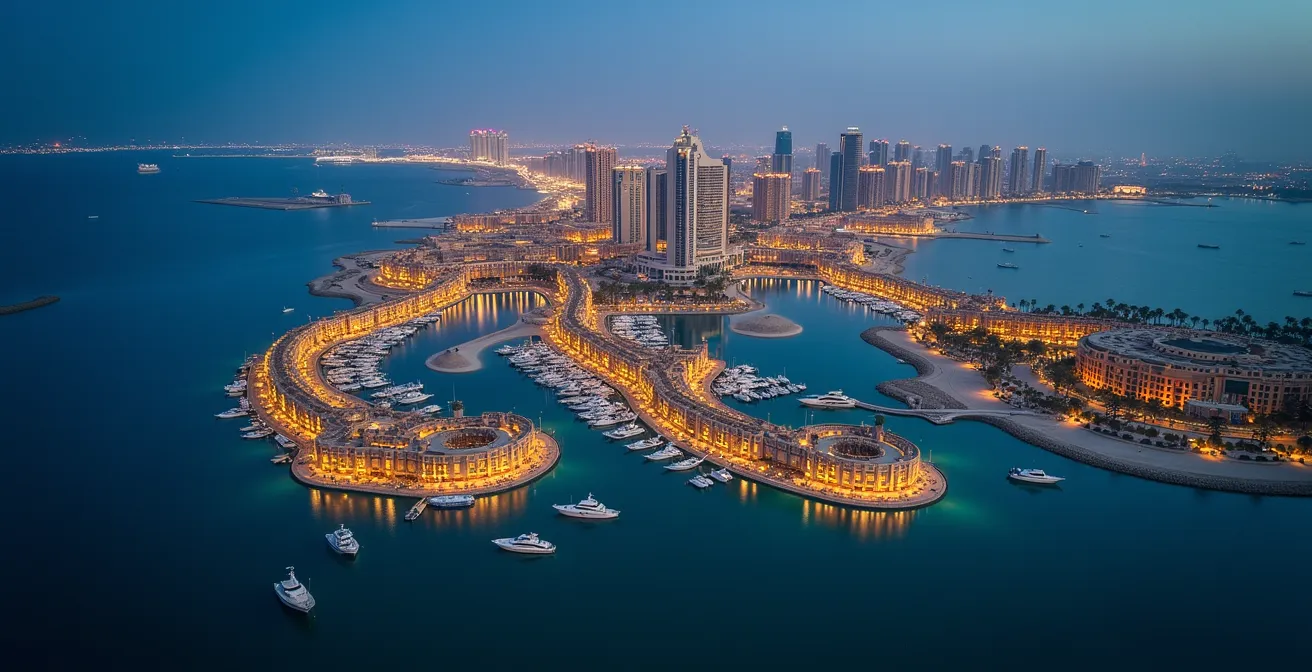
This aerial view shows the interconnected nature of the Palm’s venues. The lights represent not just buildings, but a network of relationships. Navigating it requires a clear plan, not just a black credit card. For those seeking guaranteed access, specialized VIP services can also be an efficient, if less subtle, tool.
Your Action Plan: Accessing Exclusive Palm Jumeirah Clubs
- Leverage the Right Concierge: Contact your hotel’s business concierge (not the tourist desk). Frame your request as “critical client entertainment” to signal professional importance.
- Book the Feeder Restaurant: Secure a dinner table at the club’s associated restaurant. This strategy typically ensures seamless club entry post-dinner, avoiding queues and door policies.
- Build Mid-Week Relationships: Visit on slower nights (e.g., Tuesday or Wednesday). Engage with front-of-house managers to establish a rapport, which can lead to direct invitations for coveted weekend spots.
- Engage a Specialist Service: For high-stakes events, use VIP event access Dubai services. These companies specialize in securing invitations to exclusive parties and gatherings where standard access is impossible.
- Utilize Corporate Concierge Power: If your company uses a corporate concierge firm, leverage them. They maintain long-standing, pre-existing relationships with club management for guaranteed access.
Abu Dhabi vs Dubai: Which City Offers Better Cultural Luxury?
For the business traveler looking to infuse their trip with culture, the choice between Dubai and Abu Dhabi is not about which is “better,” but which aligns with a specific objective. The two emirates offer distinct flavors of cultural luxury. Dubai’s is kinetic, contemporary, and integrated into its commercial fabric, while Abu Dhabi’s is more monumental, institutional, and focused on legacy.
Dubai excels at accessible, high-energy cultural experiences. Its cultural heart beats in districts like Alserkal Avenue, a curated collection of contemporary art galleries, performance spaces, and artisanal cafes. The luxury here is in access and immersion—arranging a private gallery viewing for clients or a workshop with a resident artist. The city’s infrastructure is built for this efficiency; in fact, 95% of Dubai business hotels are within 15 minutes of DIFC, the hub connecting business with districts like these. It’s a culture of immediacy, perfectly suited for a tight business schedule.
Abu Dhabi, in contrast, offers a more stately and profound cultural experience. Its luxury lies in scale and exclusivity within grand institutions. The Louvre Abu Dhabi and the upcoming Guggenheim are architectural marvels, but the real VIP experience is in what the general public doesn’t see. For example, arranging a private architectural tour of Qasr Al Watan, the presidential palace, offers a glimpse into national heritage and governance that is both educational and deeply impressive for high-level guests. It is a more formal, contemplative cultural engagement.
Case Study: Closed-Door Cultural Access
The choice between the two cities depends on the desired outcome. For a corporate group focused on innovation and creative energy, a private tour and networking event at Dubai’s Alserkal Avenue provides direct access to the region’s contemporary art scene. Conversely, for hosting a delegation of senior executives or government contacts, a bespoke architectural tour of Abu Dhabi’s Qasr Al Watan offers an unparalleled experience of heritage and statesmanship. The luxury is not just in the art, but in the exclusive context provided.
The Dining Mistake Tourists Make During Holy Month
For the unprepared business traveler, Ramadan can seem like a logistical challenge. Restaurants are closed during the day, and the pace of business slows. Many tourists and inexperienced expatriates see this as a disruption. This is a significant mistake. For the savvy professional, Ramadan is the single best time of year for high-value networking and premium dining, offering opportunities that are unavailable during the rest of the year.
The mistake is viewing Iftar—the evening meal to break the fast—as a mere dinner. It is a major social and cultural event. Avoiding it means missing out on a crucial aspect of local business culture. The opportunity lies in embracing it. Accepting an Iftar invitation from a local business contact is a powerful gesture of respect that builds significant goodwill. Furthermore, the city’s luxury hotels host elaborate Iftar tents and buffets. These are not just meals; they are grand culinary events featuring live entertainment, traditional music, and an incredible spread of premium cuisine.
Herein lies the value arbitrage. These lavish Iftar buffets offer a chance to experience the best of a hotel’s culinary offerings for a fixed price. A recent 2024 Ramadan pricing analysis shows that luxury Iftar buffets average AED 250-350 per person, while a comparable à la carte dining experience at the same venue would typically cost AED 500-700. This represents a 40-60% savings for a superior, culturally rich experience, making it an ideal setting for hosting clients or teams without an extravagant bill. Booking these popular venues early is essential.
When to Book a Desert Safari: Sunset vs Sunrise for Best Photos?
The desert safari is a quintessential Dubai experience, but the term encompasses a vast range of options, from mass-market dune bashing tours to ultra-luxury private excursions. For the discerning traveler, the choice between a sunset and a sunrise safari is not just about timing; it’s about the entire purpose of the experience and, crucially, the photographic outcome.
The sunset safari is the classic option, geared towards entertainment. It typically involves an afternoon of activities like dune driving and falcon shows, culminating in a Bedouin-style camp dinner with live performances. While enjoyable, it is a shared experience. The light is harsh for photography until the final moments of sunset, and the camps can be crowded. It is best suited for team-building or a lively, social evening.
The sunrise safari, conversely, is about tranquility and exclusivity. It requires an early start, but the rewards are immense. Floating over the dunes in a hot air balloon as the sun rises offers a serene, almost magical perspective of the desert. The light during the “golden hour” just after sunrise is soft, casting long shadows and creating a rich, warm palette ideal for stunning photography. This experience is less about high-octane activity and more about peaceful observation. It carries a much higher perceived value and is perfect for creating a lasting impression on a key client or for personal reflection away from the city’s bustle.

The choice ultimately comes down to your objective. For vibrant, social energy, the sunset safari delivers. For breathtaking photography, unparalleled serenity, and an atmosphere of true luxury, the sunrise experience is unmatched. Many high-end operators in the Dubai Desert Conservation Reserve now offer private, ultra-comfortable safaris with personal guides and chef-prepared meals, elevating the experience far beyond the standard tourist offering.
Pottery Wheel vs Painting Class: Which Is Better for Socializing?
In the context of corporate team-building or client entertainment, creative workshops have become a popular alternative to traditional dinners or golf outings. They offer a hands-on, memorable experience. However, not all creative activities are created equal when it comes to fostering socialization and collaboration. The choice between a pottery wheel workshop and a collaborative painting class, for instance, has a direct impact on the return on investment for team dynamics.
A pottery workshop is primarily an individual-focused activity. Each participant is engaged with their own wheel and piece of clay. While it can be a meditative and skill-building experience, it requires intense concentration that minimizes conversation and interaction during the core creation process. Communication happens before and after, but not during. The technical skill barrier can also be high, potentially leading to frustration for some, while the final take-home is an individual piece, not a symbol of group effort.
A collaborative painting class is inherently social. Teams are typically given a large canvas and a shared goal, requiring constant communication, negotiation, and coordination to create a unified piece of art. The skill barrier is lower, making it more accessible and less intimidating for participants of all abilities. The process itself is the team-building exercise. The final result—a single, large artwork that can be displayed back at the office—serves as a lasting physical testament to the team’s collaborative achievement. Both activities offer excellent VIP upgrade options, such as booking a private studio session or engaging a renowned local artist to lead the workshop.
The following analysis breaks down the key differences for a business objective:
| Criteria | Pottery Workshop | Collaborative Painting | Winner for Teams |
|---|---|---|---|
| Collaboration Level | Individual focus | Group coordination required | Painting |
| Communication Need | Minimal during creation | Constant for shared vision | Painting |
| Office Display Value | Individual items | Single team artwork | Painting |
| Skill Barrier | High (technical) | Low (accessible) | Painting |
| VIP Upgrade Options | Private studio session | Renowned artist workshop | Both excellent |
Prêt-à-Porter vs Couture: Is the Quality Gap Really Worth the Price Difference?
For the executive traveler, wardrobe is a critical component of professional branding. In Dubai, a global fashion hub, the choice is not simply what to wear, but how to acquire it. The debate between European prêt-à-porter (ready-to-wear) and haute couture often comes down to a question of price. However, Dubai’s unique market offers a third, more strategic option: local bespoke tailoring.
The quality gap between a high-end ready-to-wear suit and a true couture piece is significant, involving hundreds of hours of manual craftsmanship. The price difference is astronomical, making couture an unjustifiable expense for most corporate budgets. The mistake is assuming these are the only two options. Dubai’s long history as a trading and tailoring hub has cultivated a thriving ecosystem of highly skilled bespoke tailors. These artisans can create custom-fitted garments—suits, blazers, or elegant abayas—that rival the quality and fit of European houses for a fraction of the cost.
This is value arbitrage in its purest form. According to a recent luxury shopping analysis, custom-tailored suits in Dubai can cost between AED 3,000-5,000, whereas their European couture equivalents start at AED 15,000 and go much higher. The smart strategy is to invest in one or two bespoke statement pieces from a local tailor for high-visibility events like keynote speeches. For routine meetings, high-quality prêt-à-porter from the city’s tax-free luxury malls (offering 20-30% savings versus Western markets) is perfectly appropriate. This hybrid approach maximizes both budget and impact.
To execute this strategy, schedule fittings during off-peak hours (typically 2-4 PM) to receive undivided attention from master tailors. For ready-to-wear, booking a complimentary personal styling session at a VIP lounge, such as the one in Mall of the Emirates, can provide expert guidance on building a versatile and culturally appropriate business wardrobe.
Key Takeaways
- Dubai’s standard 5-star baseline inherently includes luxury amenities and space that are premium, add-on costs in Western markets.
- True exclusivity is often gained through strategic access—leveraging business concierges and restaurant-to-club pipelines—rather than simply high spending.
- Local market efficiencies, such as bespoke tailoring and fixed-price Iftar buffets during Ramadan, offer significant value arbitrage opportunities for premium experiences.
Finding the Bespoke Itinerary to Suit Wanderlust: How to Plan a Trip That Matches Your Personality Type?
The preceding sections have provided the tactical building blocks for accessing Dubai’s luxury landscape efficiently. The final, and most crucial, step is to assemble these elements into a cohesive, bespoke itinerary that does more than just impress—it must align with your specific business objectives and personality type. A generic itinerary, no matter how luxurious, is an inefficient use of time and resources.
The most effective business trips are designed around a central theme or “corporate archetype.” Are you in Dubai to close a major deal? To foster collaboration within your team? Or to explore innovative new partnerships? Each of these goals requires a different pace, venue, and style of interaction. A trip designed for a “Deal Closer” will prioritize high-impact, private settings like helicopter tours and exclusive dining, while an itinerary for a “Team Builder” should focus on collaborative, shared experiences like desert challenges or cooking classes.
This level of personalization is the hallmark of true luxury travel management. It moves beyond booking flights and hotels into the realm of strategic planning. As leading advisors at Kimia Journey note, 96% of ultra-luxury clients expect this level of expert guidance. It’s about understanding that the mode of transport, the choice of restaurant, and the type of evening experience should all work in concert to support a singular narrative. The table below provides a framework for how different business archetypes can be matched with corresponding activities in Dubai.
| Business Archetype | Morning Activity | Power Lunch Venue | Evening Experience | Transport Mode |
|---|---|---|---|---|
| The Deal Closer | Helicopter tour of developments | At.mosphere (Burj Khalifa) | Private yacht meeting | Rolls-Royce chauffeur |
| The Team Builder | Desert team challenges | Collaborative cooking class | Beach club bonding | Luxury coach |
| The Innovator | Museum of the Future tour | Design District d3 cafe | Tech hub networking | Tesla rental |
By shifting your perspective from cost-cutting to value-maximization, you can transform a standard business trip into an immersive VIP experience that achieves professional goals and leaves a lasting impression, all while respecting the boundaries of a corporate budget. The next logical step is to apply this strategic thinking to your own specific travel requirements and design an itinerary that is truly bespoke.