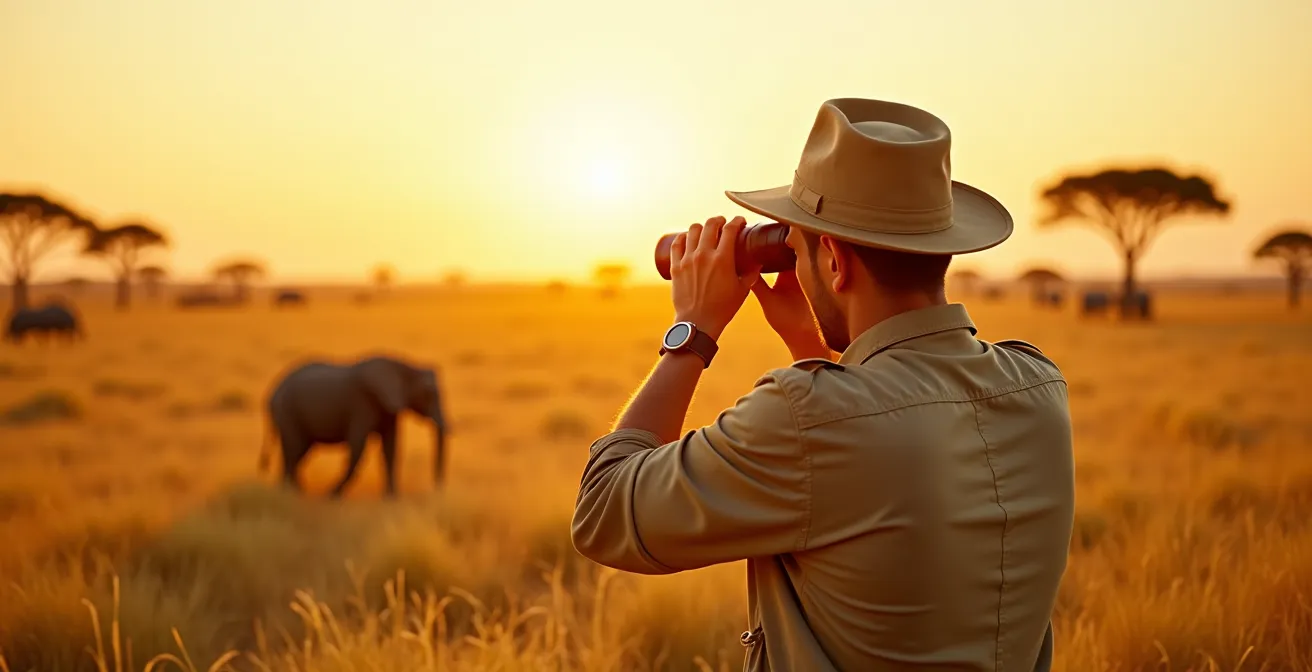
True ethical tourism demands you act less like a tourist and more like a critical auditor for conservation.
- The word “sanctuary” is an unregulated marketing term; use the scientific “Five Domains” model to assess actual animal welfare.
- Legitimacy is proven by verifiable accreditation from bodies like the Global Federation of Animal Sanctuaries (GFAS), not by promotional claims.
Recommendation: Prioritize non-invasive wild safaris and direct financial support to conservation programs over any form of captive animal encounter.
The desire to connect with the natural world is a powerful, primal instinct. For many travelers, witnessing the majesty of endangered fauna and flora is the pinnacle of a life well-lived. Yet, this noble intention is fraught with peril. The wildlife tourism industry is a minefield of deceptive marketing and hidden cruelty, where well-meaning tourists inadvertently fund the very abuse they seek to prevent. The common advice—avoid elephant rides, don’t feed the monkeys—is tragically insufficient. It scratches the surface of a deeply systemic problem.
The distinction between an operation that exploits animals and one that genuinely supports their conservation is often deliberately blurred. Words like “sanctuary,” “rescue,” and “conservation center” have been co-opted by commercial interests, rendering them almost meaningless without rigorous scrutiny. As a conservation biologist, I can state unequivocally that the passive consumer approach is no longer viable. The situation is too dire. There are more than 500,000 animals in captivity suffering for tourist entertainment at this very moment. To be a part of the solution, you must evolve from a tourist into an investigator.
This guide abandons platitudes. Instead, it provides a scientific and ethical framework for auditing wildlife encounters. We will dismantle marketing myths, provide tools for verifying legitimacy, and dissect the economic realities of conservation funding. This is not about feeling good; it is about doing good. The goal is to arm you with the critical thinking necessary to ensure your travel funds protect habitats and support species survival, rather than perpetuating a cycle of suffering for a selfie.
This article will provide a clear, actionable methodology for making responsible choices. From decoding the language of so-called sanctuaries to understanding the critical role of your actions back home, you will learn to see the wildlife tourism industry through the uncompromising lens of a conservationist.
Summary: A Critical Guide to Ethical Wildlife Tourism
- Why “Sanctuary” in the Name Doesn’t Mean the Animals Are Happy?
- How to Check if a Zoo Is Accredited by Global Conservation Bodies?
- Wild Safari vs Captive Encounter: Which Experience Truly Supports Survival?
- The Souvenir Mistake That Could Get You Arrested at Customs
- When to Donate: Why Supporting Rangers in Dry Season Saves More Rhinos?
- Open-Sided vs Closed 4×4:Emerging Trends in 2024: The 5 Shifts That Will Redefine Consumer Behavior
- Why Your Perfect Green Lawn Is a Desert for Bees?
- Tanzania Wildlife Adventure: How to Plan a Great Migration Safari for Best Photography Results?
Why “Sanctuary” in the Name Doesn’t Mean the Animals Are Happy?
The term “sanctuary” is one of the most abused words in wildlife tourism. It evokes images of compassionate care and safe refuge for animals rescued from harm. In reality, it is a completely unregulated marketing term. Any operator can call their facility a sanctuary, regardless of the conditions within. Many so-called sanctuaries are nothing more than commercial breeding mills and petting zoos that prioritize profit over the behavioral and psychological needs of the animals.
The key indicator of an unethical operation is any form of direct human-animal interaction. If you can ride, touch, bathe, or take a selfie with a wild animal, you are participating in its exploitation. These activities require the animal to be “broken” or conditioned through abusive training methods, often from a very young age. This process inflicts severe and lasting psychological trauma, creating systemic stressors that compromise the animal’s health for its entire life. A true sanctuary prioritizes the animal’s autonomy and safety above all, which means keeping a respectful, hands-off distance.
Instead of relying on a name, you must learn to assess the conditions yourself. The globally recognized Five Domains Model is the scientific standard for evaluating animal welfare. It moves beyond simply asking if an animal is free from pain and looks at its overall mental state. Before visiting any facility, you must critically assess these five areas from a distance. A legitimate sanctuary will be transparent and proud to demonstrate its high standards across all five domains, whereas a fraudulent one will hide its deficiencies behind a carefully constructed tourist experience.
Action Plan: The Five Domains Welfare Assessment
- Nutrition: Observe the animals. Do they appear well-fed and have constant access to fresh water? Are their feeding methods species-appropriate, encouraging natural foraging behaviors rather than just being handed food?
- Environment: Examine the enclosure. Does it provide thermal comfort, freedom of movement, and environmental enrichment that stimulates natural behaviors (e.g., climbing structures, pools, varied substrate)?
- Health: Look for signs of good physical health. Are the animals free from injury, disease, and untreated wounds? A well-managed facility has a clear and present veterinary care program.
- Behavior: This is critical. Are animals able to express a full range of natural behaviors? Can they socialize with their own kind, hide from view if they choose, and avoid forced interaction with tourists? Repetitive, neurotic behaviors like pacing are a major red flag.
- Mental State: Based on the other four domains, what is the animal’s likely mental state? A true sanctuary works to provide opportunities for positive experiences, not just minimize negative ones. Look for signs of calm, curiosity, and engagement, not fear or apathy.
How to Check if a Zoo Is Accredited by Global Conservation Bodies?
While the word “sanctuary” is unreliable, “accreditation” is not. Accreditation is a formal, rigorous process where an independent, expert organization evaluates a facility against a comprehensive set of standards. This is the single most important tool you have for verifying legitimacy. An unaccredited facility should be considered unethical until proven otherwise, as it is operating without oversight or accountability.
The world’s leading accreditation bodies are the gatekeepers of ethical practice. For true sanctuaries that do not breed or permit public interaction, the gold standard is the Global Federation of Animal Sanctuaries (GFAS). For zoos and aquariums, the most respected body is the Association of Zoos and Aquariums (AZA). These organizations enforce strict, science-based standards for animal welfare, veterinary care, conservation programming, and ethical governance. Their accreditation is not easy to obtain or maintain, involving detailed applications and regular on-site inspections. A facility proud of its GFAS or AZA status will display the logo prominently on its website.

You must actively verify these claims. Do not take a facility’s word for it. Go directly to the GFAS or AZA websites and use their search functions to see if the facility is listed as a currently accredited member. Some operations may claim to be “members” of or “affiliated with” organizations like the World Association of Zoos and Aquariums (WAZA), but this is not the same as being accredited. Accreditation is the proof of high standards; anything less is insufficient. As one expert in the Ethical Wildlife Tourism Guidelines states:
A good institution should be able to demonstrate constant improvement in its enclosures and welfare standards, phasing out old habitats and practices.
– Conservation Travel Expert, Ethical Wildlife Tourism Guidelines
This commitment to constant improvement is a hallmark of accredited facilities, as they are held accountable to evolving scientific knowledge about animal welfare. Unaccredited roadside zoos have no such incentive and often languish with outdated, cruel enclosures for decades.
Wild Safari vs Captive Encounter: Which Experience Truly Supports Survival?
The fundamental choice in wildlife tourism often comes down to two models: observing animals in their natural, wild habitat (safari) or interacting with them in a captive facility. From a conservation standpoint, there is no contest. A well-managed, non-invasive wild safari is profoundly more beneficial to species survival than any captive encounter. The reason lies in the core of conservation: habitat protection.
Wild animals need vast, healthy, and interconnected ecosystems to thrive. The greatest threat to their existence is habitat loss. Ethical safari tourism provides a powerful economic incentive to protect these wild spaces. When national parks, reserves, and community conservancies can generate sustainable revenue from tourism, the land becomes more valuable intact than it would be if converted to agriculture or mining. This revenue funds anti-poaching patrols, compensates local communities for human-wildlife conflict, and maintains the ecological integrity of the entire system. It is a direct investment in the long-term survival of whole populations, not just individual animals.
Captive facilities, even the best accredited zoos, operate on a different model. While they play a role in education and some specific ex-situ (off-site) breeding programs for critically endangered species, their impact is limited. They cannot preserve the complex web of life that constitutes an ecosystem. Furthermore, the economic benefits are often less direct. The following comparison highlights the critical differences in impact:
| Aspect | Wild Safari | Captive Facility |
|---|---|---|
| Conservation Funding | Direct habitat protection and anti-poaching. | Primarily funds facility operations, with some contribution to breeding programs. |
| Animal Welfare | Animals exhibit a full range of natural behaviors in their own territory. | Behaviors are limited by a controlled, artificial environment. |
| Educational Impact | Powerful but reaches fewer people; teaches respect for wildness. | Reaches millions but can create a false sense of accessibility to wildlife. |
| Economic Benefit | According to an analysis by Sustainable Travel International, it helps generate funds for protected areas. | Supports jobs at the facility but may have less broad community impact. |
The choice is clear. By choosing a responsible safari operator that respects wildlife-viewing distances and contributes to local conservation initiatives, your tourist dollars become a direct force for preserving the very ecosystems endangered species depend on. It supports ecosystem integrity at a scale that no captive facility can ever match.
The Souvenir Mistake That Could Get You Arrested at Customs
Your ethical responsibility as a traveler does not end when you leave a park or reserve. It extends to every purchase you make, especially when it comes to souvenirs. The illegal wildlife trade is a multi-billion dollar industry that is driving species toward extinction and is often disguised as legitimate local commerce. A seemingly innocent trinket could be a product of poaching, and purchasing it not only fuels the slaughter but could also lead to your arrest.
The Convention on International Trade in Endangered Species of Wild Fauna and Flora (CITES) is a global agreement to protect endangered plants and animals from over-exploitation. It regulates or bans the trade of items made from thousands of species. Items made from ivory, rhino horn, sea turtle shells, and big cat furs are obvious contraband. However, the trade is often more subtle. A carved bone necklace, a snakeskin belt, or even certain types of coral and shells can be illegal to transport across international borders. Ignorance of the law is not a defense, and penalties can include confiscation, massive fines, and even jail time.
The scale of the crisis driven by this demand is staggering. The WWF’s 2024 Living Planet Report revealed a 73% average decline in monitored wildlife populations since 1970. Every purchase of a prohibited item contributes directly to this catastrophic decline. Be extremely wary of vendor claims. Labels like “sustainably harvested” or “farm-raised” are often used to launder illegally poached items. You must adopt a position of extreme skepticism and follow a simple rule: if you have any doubt about an item’s origin, do not buy it. Your best choice is to support local artisans by purchasing souvenirs made from sustainable materials like wood, pottery, textiles, or recycled materials.
- Never purchase items made from ivory, fur, bones, tortoise shell, or animal teeth.
- Avoid all coral and most shells, as well as products made from reptile skin (snake, crocodile, lizard).
- Be highly skeptical of “farm-raised” labels on wildlife products, as they can be a front for trafficking.
- Question the materials in traditional artifacts or folk medicines, which may contain parts of protected species.
- Always choose products that are clearly made from non-animal materials to ensure you are not contributing to the illegal trade.
When to Donate: Why Supporting Rangers in Dry Season Saves More Rhinos?
While responsible tourism provides crucial revenue, its seasonal nature creates dangerous vulnerabilities. The “off-season” or “dry season” in many wildlife destinations sees a sharp drop in tourist numbers and, consequently, a drop in funding for conservation operations. This is precisely when poaching syndicates intensify their activities, knowing that parks have fewer eyes and ears on the ground. This is where a different form of support becomes paramount: direct, consistent financial donation.
Your single visit to a park is helpful, but the sustained, year-round salary of a ranger is what truly protects wildlife. Rangers are the front-line soldiers in the war against poaching. They patrol vast, often dangerous territories to deter poachers, remove snares, and monitor the health of animal populations. Their work is relentless and does not stop when the tourists go home. A predictable, stable income is essential for maintaining these anti-poaching patrols, especially during the lean dry season when resources are scarcest and the threat is highest.
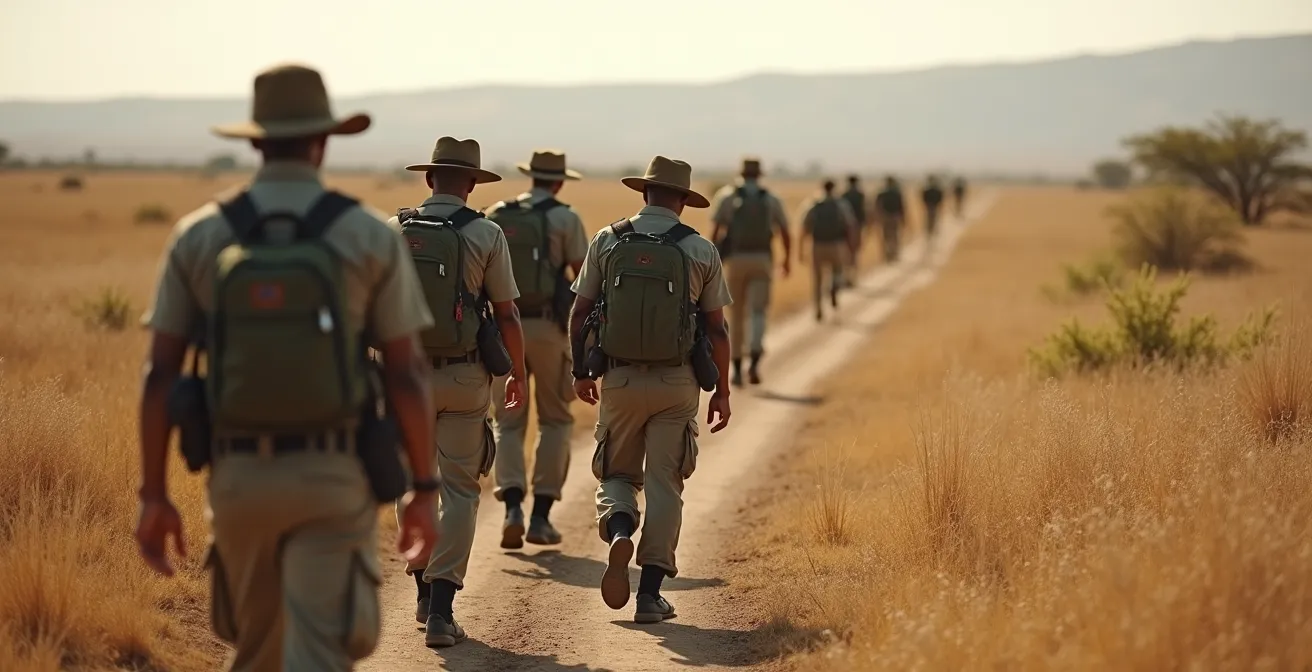
Instead of thinking of your contribution as a one-time event tied to a visit, consider it a long-term investment in habitat integrity. Community-led conservancies in places like Kenya have pioneered a model that demonstrates the power of this approach. By securing consistent funding through direct donations and conservation levies, they are able to maintain robust anti-poaching operations year-round, leading to significant reductions in wildlife crime and a rebound in species like the black rhino. This proves that a small, recurring monthly donation to a reputable on-the-ground conservation organization can have a far greater impact than the park fee from a single safari.
When selecting an organization to support, do your research. Choose groups that are transparent about how they use their funds, have a proven track record, and ideally focus on direct ranger support and community engagement. Organizations like the Thin Green Line Foundation or local conservancies with verifiable results are excellent choices. This strategic support smooths out the dangerous “boom and bust” cycle of tourism, ensuring that protection remains constant when the animals are most vulnerable.
Open-Sided vs Closed 4×4:Emerging Trends in 2024: The 5 Shifts That Will Redefine Consumer Behavior
The conversation around ethical tourism is evolving beyond just where you go, to *how* you experience it. The safari vehicle itself—the very platform for your wildlife viewing—is at the center of this shift. While the debate between open-sided versus closed 4x4s continues (open vehicles offer better photographic opportunities and a more immersive sensory experience, while closed vehicles can offer more comfort and safety in certain conditions), the more significant changes are happening under the hood and in the philosophy of the safari itself.
Emerging trends for 2024 and beyond show a move towards minimizing the human footprint and maximizing the authenticity of the encounter. This is not just about animal welfare, but about enhancing the quality of the tourist experience by prioritizing respect for the environment. These shifts reflect a deeper understanding that the best wildlife encounter is one where the animals are least disturbed by our presence. A key development is the “Electric Revolution” in safari vehicles. Silent, zero-emission electric 4x4s are becoming more common, eliminating the noise and air pollution that stress wildlife and detract from the natural soundscape. This allows for closer, less intrusive viewing and a profoundly more peaceful experience.
This technological shift is part of a broader philosophical change. The modern ethical safari is moving away from a passive “viewing” experience towards active, respectful participation. Here are five key trends redefining the industry:
- Sensory Safaris: The focus is expanding beyond just sight. Guides are encouraging guests to listen to bird calls, smell the wild sage after a rain, and feel the vibrations of the landscape. Open-sided vehicles are often preferred for this multi-sensory immersion.
- Silent Electric Vehicles: As mentioned, the move to electric power is a game-changer for reducing disturbance and enhancing the natural ambiance of the bush.
- “Leave a Positive Trace” Tourism: Going beyond “leave no trace,” some tours now integrate citizen science. Guests can help with camera trap data, log bird sightings, or participate in minor habitat restoration projects, turning a holiday into a direct conservation contribution.
- Hyper-specialization: General “Big Five” tours are being supplemented by highly specialized trips focusing on primatology, entomology, botany, or nocturnal wildlife, led by expert guides who provide deep ecological context.
- Low-Impact Viewing: The emphasis is on quality over quantity. This means smaller group sizes, expert-led walks, and a strict adherence to ethical viewing distances, prioritizing the animal’s comfort above the perfect photograph.
Why Your Perfect Green Lawn Is a Desert for Bees?
The principles of conservation do not apply only to exotic destinations. They begin in your own backyard. The choices you make at home have a direct and significant impact on local biodiversity. One of the most damaging yet socially accepted practices in many parts of the world is the maintenance of a perfect, manicured green lawn. From an ecological perspective, this monoculture of non-native grass is little more than a green desert.
A tidy lawn offers virtually no food or shelter for essential pollinators like bees, butterflies, and other insects. The frequent mowing prevents flowers from blooming, and the common use of pesticides and herbicides poisons the very creatures that form the foundation of our food web. This practice, multiplied across millions of suburban homes, contributes to massive habitat fragmentation, breaking up natural landscapes into isolated, inhospitable patches. It is a microcosm of the same habitat destruction that threatens rhinos and tigers on a global scale.
The urgency of this issue cannot be overstated. We are living through a mass extinction event. The current species extinction rate is 100 to 1,000 times higher than the natural background rate, a crisis driven primarily by habitat loss. Re-thinking your own property is one of the most direct and impactful actions you can take. “Rewilding” your garden doesn’t mean letting it become an overgrown mess. It’s about making conscious, strategic choices to reintroduce native species and create a functional ecosystem.
By replacing portions of your lawn with patches of native wildflowers, shrubs, and grasses, you provide critical nectar, pollen, and nesting sites for local fauna. This small act helps create “wildlife corridors” that connect fragmented habitats, allowing animals to move, feed, and reproduce. Here is a simple strategy to begin rewilding your personal space:
- Start Small: Dedicate a patch of your lawn to native plants. Using neat borders or small signs can signal to neighbors that this is an intentional, managed ecological garden.
- Plant for Pollinators: Choose native flowers that bloom at different times throughout the year to provide a consistent food source.
- Embrace “Mess”: Leave seed heads on flowers and stems standing over winter. They provide vital food and shelter for birds and overwintering insects.
- Reduce Mowing: Designate “no-mow” areas or simply mow less frequently and at a higher setting to allow low-growing plants like clover to flower.
- Eliminate Chemicals: Cease all use of synthetic pesticides, herbicides, and fertilizers, which are devastating to insect life and soil health.
Key Takeaways
- Ethical tourism requires active investigation; verify accreditations (GFAS, AZA) and never trust a facility’s name alone.
- Prioritize wild, non-invasive experiences over any captive encounter to directly fund habitat protection and anti-poaching efforts.
- Your impact continues at home; avoid all wildlife souvenirs and consider rewilding parts of your lawn to support local biodiversity.
Tanzania Wildlife Adventure: How to Plan a Great Migration Safari for Best Photography Results?
Planning a trip to witness Tanzania’s Great Migration is the ultimate test of an ethical tourist’s resolve. This breathtaking spectacle, involving millions of wildebeest and zebras, attracts a huge volume of tourism, which can either be a powerful force for conservation or a significant source of systemic stress on the ecosystem. Achieving phenomenal photography results while adhering to the strictest ethical principles is not just possible; it is the only acceptable approach.
First, apply the principles of operator selection. Choose a safari company that is explicitly committed to low-impact viewing. This means they use expert guides who understand animal behavior, strictly adhere to park regulations on vehicle numbers and viewing distances, and never harass wildlife for a better shot. Look for operators who contribute to local conservation initiatives, such as the Serengeti De-Snaring Program or community conservancies bordering the park. A company’s conservation credentials should be as important as its itinerary.
Second, rethink your photographic goals. The most impactful wildlife photography captures natural behavior, not forced reactions. This requires patience and the right equipment. Use a long lens (400mm or more) to get frame-filling shots without encroaching on the animal’s space. Turn off your engine to minimize noise and vibration. Focus on capturing the wider environmental story—the vast landscapes, the dramatic skies, the intricate interactions between different species. As demonstrated by WWF’s Photo Expeditions in the Serengeti, the goal is to create powerful images that inspire conservation, which is only possible when the photographer acts with the utmost respect for their subjects.
Finally, your conduct is paramount. Insist that your guide does not drive off-road (unless in designated zones), does not crowd other vehicles, and does not alter an animal’s behavior for your benefit. The best guides will position the vehicle for the best light and background, anticipating the animal’s path rather than chasing it. By being a patient, respectful observer, you not only ensure the welfare of the wildlife but also increase your chances of capturing truly authentic and powerful photographs. This approach transforms you from a mere consumer of a spectacle to a responsible witness of a natural wonder.
Your next adventure is an opportunity to be a force for conservation. Plan it not just by destination, but by impact. Begin your research now, armed with the critical framework to distinguish genuine conservation from exploitation.