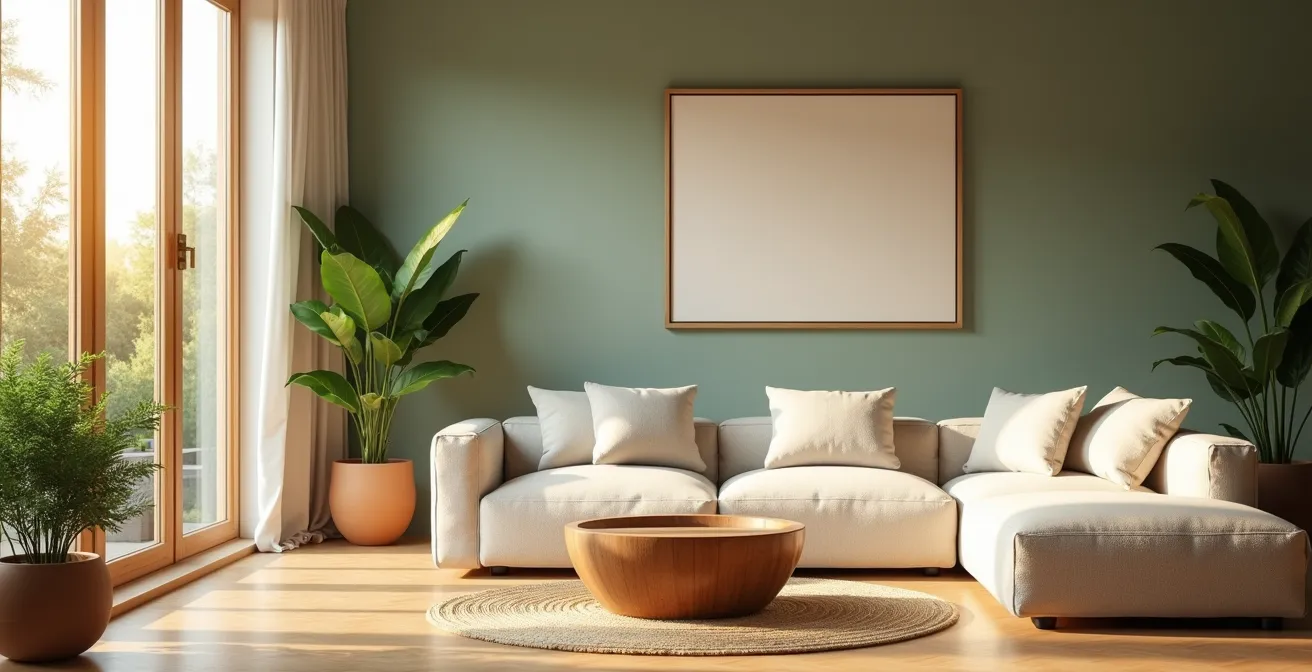
In summary:
- Your home’s design directly impacts your nervous system; it’s not just about aesthetics.
- Swap sharp, angular furniture for curved shapes to reduce subconscious anxiety triggers.
- Master light by getting morning sun to boost serotonin and using warm, low-level light at night to protect melatonin.
- Use a variety of textures (like linen and velvet) and textiles to create haptic comfort and improve room acoustics.
- Apply color theory with intention, using calming, low-saturation palettes to create a peaceful environment.
For high-stress professionals, the front door should be a portal to peace—a place where you can finally exhale. We often hear generic advice like “declutter your space” or “add a few plants.” While well-intentioned, these tips only scratch the surface of a much deeper truth. True tranquility at home isn’t just about being tidy; it’s about creating a neurological sanctuary, an environment intentionally crafted to soothe your nervous system on a biological level.
But what if the source of our unease is more subtle? What if the sharp corners of a coffee table, the wrong shade of blue in the kitchen, or the cold light from a screen are sending quiet stress signals to our brains? The common approach often overlooks these powerful, subconscious cues. This guide moves beyond the platitudes to explore the profound connection between your environment and your well-being. It’s not about following trends, but about understanding the ‘why’ behind design choices.
We will delve into the science of how specific shapes, textures, colors, and light frequencies can either heighten or calm your anxiety. By mastering these elements, you can transform your home from a simple living space into an active tool for daily stress reduction, making it a true extension of your self-care routine. This article will show you how to make intentional, science-backed changes that foster a genuine sense of calm and restoration.
To guide you in transforming your space into a true sanctuary, this article explores the key psychological principles of interior design. We’ll examine everything from the shape of your furniture to the quality of light in your bedroom, providing actionable steps for a more serene home.
Summary: A Guide to Crafting Your Stress-Reducing Home
- Why Sharp Angles in Furniture Can Subconsciously Increase Anxiety?
- How to Incorporate Plants into Your Decor to Lower Blood Pressure?
- Velvet vs Linen: Which Texture Promotes Relaxation in the Bedroom?
- The Lighting Error That Disrupts Melatonin Production in Your Bedroom
- How to Dampen Echo and Noise in Open-Plan Homes Using Textiles?
- Why Painting Your Kitchen Blue Might Suppress Your Appetite?
- Why Lack of Morning Light Is Ruining Your Sleep Cycle?
- Choosing a Chromatic Palette: How to Use Color Theory to Evoke Calm in Chaotic Spaces?
Why Sharp Angles in Furniture Can Subconsciously Increase Anxiety?
Our brains are wired with ancient survival instincts. In nature, sharp, angular objects—like shards of rock or predators’ teeth—often signal danger. This primal response is still active within us, even in the safety of our own homes. When we are surrounded by furniture with sharp corners and hard lines, our brain can interpret these as low-level threats. This creates a state of subtle but chronic vigilance, contributing to feelings of anxiety and unease without us ever consciously realizing the source.
Conversely, curved and rounded shapes are perceived as safe, inviting, and gentle. Think of smooth stones, rolling hills, or a gentle embrace. An in-depth look at the neuropsychology of space confirms that people feel more comfortable and are more likely to linger in rooms with curved elements. By consciously choosing rounded forms, you are sending a direct signal of safety to your nervous system, allowing it to relax and let down its guard. The effect is a space that feels not just aesthetically pleasing, but deeply and intuitively welcoming.
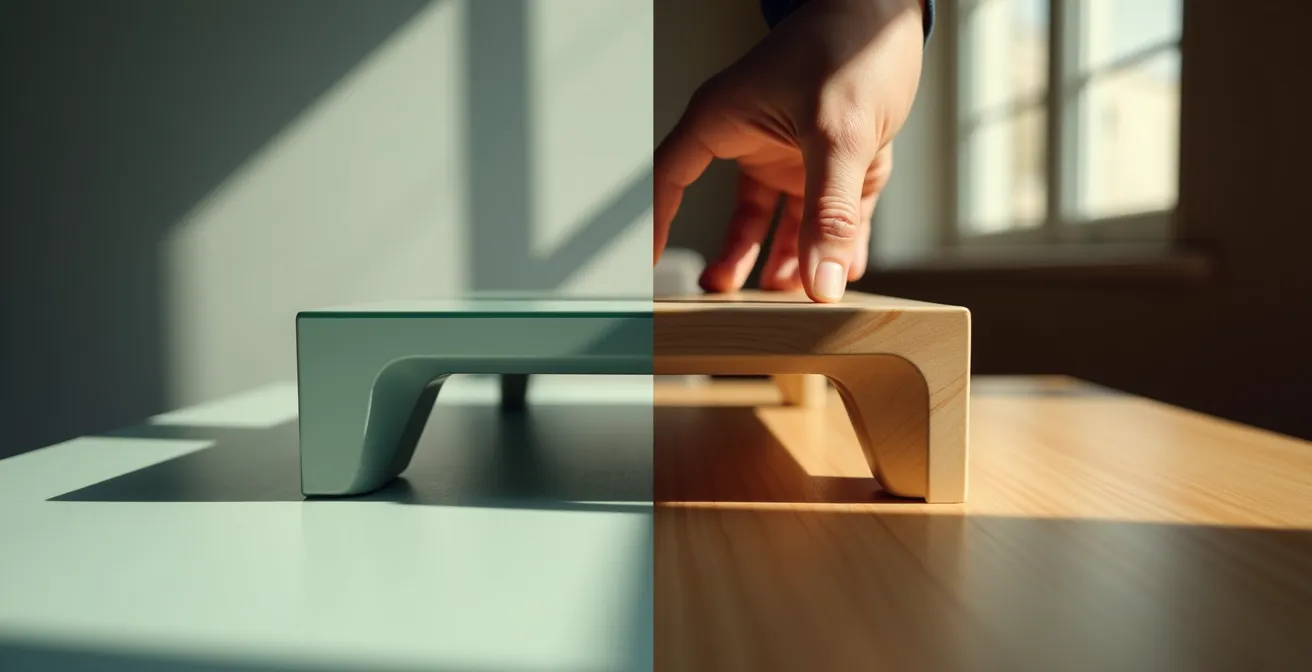
As this visual contrast shows, the difference is more than just stylistic. To soften the visual ‘threats’ in your home, you don’t need to replace all your furniture. Start by introducing rounded accessories like circular rugs, oval mirrors, or spherical vases. Opt for sofas and armchairs with soft, curved silhouettes. Even adding round cushions to an angular sofa can disrupt its harsh lines and create a more calming visual landscape.
How to Incorporate Plants into Your Decor to Lower Blood Pressure?
Bringing nature indoors, a practice known as biophilic design, is one of the most powerful strategies for creating a calming home environment. The presence of plants does more than just add a touch of color; it has a measurable physiological effect on our bodies. The simple act of being around greenery can lower heart rate, reduce blood pressure, and decrease levels of cortisol, the primary stress hormone. This connection is deeply ingrained in our evolutionary history, reminding our brains of a resource-rich, life-sustaining environment.
Beyond the general calming effect, plants actively improve our cognitive function. According to research from Texas A&M University, the presence of plants can improve concentration and memory retention, making them ideal for a home office or study area. Their fractal patterns—the complex, repeating shapes found in leaves and branches—are particularly fascinating to the human eye and can hold our attention effortlessly, providing a soft fascination that restores mental energy.
Integrating elements of nature, such as natural light, greenery, and organic materials, has been shown to reduce stress, improve cognitive function, and promote overall well-being.
– Ohio University Research, Beyond aesthetics: Interior design as a catalyst for well-being
To maximize these benefits, it’s important to choose the right plants for the right spaces. Not all greenery has the same psychological effect. A strategic approach ensures each room supports its intended function, turning your entire home into a healing ecosystem.
| Room Type | Recommended Plants | Mental Health Benefit |
|---|---|---|
| Home Office | Rosemary | Memory enhancement & focus |
| Bedroom | Snake Plant | Nighttime oxygen for better sleep |
| Living Room | Peace Lily | Social bonding & air purification |
| Study Area | Ferns | Fractal patterns reduce stress |
Velvet vs Linen: Which Texture Promotes Relaxation in the Bedroom?
Our sense of touch is a powerful, often-overlooked pathway to emotional well-being. The field of haptic psychology studies how different textures affect our mood and perception. In a bedroom, a space dedicated to rest and intimacy, the tactile environment is paramount. The choice between fabrics like velvet and linen isn’t just about style; it’s about crafting a sensory experience that signals either crisp coolness or enveloping warmth.
Linen, with its natural fibers and breathable weave, is crisp, cool, and dry to the touch. It’s ideal for promoting relaxation in those who tend to sleep hot, as it helps regulate body temperature and wicks away moisture. Its slightly irregular texture feels earthy and grounding, connecting us to a sense of natural simplicity. For a stressed mind, the clean, uncluttered feeling of linen can translate into a sense of mental clarity and calm.
On the other hand, velvet has a dense, soft pile that absorbs light and deadens sound, creating an instant feeling of quiet luxury. Its primary psychological benefit comes from its ability to provide a gentle, “hugging” sensation. This light pressure on the skin can stimulate the release of serotonin and dopamine, neurotransmitters associated with happiness and calm. For those who seek a cozy, womb-like environment, the plushness of a velvet headboard or throw can be deeply reassuring and promote a sense of security.
Your Action Plan: Choosing Bedroom Textures for Deep Relaxation
- Assess Your Sleep Temperature: For hot sleepers, prioritize breathable linen bedding to regulate temperature and prevent overheating stress.
- Seek Comfort and Coziness: For cold sleepers or those craving security, opt for velvet accents like headboards or throw pillows for a hugging sensation.
- Create Textural Zones: Use linen for the primary sleeping surfaces where coolness is key, and reserve velvet for a reading nook or accent chair to create a dedicated cozy corner.
- Consider Maintenance Stress: Be realistic about your lifestyle. Choose high-quality, low-maintenance fabrics to ensure your sanctuary doesn’t become another source of anxiety.
The Lighting Error That Disrupts Melatonin Production in Your Bedroom
Of all the elements in a home, lighting has the most direct and profound impact on our physiology, particularly our sleep-wake cycle. The most common lighting error in modern homes is the reliance on a single, bright overhead fixture that emits cool, blue-toned light. This type of light mimics midday sun, signaling to our brain that it’s time to be awake and alert. When we expose ourselves to it in the evening, we are actively suppressing the production of melatonin, the hormone responsible for inducing sleep.
This disruption leads to difficulty falling asleep, poor sleep quality, and a groggy feeling in the morning. Proper bedroom lighting isn’t about brightness; it’s about creating a “digital sunset” that guides your body naturally toward rest. This involves using multiple, low-level light sources with warm color temperatures (around 2700K) to mimic the soft, amber glow of dusk. This warm light lacks the blue frequencies that inhibit melatonin, allowing your body’s natural sleep processes to take over. Moreover, good lighting design dramatically improves comfort; in fact, a Cornell University study revealed an 84% reduction in issues like eye strain and headaches in environments with optimized lighting.
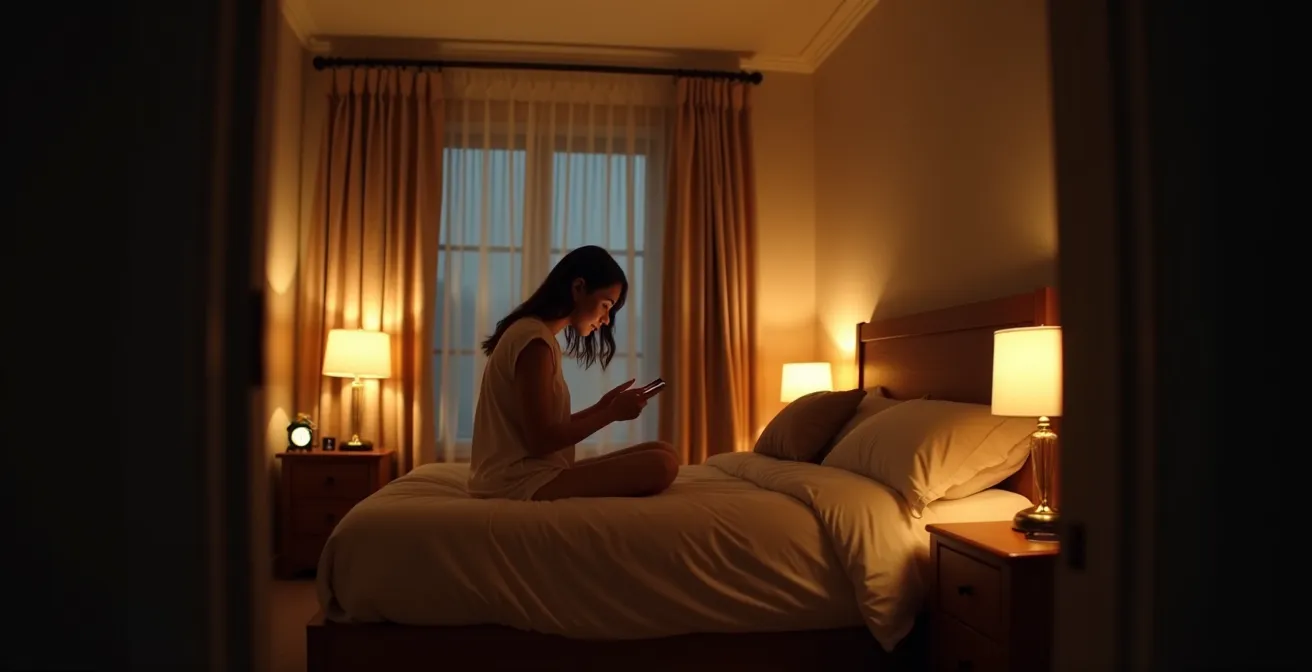
As illustrated here, the key is to create layers of light. Instead of a harsh ceiling light, use a combination of bedside lamps for reading, a floor lamp for general ambiance, and perhaps even subtle LED strips under the bed for safe navigation at night. All of these should be fitted with dimmable, warm-tone bulbs. This approach allows you to gradually decrease the light level in the hour before sleep, sending a powerful, non-verbal cue to your brain that the day is ending and it’s time to unwind.
How to Dampen Echo and Noise in Open-Plan Homes Using Textiles?
Open-plan living spaces are celebrated for their sense of spaciousness and light, but they often come with a hidden stressor: poor acoustics. Hard surfaces like hardwood floors, large windows, and bare walls reflect sound waves, creating echoes and reverberation. This constant, low-level auditory clutter, known as a high “reverb time,” can make a space feel cold, harsh, and unsettling. Our brains have to work harder to filter out background noise, leading to cognitive fatigue and a heightened sense of anxiety.
Creating acoustic comfort is about absorbing sound, not blocking it entirely. The goal is to reduce echo so that conversations are clear, footsteps are softened, and the overall soundscape is gentle and serene. Textiles are your most powerful and aesthetically pleasing tool for achieving this. Soft, porous materials trap sound waves, preventing them from bouncing around the room. The more layers of fabric you introduce, the more sound you will absorb.
The strategy is to cover a portion of every large, flat surface in the room. Here’s how you can layer textiles for maximum acoustic benefit:
- Floors: The single most effective solution is a large, thick rug placed over a high-quality felt pad. This combination can absorb a significant amount of ambient noise.
- Walls: Don’t leave walls bare. Large-scale canvas art, fabric wall hangings, or even a well-stocked bookshelf work wonders to break up and absorb sound waves.
- Windows: Swap thin blinds for heavy, layered curtains. Use a combination of a sheer inner curtain and a thicker outer drape made of a material like velvet or a heavy linen blend for optimal sound absorption.
- Furniture & Ceilings: Upholstered furniture is a natural sound absorber. Fabric pendant lights or even strategically placed acoustic panels disguised as art can help treat ceiling reflections.
Why Painting Your Kitchen Blue Might Suppress Your Appetite?
Color is one of the most direct ways to influence the mood of a space, and its effects on our appetite are particularly well-documented. Warm colors, especially reds and oranges, are known to be stimulating. They can increase heart rate and energy levels, which in turn can trigger feelings of hunger. This is why many fast-food chains use these colors in their branding and decor. As color psychology studies indicate that when surrounded by vibrant, warm tones, people tend to feel more energetic and passionate, which can translate to a more vigorous appetite.
Blue, on the other hand, sits on the opposite end of the spectrum. It is a color rarely found in natural foods (aside from blueberries and a few others), so we have no deep-seated, instinctual appetite response to it. Psychologically, blue is associated with calm, serenity, and even coldness. This can have a tranquilizing effect on our metabolism, effectively suppressing appetite. Painting a kitchen or dining room in a cool, saturated blue can therefore be a tool for mindful eating, encouraging you to slow down and eat more consciously rather than voraciously.
However, this doesn’t mean you must banish blue from your kitchen entirely if you love the color. The specific shade and how it’s used makes all the difference. A deep, cold blue will have a stronger suppressant effect than a warmer, greener teal or a soft, airy powder blue. Balancing blue cabinets with warm elements like wood countertops, brass hardware, or a warm-toned backsplash can create a beautiful, balanced space that feels calming without completely killing your desire to cook and eat.
| Blue Type | Appetite Effect | Recommended Use |
|---|---|---|
| Cold Saturated Blue | Strong appetite suppressant | For mindful eating goals |
| Warm Teal | Mild calming effect | Balance with wood accents |
| Soft Powder Blue | Minimal suppression | Pair with brass hardware |
Why Lack of Morning Light Is Ruining Your Sleep Cycle?
While we often focus on darkness for sleep, the secret to a good night’s rest actually begins the moment you wake up. Exposure to natural sunlight first thing in the morning is the most critical signal for setting your body’s internal clock, or circadian rhythm. When bright, full-spectrum sunlight hits your retinas, it triggers a cascade of hormonal responses, chief among them the production of serotonin. As research has proven that exposure to sunlight boosts serotonin, a hormone that plays a vital role in regulating mood, enhancing focus, and reducing anxiety throughout the day.
This morning serotonin boost has a direct impact on your sleep that night. As evening approaches, your body naturally converts serotonin into melatonin, the sleep hormone. A robust dose of morning serotonin leads to a robust supply of melatonin later, helping you fall asleep faster and experience deeper, more restorative sleep. When you miss out on that morning light—by waking up in a dark room or immediately turning on dim, artificial lights—you fail to give your body that crucial “start” signal. This can leave you feeling groggy, disrupt your mood, and compromise your sleep quality later.
The solution isn’t just to open your blinds, but to make morning light an intentional ritual. Create a “morning light spot” in your home. This could be a comfortable armchair next to an east-facing window, a spot on your balcony, or even just a place by a window where you stand for ten minutes while drinking your morning coffee. The key is to get 10-15 minutes of direct, unfiltered sunlight (without sunglasses) within the first hour of waking. You can amplify the effect by using mirrors to bounce this precious morning light deeper into your living space, brightening your entire home and your mood along with it.
Key takeaways
- Your home is a powerful tool for well-being; every design choice sends a signal to your brain.
- Focus on a multi-sensory approach: soothe sight with curves and calm colors, comfort touch with soft textures, and quiet hearing with textiles.
- Mastering your body’s natural rhythms through light—morning sun for energy and a “digital sunset” for rest—is non-negotiable for reducing stress.
Choosing a Chromatic Palette: How to Use Color Theory to Evoke Calm in Chaotic Spaces?
After addressing individual elements like light and texture, the final step is to unify your space with a cohesive, psychologically calming color palette. The goal is to avoid both sensory overload (from too much bright color) and sterile monotony (from a complete lack of color). The key lies not just in the colors you choose, but in their saturation, brightness, and proportion. Bright, highly saturated colors are energizing and can be stressful in large doses, while muted, less saturated tones have a much more relaxing effect.
A powerful framework for building a balanced and calming palette is the psychological 60-30-10 rule. This isn’t just a decorating formula; it’s a strategy for managing sensory input. By assigning specific psychological roles to each proportion, you can create a chromatic embrace that feels both personal and peaceful.
To implement this, think of your palette in three layers:
- 60% Dominant Color: This should be a neutral, grounding color like an off-white, a soft greige, or a warm beige. Used on the largest surfaces like walls, it creates a calm backdrop and prevents sensory overload.
- 30% Secondary Color: This is where you introduce your personality with a calming, low-saturation color. Think sage green, dusty blue, or a soft terracotta. Use this on furniture, an accent wall, or curtains to add character without overwhelming the space.
- 10% Accent Color: This is a slightly more saturated but still muted tone used in small doses to add energy and prevent the room from feeling flat. Think of throw pillows, artwork, or decorative objects in shades like mustard, deep teal, or burnt orange.
For an even deeper connection, extract your palette from a personal, peaceful memory—the colors of a misty forest, a serene beach at dusk, or a quiet desert landscape. By surrounding yourself with a palette that holds personal meaning, you create a space that offers not just visual harmony, but a profound emotional resonance.
Your home has the potential to be your greatest ally in the fight against daily stress. By applying these principles of interior design psychology, you can intentionally craft a space that actively calms your mind, soothes your nervous system, and restores your spirit. Start with one room, one small change, and begin your journey toward creating a true neurological sanctuary.