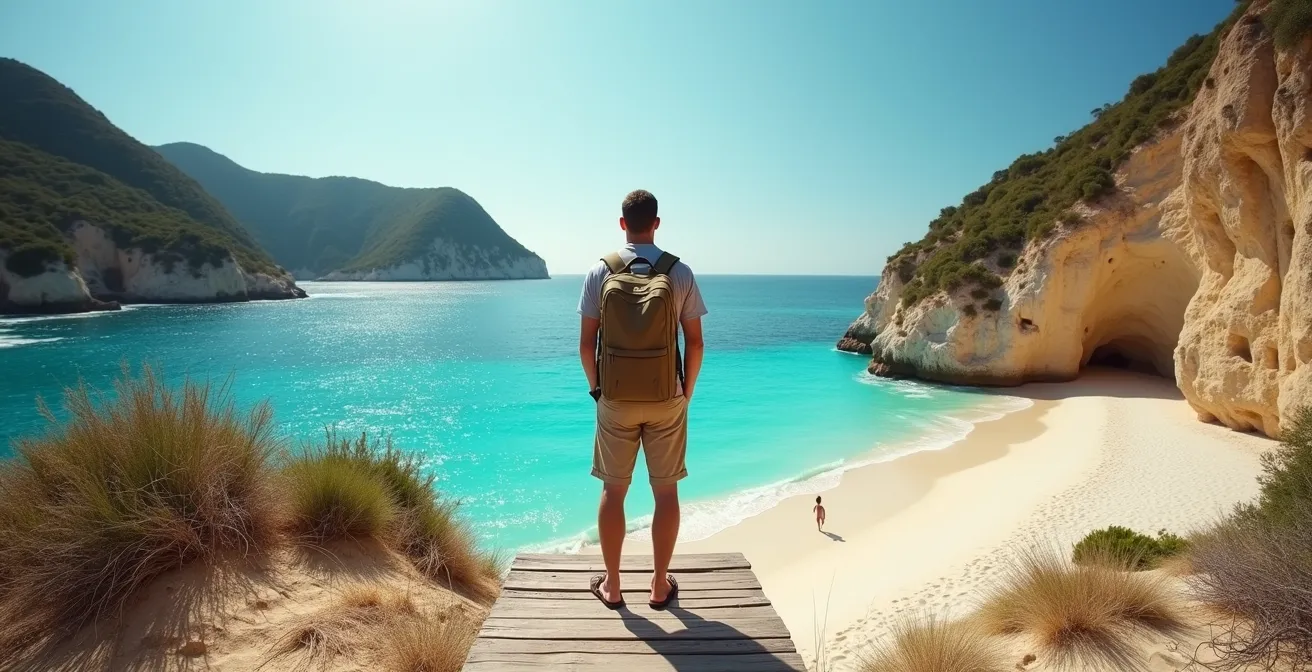
A 5-star trip isn’t about having a 5-star budget; it’s about mastering the art of “value arbitrage” in travel.
- Your money’s power changes dramatically based on where you travel (e.g., Southeast Asia vs. Europe) and when you travel (e.g., Santorini in October).
- True luxury comes from tailoring your trip—reallocating funds from overpriced basics (like a hotel room) to unique, high-value experiences (like a private tour or cooking class).
Recommendation: Stop chasing “cheap.” Start hunting for “experience density” to transform your next vacation from standard to spectacular.
Every traveler dreams of that perfect getaway: the five-star experience without the five-star price tag. We’re often told the solution is to simply travel in the off-season or pick a “cheap” country. While not wrong, this advice barely scratches the surface. It keeps us in a scarcity mindset, constantly asking “How can I save money?” instead of the more powerful question: “How can I get the most incredible experience for the money I have?”
The secret weapon of savvy travelers isn’t just finding discounts; it’s understanding the concept of value arbitrage. This is the art of identifying and exploiting the price differences for similar quality between different markets. In travel, this means finding places and times where your dollar stretches exponentially further, not just for basic lodging, but for the very experiences that define luxury: unique activities, incredible food, and unforgettable moments.
Forget the old rules that force a choice between budget and quality. This guide will reframe your approach entirely. We’ll move beyond just saving money and into the realm of maximizing experience density. You will learn to see destinations not as expensive or cheap, but as high- or low-value. The goal is to trade a crowded, costly week in a predictable hotspot for a month of abundance in a place that offers more than you ever thought your budget could afford.
This article will guide you through the core strategies of travel value arbitrage. We will explore how your money’s power can triple by choosing the right region, how to enjoy iconic destinations for half the price by picking the perfect month, and how to find emerging hotspots that offer world-class beauty without the crowds. Prepare to plan your travels not like a tourist, but like a seasoned travel hacker.
Summary: The Travel Hacker’s Guide to Unlocking Value
- Why Your Money Goes 3x Further in Southeast Asia Than in Europe?
- How to Visit Santorini in October for Half the Price?
- Albania vs Greece: Does the “Maldives of Europe” Live Up to the Hype?
- The Monsoon Mistake That Ruins Cheap Tropical Getaways
- When to Book: The “Goldilocks Window” for International Flights
- Murphy Bed vs Sofa Bed: Which One Maximizes Floor Space Without Sacrificing Sleep?
- Why a $50 Blazer Tailored to Your Body Looks Better Than a $500 One off the Rack?
- Finding the Bespoke Itinerary to Suit Wanderlust: How to Plan a Trip That Matches Your Personality Type?
Why Your Money Goes 3x Further in Southeast Asia Than in Europe?
The most fundamental travel hack is understanding Geographic Arbitrage: the massive difference in purchasing power between regions. A $150 daily budget in Paris might cover a basic hotel, a simple meal, and a metro pass. In Chiang Mai, Thailand, that same $150 can unlock a day filled with a guided temple tour, a 90-minute massage, a luxury hotel with a pool, multiple meals, and even a cooking class. This isn’t about being “cheap”; it’s about radically increasing your experience density.
The difference lies in what your money buys. In high-cost destinations, the bulk of your budget is consumed by non-negotiable basics like accommodation. In a high-value region like Southeast Asia, these basics are so affordable that the majority of your budget is freed up for experiences. This shift creates a powerful feeling of psychological wealth. Instead of constantly calculating expenses and saying “no” to opportunities, you find yourself in a mindset of abundance, saying “yes” to almost everything. This dramatically improves trip satisfaction.
Case Study: Sri Lanka’s Unbeatable Value Proposition
Sri Lanka perfectly exemplifies the Southeast Asian value equation. Travelers can find charming homestays for $8-15 per night, but more importantly, true luxury hotels are available for just $30-50. This leaves a huge portion of the budget for experiences that would be prohibitively expensive elsewhere. For example, a private jeep safari for two in a national park can cost as little as $75 total. The country packs diverse landscapes—from ancient temples and tea plantations to stunning beaches and wildlife parks—into a small area, offering a complete travel experience at a fraction of European prices.
This value disparity is starkly visible in accommodation costs. For instance, an average hotel in Santorini costs $152/night even in the off-season, while high-quality luxury accommodations in a destination like Sri Lanka can average just $30-50 per night. By choosing your continent wisely, you’re not just saving money; you’re trading a week of careful spending for a month of lavish experiences.
How to Visit Santorini in October for Half the Price?
Even the world’s most iconic and seemingly expensive destinations can be unlocked with Temporal Arbitrage—the art of timing your visit perfectly. Santorini in July is a battle against crowds and peak pricing. Santorini in October, however, is an entirely different world. It’s the “shoulder season” sweet spot, where the weather is still beautiful, the crowds have vanished, and prices have plummeted.
The numbers are compelling. According to comprehensive hotel pricing analysis, Santorini hotels average $284 per night in the summer but drop to around $152 per night in October. This 50% reduction in your biggest expense frees up hundreds of dollars for what truly makes Santorini special: catamaran cruises, wine tasting at cliffside vineyards, and leisurely dinners watching the sunset. You’re buying the same world-class view for half the price, with the added luxury of peace and quiet.

The key is to aim for the first half of October. As you can see in the breakdown below, this period offers the perfect balance. You get summer-like weather and fully operational services but with a fraction of the tourists. Waiting until the end of the month might save you a little more, but you risk cooler weather and service closures. It’s about finding that “Goldilocks” window where value and experience are both at their peak.
This table breaks down the strategic advantages of visiting Santorini during different weeks in October, showcasing the trade-offs between weather, crowds, and cost.
| October Period | Weather | Crowds | Prices | What’s Open |
|---|---|---|---|---|
| Week 1-2 (Oct 1-15) | 21-24°C, mostly sunny | Very light | 50-60% off peak | Everything operational |
| Week 3 (Oct 16-22) | 20-22°C, some clouds | Minimal | 60-70% off peak | Most restaurants/tours open |
| Week 4 (Oct 23-31) | 18-21°C, rain possible | Nearly empty | 70% off peak | Some closures begin |
Albania vs Greece: Does the “Maldives of Europe” Live Up to the Hype?
One of the most effective value-hacking strategies is identifying the “destination dupe”—an emerging location that offers a similar experience to a world-famous hotspot but without the crowds or inflated prices. The Albanian Riviera is a prime example, often hyped as the “Maldives of Europe” for its turquoise waters and stunning beaches, presenting a compelling alternative to its famous neighbor, Greece.
But does it live up to the hype for a traveler seeking a 5-star experience? The answer lies in what you value. Greece offers polished infrastructure and a well-oiled tourism machine. Albania offers raw, untouched beauty and a deep sense of authenticity that has become a luxury in itself. For a budget-conscious traveler, Albania is a clear winner, offering 5-star hotel experiences for around $100 a night, a price that would barely secure a basic room in Mykonos. This is destination arbitrage at its finest.
Lee Thompson, co-founder of the Flash Pack travel company, captured this sentiment perfectly in a statement to Newsweek about emerging destinations:
Albania is effectively the hidden-secret version of Greece or Croatia—stunning beaches, exceptional food and historic towns—but without the crowds or inflated prices.
– Lee Thompson, Flash Pack Travel Company co-founder
While Greece’s infrastructure is more developed, Albania’s rapidly improving roads and new hotels mean the gap is closing. For travelers who prioritize unique photos, authentic culture, and pristine nature over brand-name recognition, the Albanian Riviera not only lives up to the hype but exceeds it by delivering a sense of discovery that is increasingly rare.
| Category | Albania | Greece | Winner for Budget Luxury |
|---|---|---|---|
| Beach Quality | Pristine, less developed | World-famous, developed | Tie (preference-based) |
| Average Daily Cost | $25-40 | $80-150 | Albania |
| Infrastructure | Basic but improving | Excellent | Greece |
| Luxury Hotels | $100/night for 5-star | $300+/night | Albania |
| Authentic Experience | Very high | Tourism-heavy | Albania |
| Instagram Factor | Emerging hotspot | Oversaturated | Albania (uniqueness) |
The Monsoon Mistake That Ruins Cheap Tropical Getaways
Scoring a cheap flight to a tropical paradise during the “rainy season” can feel like a major win, but it can quickly turn into a trip-ruining mistake. The allure of low prices often blinds travelers to the reality of a monsoon: torrential downpours, flooding, and canceled boat tours. However, for a savvy travel hacker, the monsoon season isn’t a barrier; it’s an opportunity for risk arbitrage. The key is not to avoid the season, but to outsmart it.
Many travelers make the error of assuming a country’s monsoon season is uniform. In reality, weather patterns are often highly regional. A smart traveler can leverage this by employing a strategy of “monsoon arbitrage.” This means understanding a country’s microclimates to find the dry spots while everyone else is getting rained out.
Case Study: Thailand’s Dual Coast “Monsoon Arbitrage” Strategy
Thailand offers a perfect example of this play. From May to October, the Andaman Coast (home to Phuket and Krabi) is hit with heavy monsoons. However, during this same period, the Gulf Coast (home to Koh Samui and Koh Phangan) remains relatively sunny and dry. By simply choosing the opposite coast, travelers can enjoy a spectacular beach vacation at prices that are 40-50% lower than in peak season, all while avoiding the rain. This strategy allows you to benefit from low-season pricing without suffering the low-season weather.
Beyond choosing the right region, mitigating weather risk involves practical planning. This means preparing for the worst-case scenario so you can enjoy your trip without worry. From packing the right gear to knowing your insurance policy, a little preparation goes a long way in turning a potential disaster into a minor inconvenience.
Your Action Plan: Monsoon-Proofing Your Trip
- Location Savvy: Book hotels on higher ground or request upper-floor rooms to avoid potential ground-level flooding.
- Policy Check: Before booking, verify ferry and boat tour cancellation policies, ensuring you can get a full refund for weather-related issues.
- Gear Up: Pack quick-dry clothing, waterproof footwear, and essential dry bags to protect your electronics from humidity and rain.
- Insurance Audit: Confirm your travel insurance policy explicitly covers weather-related disruptions, trip delays, and cancellations.
- Microclimate Research: Investigate the ‘dry side’ of your destination; for example, Thailand’s Gulf Coast often stays dry when the Andaman Coast has monsoons.
When to Book: The “Goldilocks Window” for International Flights
Finding the flight is often the most expensive part of any trip, but applying arbitrage principles here can lead to massive savings. Most people know to book in advance, but the real hack is identifying the “Goldilocks Window”—not too early, not too late. For international long-haul flights, this sweet spot is typically 3 to 6 months before your travel date. This is when airlines have released their fare buckets, but demand hasn’t yet peaked.
Another powerful strategy is using positioning flights. Instead of searching for a direct flight from your home to your final destination, search for the cheapest flight to a major international hub in that region (like London, Amsterdam, or Singapore). From there, book a separate, short-haul flight on a local budget carrier to your final stop. For example, recent flight pricing analysis shows round-trip flights from NYC to Santorini average $800, but by booking a main flight to a hub like London and a separate budget flight to the island, travelers can often save 30-40%.

This kind of strategic planning turns the booking process into a game where you are actively creating value. It requires more effort than a simple point-to-point search, but the savings can be substantial, often freeing up enough money to upgrade your entire trip’s experience level. Combine this with other advanced tactics to stack your savings.
- Fly on Tuesdays/Wednesdays: These are consistently the cheapest days for long-haul travel as fare buckets are often reset.
- Use Price Alerts: Set up alerts on Google Flights and Hopper as soon as you know your destination and dates (at least 6 months out).
- Check Error Fares: Monitor communities like Secret Flying daily. Airlines sometimes publish mistake fares that offer incredible discounts if you act fast.
- Book Regional Flights Separately: For budget carrier flights within a region, book them much closer to your travel date, typically 4-6 weeks out, to catch the best sales.
Murphy Bed vs Sofa Bed: Which One Maximizes Floor Space Without Sacrificing Sleep?
This question isn’t just about furniture; it’s a travel philosophy. The Murphy bed is the ultimate symbol of smart design: it transforms a small space into a fully functional one, offering maximum utility with a minimal footprint. In travel, a “Murphy Bed Destination” is a compact country or region that unfolds to reveal a surprising diversity of world-class experiences, all within easy reach.
This approach is the antidote to the exhausting “one country, ten cities” itinerary. Instead of wasting time and money on constant transit, you base yourself in a strategic location and “fold out” to different adventures each day. This maximizes both the variety of your experiences and your relaxation, giving you the feeling of a multi-destination trip without the logistical nightmare.
Case Study: Slovenia as the Perfect “Murphy Bed Destination”
Slovenia, a country roughly the size of New Jersey, perfectly embodies this travel concept. From its charming capital, Ljubljana, you can drive to the Julian Alps for mountain hiking, the Mediterranean coast for a swim, the surreal Postojna Caves for exploration, and rolling wine regions for tastings—all in under two hours. Like a Murphy bed, Slovenia packs the complete European experience (mountains, beaches, vibrant culture, and incredible cuisine) into a tiny, efficient package. You can base yourself in one spot and enjoy a dozen different types of vacations, maximizing value and minimizing travel fatigue.
Choosing a “Murphy Bed Destination” is a form of efficiency arbitrage. You are getting the experiential return of a grand tour of Europe for the logistical cost and effort of a single-city stay. It’s about being smarter with your time and energy, which are just as valuable as your money on any trip. It allows for a deeper connection to a place while still satisfying the wanderlust for variety.
Why a $50 Blazer Tailored to Your Body Looks Better Than a $500 One off the Rack?
The answer is fit. A garment that is perfectly customized to you will always look more luxurious than an expensive but generic one. This principle is the secret to transforming a budget trip into a luxury experience. Instead of spending your entire budget on a “five-star” hotel (the $500 off-the-rack blazer), you can book basic, clean accommodation and use the money you save to “tailor” your trip with bespoke experiences that feel truly personal and luxurious.
This is the concept of personal value arbitrage. What feels like luxury is subjective. For some, it’s a private cooking class with a local chef. For others, it’s a private transfer from the airport instead of a crowded bus, or a deep-tissue massage every other day. By reallocating funds from the big-ticket items that don’t bring you personal joy, you can sprinkle your trip with affordable luxuries that have a disproportionate impact on your overall experience.
Destinations in Central and Eastern Europe are perfect for this strategy. For example, travel cost comparisons reveal that Budapest offers world-class thermal baths, Michelin-worthy meals, and stunning boutique hotels for up to 60% less than nearby Vienna or Prague. The low cost of these high-value experiences means you can afford to “tailor” your itinerary extensively.
Here’s how to start thinking like a trip tailor:
- Splurge on Experiences, Save on Basics: Book a simple, well-located apartment, then use the savings to hire a local guide for a personalized half-day tour through a service like Withlocals.
- Leverage Local Intel: Join destination-specific Facebook groups for expats and long-term travelers two months before your trip. You’ll get insider tips on the best restaurants and activities that aren’t in the guidebooks.
- Reallocate the Hotel Budget: Calculate the difference between a standard hotel and a luxury one. Then, make a list of smaller luxuries (e.g., massages, private transfers, craft cocktail bars) you could buy with that difference. More often than not, the list of small luxuries provides far more value and enjoyment.
Key Takeaways
- True travel value is not about spending less, but about getting disproportionately more experience for your money (Experience Density).
- Mastering arbitrage is key: Geographic (where), Temporal (when), and Personal (how you spend) are the three pillars of value hacking.
- Emerging destinations like Albania and compact “Murphy Bed” countries like Slovenia offer the luxury of authenticity and variety without the high cost and crowds of traditional hotspots.
Finding the Bespoke Itinerary to Suit Wanderlust: How to Plan a Trip That Matches Your Personality Type?
The ultimate form of luxury travel is a trip that feels like it was designed just for you. After mastering the principles of geographic, temporal, and personal value arbitrage, the final step is to synthesize them into a bespoke itinerary that perfectly matches your unique travel personality. A trip that delights an “Adventurer” might bore a “Scholar,” and a “Rejuvenator” would feel stressed by an itinerary packed with museums and ruins.
Understanding your traveler archetype is crucial. Are you seeking knowledge, thrills, relaxation, or connoisseur-level food and wine? Answering this question honestly prevents you from booking a trip based on Instagram hype rather than genuine interest. A crowded, famous destination might be the “wrong” choice if it doesn’t align with your core desires, no matter how popular it is.
This means consciously choosing an underrated destination that better serves your personality type. For instance, a history-loving Scholar might find the extensive, crowd-free Roman ruins in Plovdiv, Bulgaria far more rewarding than fighting through the masses in Rome. Similarly, a Rejuvenator seeking pristine, empty beaches will find more bliss in Flores, Indonesia, than in overcrowded Bali.
| Traveler Type | Skip This | Choose This Instead | Why It Works |
|---|---|---|---|
| The Scholar | Rome (crowded) | Plovdiv, Bulgaria | Extensive Roman ruins without crowds |
| The Adventurer | Nepal Everest Base | Pamir Highway, Kyrgyzstan | Remote mountains, authentic nomadic culture |
| The Connoisseur | French Riviera | Alentejo, Portugal | Wine, cuisine, luxury at half the price |
| The Rejuvenator | Bali | Flores/Sulawesi, Indonesia | Pristine beaches, no crowds, authentic |
Planning a bespoke trip involves creating your own metrics for success. Define what a “5-star” day looks like for you. Is it measured in books read by the pool, new foods tried, or mountains climbed? By creating a personal satisfaction worksheet, you can rate potential destinations against your own priorities, ensuring the place you choose is a perfect fit for what you truly want out of a vacation.
By combining these strategies—choosing high-value regions, timing your visit perfectly, tailoring your expenses, and aligning it all with your personality—you move beyond being a simple tourist. You become the architect of your own perfect, high-value travel experiences.