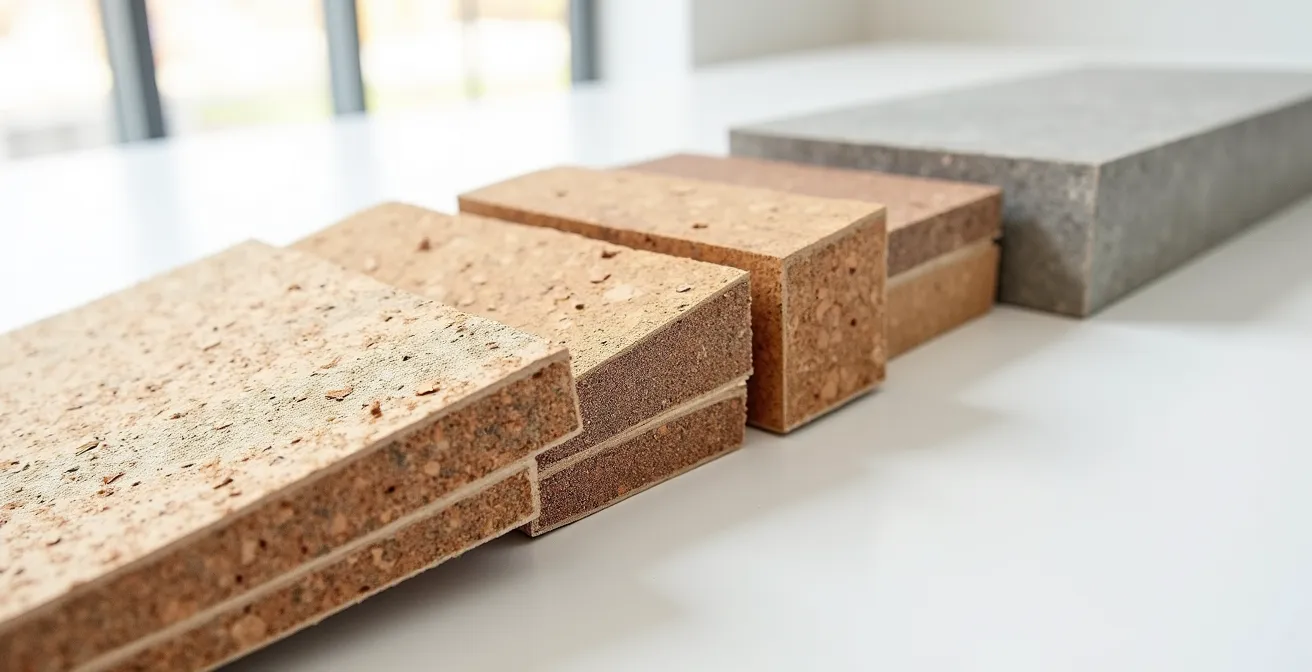
The most sustainable flooring isn’t the one with the “greenest” label, but the one you never have to replace.
- “Recyclable” often means the material is downcycled into a lower-quality, non-recyclable product, creating a new waste problem.
- Durability, repairability, and low indoor air pollution are more impactful measures of sustainability than recyclability alone.
Recommendation: Prioritize materials with a proven long lifespan and low lifecycle impact, such as strand-woven bamboo, high-density cork, or properly refinished solid wood.
For an eco-conscious family, renovating a kitchen or hallway presents a tough challenge. You want a floor that stands up to the daily chaos of pets, kids, and constant foot traffic, but you also want to make a choice that’s kind to the planet. The market is flooded with options labeled “green,” “eco-friendly,” or “sustainable,” often highlighting materials like bamboo, cork, or reclaimed wood. While these are good starting points, they only tell part of the story.
The conventional approach focuses on a material’s origin or its potential for recycling. However, this narrow view can be misleading. A truly sustainable choice requires a deeper analysis, one that considers the entire lifecycle of the material—from the energy used in its creation to the quality of your home’s air and its potential for renewal decades from now. What if the key to sustainable flooring wasn’t just about choosing a “green” material, but about adopting a strategic system that prioritizes long-term durability as the ultimate form of environmental responsibility?
This guide moves beyond surface-level labels to provide an expert framework for making your decision. We will explore the hidden pitfalls of “recyclable” materials, compare leading sustainable options based on real-world performance, and uncover the critical factors—like indoor air quality and refinishing potential—that define a truly durable and ethical flooring choice. By the end, you will have the confidence to select a floor that is not only beautiful and resilient but also genuinely aligned with your values.
This article provides a comprehensive overview to guide your selection process. Below is a summary of the key topics we will cover to help you navigate your sustainable renovation journey.
Summary: A Strategic Guide to Choosing Long-Lasting Eco-Flooring
- Why “Recyclable” Materials Are Not Always the Most Eco-Friendly Choice?
- How to Find and Treat Reclaimed Wood for Custom Furniture Projects?
- Bamboo vs Cork: Which Sustainable Floor Is Better for Pet Owners?
- The VOC Danger Lurking in Standard Paints and How to Avoid It
- When to Refinish Instead of Replace: Extending the Life of Sustainable Features
- How to Retrofit Insulation During a Renovation for Maximum ROI?
- Compostable vs Biodegradable: Which Plastic Alternative Actually Breaks Down?
- Waste Reduction and Circular Economy: How to Turn Household Trash into Savings?
Why “Recyclable” Materials Are Not Always the Most Eco-Friendly Choice?
The “recyclable” label is one of the most common yet misunderstood terms in sustainable design. While it evokes a positive image of a closed-loop system, the reality is often far less ideal. The primary issue is the concept of downcycling, where a material is reprocessed into a product of lower quality and functionality. This is particularly prevalent in the construction industry. For example, PET plastic bottles are rarely turned back into new bottles; instead, they might become polyester fibers for carpets, which are typically not recyclable at the end of their life.
This process doesn’t eliminate waste; it merely delays its journey to the landfill. A significant amount of energy is consumed during recycling, and the resulting product often loses the durability of the original. In fact, research from 2023 demonstrates that 75% of recovered construction and demolition waste is downcycled, not truly recycled into equivalent products. This highlights a critical flaw in prioritizing recyclability over other sustainability metrics.
A more effective approach is to evaluate a material’s potential for closed-loop recycling—the ability to be remade into the same product without loss of quality. More importantly, we must weigh this against its inherent durability and repairability. A floor that lasts 50 years and can be refinished multiple times has a far smaller environmental footprint than a “recyclable” floor that needs replacement every decade. The most sustainable action is often to reduce the need for replacement altogether.
How to Find and Treat Reclaimed Wood for Custom Furniture Projects?
While the title mentions furniture, the principles for sourcing and treating reclaimed wood are directly applicable—and highly valuable—for creating a unique and deeply sustainable floor. Reclaimed wood embodies the pinnacle of circular thinking: it gives a high-quality, historical material a second life, preventing it from becoming waste while adding unparalleled character to your home. Its material integrity comes from being harvested from old-growth forests, making it denser and more stable than most new lumber.
Finding quality reclaimed wood requires a bit of detective work, but the results are well worth the effort. The goal is to find timber that has been preserved in a stable environment. Here are the key steps to sourcing and preparing it for your home:
- Source from reliable origins: Look for wood from old warehouses, boxcars, coal mines, school gymnasiums, and historic barns. These structures often contain long, straight boards.
- Consider submerged logs: Logs lost during old river logging operations can be perfectly preserved underwater and offer incredible grain patterns.
- Salvage from demolitions: Parquet flooring from buildings undergoing demolition can be over 100 years old and of exceptional quality.
- Acclimatize the wood: Before milling or installation, the wood must sit in your home for several weeks to adjust to its specific humidity level, preventing future warping.
- Test for contaminants: Always use professional testing kits to check for lead paint and other chemical treatments that were common in the past.
- Treat it safely: If pest control is needed, opt for eco-friendly treatments like heat or borate solutions that don’t compromise your indoor air quality.
This paragraph introduces the beautiful character of reclaimed wood. To truly appreciate its unique aesthetic, the image below showcases the deep textures and history embedded in every piece.
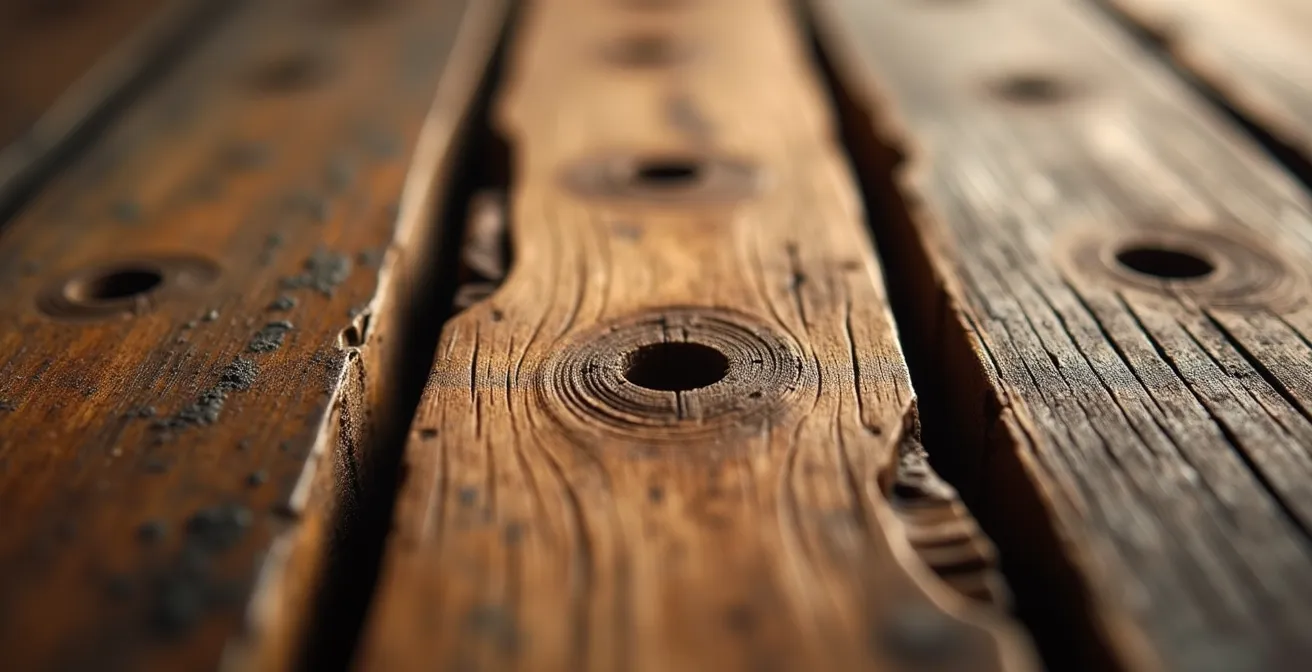
As the image reveals, each plank tells a story through its nail holes, color variations, and weathered grain. By choosing reclaimed wood, you are not just installing a floor; you are preserving a piece of history and making a powerful statement about conscious consumption.
Bamboo vs Cork: Which Sustainable Floor Is Better for Pet Owners?
When it comes to sustainable flooring for a home with pets, bamboo and cork are two of the strongest contenders. Both are rapidly renewable resources, but they offer very different benefits and drawbacks, especially when faced with the challenges of claws, spills, and the need for good traction. The best choice depends on balancing durability with your pet’s comfort and safety.
Strand-woven bamboo is an engineering marvel. It’s created by shredding bamboo stalks, mixing them with a resin, and compressing them under intense pressure. The result is a flooring material that is exceptionally hard—often two to three times harder than oak—making it highly resistant to scratches from pet claws. However, this hardness can make it slippery for pets, and its acoustic properties are minimal. It’s a fantastic choice for durability in high-traffic zones like hallways.
High-density cork, on the other hand, prioritizes comfort and health. Harvested from the bark of cork oak trees without harming the tree, it is a truly regenerative material. Its natural cellular structure is filled with air, making it an excellent acoustic and thermal insulator—it’s quiet and warm underfoot. For pets, it offers better grip and its natural elasticity provides some “give,” which is easier on their joints. While not as hard as bamboo, its surface has self-healing properties for minor scratches, and its antimicrobial nature helps resist mold and mildew from spills.
The following table provides a direct comparison to help you make an informed decision based on the specific needs of your family and pets, based on a detailed analysis of eco-friendly flooring options.
| Criteria | Strand-Woven Bamboo | High-Density Cork |
|---|---|---|
| Scratch Resistance (Claws) | 13% harder than maple, 27% harder than red oak | Self-healing properties for minor scratches |
| Impact Resistance | Excellent – extremely durable | Good – natural elasticity absorbs impacts |
| Moisture Resistance | Naturally water-resistant | Antimicrobial properties, requires sealing |
| Traction for Pets | Can be slippery when polished | Better grip due to natural texture |
| Sound Dampening | Minimal noise reduction | Excellent acoustic insulation |
| Thermal Comfort | Cool to touch | Warm underfoot year-round |
| Repairability | Requires professional refinishing | Patch repairs possible with tiles |
The VOC Danger Lurking in Standard Paints and How to Avoid It
Choosing a sustainable floor is only half the battle for a healthy home; the finishes you use on your walls, trim, and even the floor itself are just as important. Standard paints and sealants are a primary source of Volatile Organic Compounds (VOCs), chemicals that evaporate at room temperature and can cause a range of health issues, from headaches and dizziness to long-term respiratory problems. For a family, protecting indoor air quality (IAQ) is non-negotiable.
The danger is most acute during and immediately after application. According to EPA research that reveals VOC levels can be 1,000 times higher than outdoor levels during activities like paint stripping, and can remain elevated for months. This off-gassing poses a significant risk, especially to children and pets. This has led to the rise of “Low-VOC” and “Zero-VOC” paints, but these labels can be deceptive. As OSCEA Environmental Research notes in its analysis:
Zero VOC does not necessarily mean zero emissions or even zero VOC. Any VOC that doesn’t cause smog doesn’t count as a VOC and is allowed in products marketed as Zero. This means even zero VOC paint could contain formaldehyde, ammonia, acetone, odor masking agents, and other harmful chemicals.
– OSCEA Environmental Research, Analysis of VOC-Free Paint Marketing Claims
This highlights the need to look beyond marketing claims and toward third-party certifications and natural alternatives. To ensure you’re creating a truly healthy living space, you need a clear plan of action.
Your Action Plan: Selecting Truly Safe, Low-Impact Paints
- Verify certifications: Look for trusted labels like GreenSeal-11, which limits harmful chemicals beyond just VOCs, and GreenGuard GOLD, which certifies products for safe use in schools and healthcare facilities.
- Seek multiple certifications: No single label guarantees complete safety, so products with several certifications are generally a better bet.
- Choose natural alternatives: Consider time-tested options like milk paint for furniture, limewash for humid areas like bathrooms, or clay paint for a breathable wall finish.
- Ensure proper ventilation: Even with low-impact paints, ventilate rooms thoroughly during and after painting. Wait a minimum of 72 hours before sleeping in a newly painted room.
- Take extra precautions for sensitive spaces: For nurseries and children’s rooms, it’s wise to wait a full week before re-occupying the space, even when using the safest paints available.
When to Refinish Instead of Replace: Extending the Life of Sustainable Features
In the pursuit of sustainability, the most impactful choice is often not what you buy, but what you choose *not* to replace. If your home already has solid hardwood or high-quality engineered wood floors, refinishing them is almost always a more eco-friendly and cost-effective solution than tearing them out. Extending the life of an existing feature is a core principle of circular thinking, drastically reducing waste and the carbon footprint associated with manufacturing and transporting new materials.
Deciding whether to refinish or replace comes down to a simple diagnosis. The key is to assess whether the floor’s issues are cosmetic or structural. Scratches, fading, and surface wear can all be corrected, but deep gouges, rot, or widespread warping may signal that the floor’s structural integrity is compromised. A good rule of thumb is the “70% Rule”: if less than 70% of the floor’s surface is significantly worn, refinishing is a highly viable option. Solid wood floors can often be sanded and refinished many times over their lifespan.
The environmental benefits are staggering. Opting to refinish a wooden floor instead of replacing it can reduce its carbon footprint by over 75%. Furthermore, modern refinishing techniques offer an opportunity to upgrade the floor’s performance with advanced, low-VOC hardwax oils that can make it even more durable and water-resistant than it was originally.
The transformation from a worn, tired floor to a revitalized surface can be dramatic, breathing new life into a space while honoring the material’s inherent value.
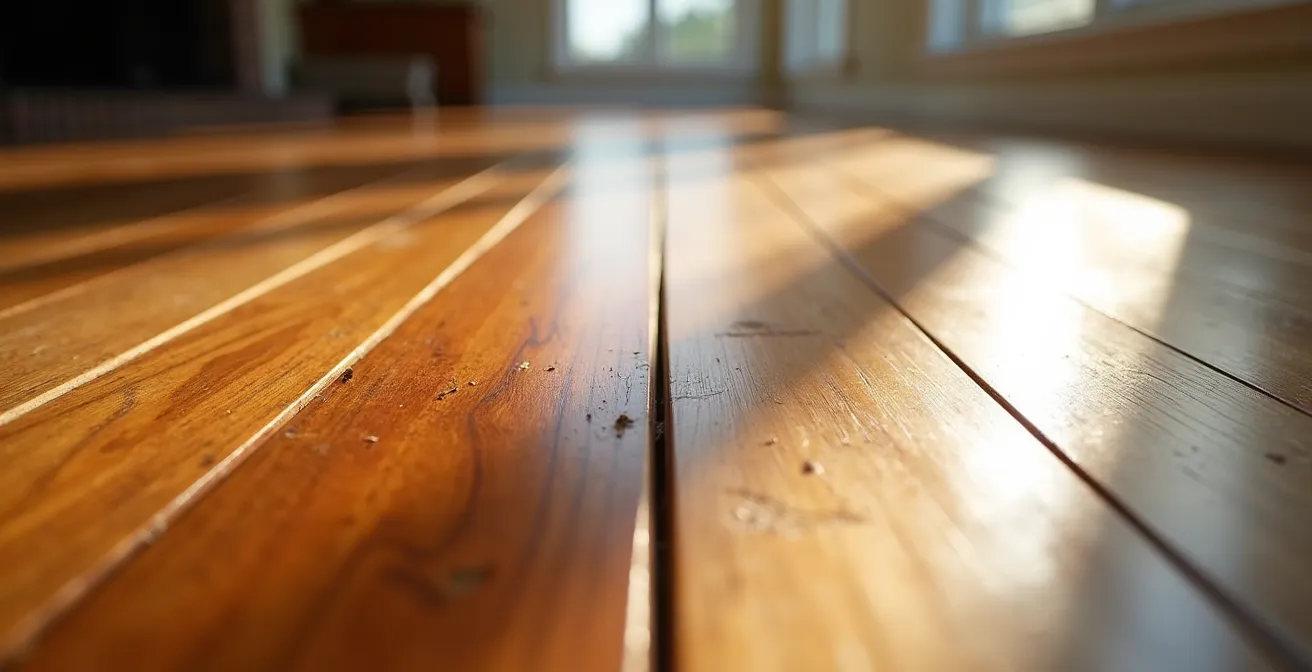
As this image illustrates, the character and beauty of the original wood are not lost but enhanced. Before defaulting to replacement, always evaluate the potential that lies just beneath the surface of your existing floors. It’s a choice that benefits your wallet and the planet.
How to Retrofit Insulation During a Renovation for Maximum ROI?
While you’re focused on the flooring, a major renovation—especially one that involves removing old floors or opening up walls—provides a golden opportunity to address one of the most critical aspects of a home’s energy efficiency: insulation. Upgrading insulation offers one of the highest returns on investment of any home improvement project, lowering energy bills for years to come. Thinking about the house as a complete thermal system is key.
When renovating, a prioritized approach ensures you get the most impact for your budget. The first priority is always air sealing. Use a blower door test or even a stick of incense on a windy day to find and seal gaps around windows, doors, and plumbing penetrations. This is the cheapest task with the highest immediate ROI. The second priority is the attic or roof, where the majority of heat is lost. Only then should you focus on walls, which are best insulated when the drywall is already being removed for other reasons.
Finally, address the floors and any crawlspace beneath them. This is especially relevant during a flooring renovation. Before installing your new sustainable floor, it’s the perfect time to add insulation between the floor joists. However, it’s crucial to address any moisture issues first to prevent mold and rot. For this application, moisture-resistant insulation materials are ideal. Options like cork board (R-value of ~3.6 per inch), which is naturally antimicrobial, or hempcrete (R-value of ~2.5 per inch), which offers excellent breathability, are fantastic sustainable choices that complement your eco-friendly flooring.
Compostable vs Biodegradable: Which Plastic Alternative Actually Breaks Down?
As you manage your renovation project, you’ll encounter a flood of packaging and materials, many labeled with confusing environmental terms. Understanding the difference between “biodegradable” and “compostable” is crucial, not just for sorting your project’s waste, but for internalizing the principles of a true circular economy. These terms are often used interchangeably, but they mean very different things.
Biodegradable is a vague and often unregulated term. It simply means that a material will break down into smaller pieces over time when exposed to microorganisms. It does not specify the timeframe (which could be hundreds of years) or the conditions required. Many “biodegradable” plastics break down into microplastics, which persist in the environment and cause significant harm. In essence, the term offers little to no verifiable environmental benefit.
Compostable, on the other hand, is a much more specific and meaningful standard. For a material to be certified compostable, it must break down into natural elements (water, carbon dioxide, and biomass) within a specific timeframe and under specific conditions, leaving no toxic residue behind. There are two main types of certification: industrial (requiring the high heat of a commercial facility) and home (able to break down in a backyard compost pile). When you see a “compostable” label, it represents a genuine end-of-life solution for a product.
For your renovation, this distinction matters. When choosing materials, look for companies that use certified compostable packaging. When disposing of old materials, recognize that an item simply labeled “biodegradable” should be treated as trash unless your local facility specifies otherwise. This critical lens helps you avoid contributing to the microplastic problem and supports a truly circular system where materials are returned safely to the earth.
Key Takeaways
- Lifecycle Over Labels: A material’s true sustainability is measured by its entire lifecycle impact, not just a single “eco-friendly” label.
- Durability is the Goal: The most sustainable floor is one that is highly durable and repairable, reducing the need for premature replacement.
- Health is Non-Negotiable: Prioritize materials and finishes with zero or low VOCs, verified by third-party certifications, to protect your family’s indoor air quality.
Waste Reduction and Circular Economy: How to Turn Household Trash into Savings?
The principles we’ve applied to selecting flooring—prioritizing durability, repairability, and a full lifecycle perspective—are the cornerstones of a circular economy. This mindset extends far beyond a single renovation project. By applying it to your entire household, you can dramatically reduce waste and unlock significant savings. The flooring industry provides both a cautionary tale and a model for success. For instance, a staggering five billion pounds of carpet are discarded in US landfills annually, a clear failure of linear “take-make-dispose” thinking.
However, innovative models are emerging. A compelling case study on a wood parquet manufacturer demonstrates the power of circularity. By implementing a take-back system, the company reclaims its floors after their initial service life, professionally refurbishes them, and sells them as new. This model not only achieves the same target profit but does so with a significantly lower environmental impact. It proves that what was once considered “waste” is actually a valuable resource.
Applying this at home starts with understanding what you throw away. A simple “waste audit”—sorting and weighing your trash for a week—can reveal your biggest waste streams, which are often food scraps and packaging. From there, you can implement targeted strategies: composting food scraps, choosing products with minimal or compostable packaging, and using local “Buy Nothing” groups to give items a second life. This shift in perspective transforms trash from a problem to be disposed of into an opportunity for resourcefulness and savings, fully aligning your home with the sustainable principles you’ve built into its very floors.
Your renovation is an opportunity to create a home that is not only resilient and beautiful but also a true reflection of your values. By prioritizing durability and adopting a lifecycle-first approach, you build a foundation for a healthier, more sustainable future. Begin your project with confidence by applying this strategic framework to every material choice you make.