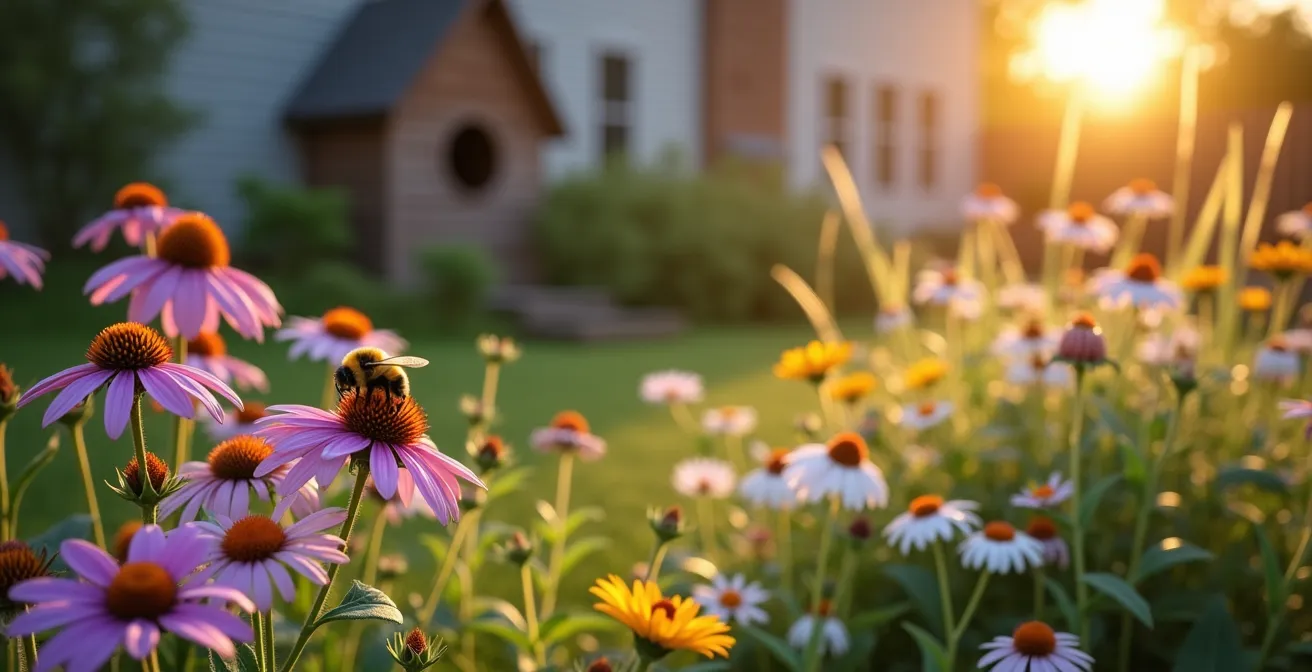
To truly support pollinators, you must shift from ‘decorating’ your garden with bee-friendly products to creating a complete, functional ecosystem.
- Your pristine lawn is a food desert, and common “natural” pesticides can be lethal to the very insects you want to attract.
- Effective support means providing year-round food with native plants, safe nesting sites like functional bee houses, and pesticide-free water sources.
Recommendation: Start by converting just a small patch of your lawn into a native wildflower meadow and observe the life that returns.
For the suburban homeowner with a passion for nature, the desire to help struggling bees and butterflies is strong. We buy “pollinator-friendly” plants, hang a bee hotel, and feel we’ve done our part. Yet, often, our gardens remain strangely quiet. The truth is, many well-intentioned efforts fall short because we approach the problem as gardeners, not as ecosystem builders. We add decorative elements to our landscape, but we fail to provide a truly functional habitat that offers food, shelter, and safety throughout the entire lifecycle of these crucial creatures.
The disconnect stems from a misunderstanding of what pollinators actually need. A perfect, green lawn is a monoculture desert. An imported, exotic flower might offer a sip of nectar but lacks the nutritional value of a native plant. And a poorly designed bee hotel can become a death trap, concentrating disease and parasites. Research by the Xerces Society reveals that over 90% of pollen samples from bee hives are contaminated with multiple pesticides, showing how pervasive these threats are even in seemingly safe spaces.
This guide offers a fundamental shift in perspective. It’s not about just adding a few items from a “bee-friendly” checklist. It’s about learning to see your yard through the eyes of a pollinator. It’s about understanding their needs for food, shelter, and raising their young. The goal is to stop managing a landscape and start stewarding a living, breathing ecosystem. By making small, strategic changes, you can transform your backyard from a silent patch of green into a bustling, biodiverse sanctuary that makes a real difference.
This article will guide you through the essential steps to effectively rewild your space. We’ll explore why your lawn is the first problem to tackle, how to build shelters that actually work, and how to plan a garden that provides a feast for pollinators from early spring through late fall.
Summary: How to Rewild Your Backyard for Pollinators
- Why Your Perfect Green Lawn Is a Desert for Bees?
- How to Construct a Solitary Bee House That Actually Works?
- Native Wildflowers vs Exotics: Which Plants Survive Drought Without Water?
- The “Natural” Pesticide Mistake That Kills Ladybugs and Butterflies
- How to Plan Your Garden for Year-Round Nectar Flow?
- How to Incorporate Plants into Your Decor to Lower Blood Pressure?
- Bamboo vs Cork: Which Sustainable Floor Is Better for Pet Owners?
- Protecting Endangered Fauna and Flora: How to Spot Ethical Wildlife Tours That Help Conservation?
Why Your Perfect Green Lawn Is a Desert for Bees?
That immaculate, weed-free stretch of green turf may be a point of pride in many neighborhoods, but from an ecological standpoint, it’s a disaster. For pollinators, a conventional lawn is the equivalent of a vast, barren desert. It offers virtually no food, no shelter, and no nesting opportunities. It’s a monoculture—a single plant species maintained by a constant input of resources like water and chemicals, providing nothing for the complex web of life that should be thriving in our yards.
In the United States, lawn is the single largest irrigated crop, covering more acreage than corn or soybeans. This vast expanse of green is not just empty of food; it’s often actively hostile. The herbicides used to kill dandelions and clover—two vital early-season food sources for bees—eliminate their food supply. The pesticides and fungicides we apply can be directly lethal to bees, butterflies, and the myriad other insects that form the base of the food chain. This chemical-dependent system creates a sterile environment where biodiversity cannot flourish.
Case Study: The Ecological Cost of Lawns
Ecologists now view the spread of the suburban lawn as a major crisis for biodiversity. Beyond the heavy use of water and chemical inputs, traditional lawn care relies on pollutant-spewing mowers. The simple act of converting even a portion of this lawn back to a naturalized space with native plants has been shown to dramatically increase the presence and diversity of all local creatures, from pollinators to songbirds. Each square foot of lawn replaced with native habitat becomes a functioning part of the local ecosystem.
The first, most impactful step in rewilding is to challenge the tyranny of the perfect lawn. This doesn’t mean you have to let your entire property run wild. It means strategically reclaiming portions of it for nature. Start by reducing the mowed area, creating “no-mow” zones, or replacing turf with a meadow of native wildflowers and grasses. By simply doing less, you immediately begin to create more habitat and offer a lifeline to local pollinators.
How to Construct a Solitary Bee House That Actually Works?
One of the most popular “save the bees” projects is the bee hotel. These bundles of tubes are meant to provide nesting sites for solitary bees like mason bees and leafcutter bees. Unfortunately, most commercially available bee hotels—especially those made from bamboo or with non-removable parts—can become ecological traps. They attract bees but concentrate predators, parasites, and diseases like chalkbrood, ultimately doing more harm than good. A functional bee house is not a “set it and forget it” garden ornament; it’s a managed system that requires proper design and annual maintenance.
The key to a successful bee house is emulating the natural nesting sites these bees would seek out: hollow stems or beetle-bored holes in wood. The house must be cleanable, dry, and made from the right materials. Use untreated wood for the structure and paper tube inserts or drilled wooden blocks. Variety in hole size is crucial; mason bees prefer holes around 8mm (5/16″), while leafcutter bees favor slightly smaller 6mm (1/4″) tunnels. All holes should be smooth inside, at least 15cm (6 inches) deep, and have a solid back—bees will not use a tunnel that is open at both ends.
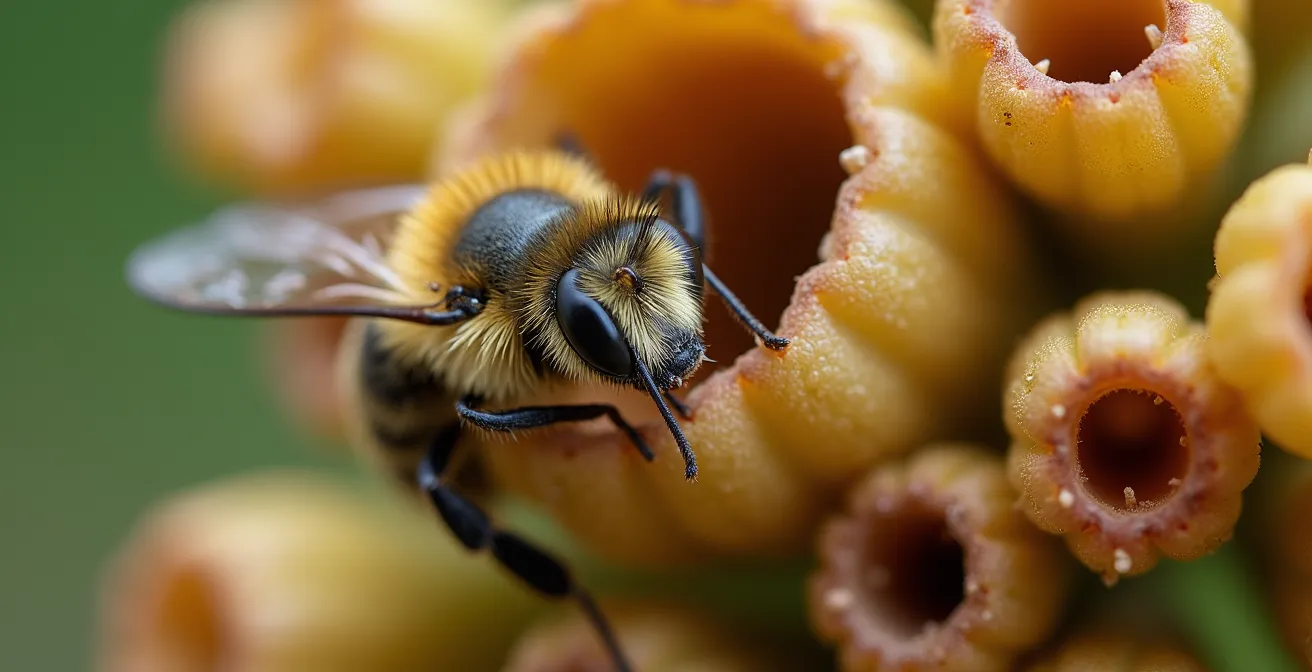
As the image above shows, a native bee’s ideal home is simple and natural. The most critical and often-overlooked step is annual maintenance. In the fall, after bees have completed their lifecycle and sealed their tubes with mud or leaves, the cocoons must be protected. During the winter, you need to carefully harvest the cocoons, clean them, and store them in a cool, dry place (like a garden shed) until spring. The old nesting tubes must be cleaned or, ideally, replaced to prevent the buildup of deadly pathogens. This mimics the natural cycle where old, rotting stems are constantly replaced by new ones.
Native Wildflowers vs Exotics: Which Plants Survive Drought Without Water?
Once you’ve provided shelter, the next critical element is food. But not all flowers are created equal. While a garden full of colorful exotic ornamentals might look beautiful, it can be the equivalent of a fast-food restaurant for pollinators—offering sugary, low-nutrition nectar and little else. Native plants, on the other hand, are a full-course meal. They co-evolved with local pollinators and offer the specific pollen and nectar chemistry these insects need to thrive and reproduce. They provide complete lifecycle support.
Native bees are especially adapted to native plants. In fact, some research shows that native solitary bees are two to three times more effective at pollinating than introduced honey bees, making them powerhouse contributors to your garden’s health. Furthermore, native plants are inherently more resilient. Once established, they are adapted to the local climate, soil conditions, and rainfall patterns, requiring far less water and maintenance than their exotic counterparts. They are the ultimate drought-tolerant choice for a sustainable garden.
The comparison is stark. A native wildflower meadow supports hundreds of insect species, which in turn feed local birds. A traditional lawn with a border of exotic flowers supports almost none. Choosing native means you are not just feeding bees; you are rebuilding an entire food web.
| Plant Type | Water Needs | Pollinator Support | Maintenance |
|---|---|---|---|
| Native Wildflowers | Low once established | Complete lifecycle support | Minimal |
| Exotic Ornamentals | High, regular watering | Nectar only, if accessible | High |
| Native Grasses | Drought-tolerant | Nesting sites for bumble bees | Annual cutting only |
| Lawn Grass | Very high | No support | Weekly mowing required |
The best approach is to research which wildflowers, shrubs, and grasses are native to your specific region. Local conservation authorities or native plant societies are excellent resources. By prioritizing these plants, you create a garden that is not only beautiful and low-maintenance but also a buzzing, thriving hub of biodiversity.
The “Natural” Pesticide Mistake That Kills Ladybugs and Butterflies
A core tenet of rewilding is to stop using pesticides. However, a dangerous misconception persists around “natural” or “organic” options. Many gardeners, trying to do the right thing, will reach for a product labeled as organic, assuming it’s safe for beneficial insects. This can be a fatal mistake. Many of these products are broad-spectrum, meaning they kill indiscriminately—wiping out the ladybugs, lacewings, and butterflies along with the aphids.
The Washington Department of Fish & Wildlife offers a stark warning about this common error:
Pyrethroids and neonicotinoids are insecticides that claim to be safe for mammals but can still be devastating for pollinators. These insecticides can end up in plant nectar and can kill pollinators, even if they were treated at the nursery or as seeds.
– Washington Department of Fish & Wildlife, Creating Pollinator Habitats Guide
The most insidious are systemic insecticides, particularly neonicotinoids (“neonics”). These chemicals are absorbed by the plant, making every part of it—leaves, pollen, and nectar—toxic to insects for weeks or even months. A plant purchased from a nursery may have been pre-treated, turning your “pollinator-friendly” purchase into a poison dispenser. The toxicity is astonishingly high; Iowa State University estimates that a single kernel of neonic-treated corn contains enough active ingredient to kill 80,000 bees. Always buy plants from trusted nurseries that guarantee their stock is neonicotinoid-free.
The permaculture approach is to create a balanced ecosystem where pests are controlled by natural predators. By planting a diverse range of native plants, you will attract beneficial insects that keep pest populations in check. If you must intervene, use targeted, non-persistent methods like a strong jet of water from a hose or insecticidal soap, applied at dusk when bees are not active. The goal is to foster a resilient system, not to sterilize it.
How to Plan Your Garden for Year-Round Nectar Flow?
A truly functional pollinator garden is more than just a collection of flowers; it’s a strategically planned cafeteria that is open for business from the first warm days of spring to the last mild days of autumn. This concept is known as bloom succession or creating a continuous nectar flow. Many pollinators, especially queen bumblebees emerging from hibernation, need food sources very early in the season. Likewise, migratory species like monarch butterflies need fuel late into the fall for their long journey.
Planning for year-round blooms requires thinking beyond the peak of summer. Your garden should include:
- Early Spring Bloomers: Native willows, maples, and fruit trees are some of the first and most important food sources. Spring ephemerals like Virginia bluebells and crocuses are also excellent.
- Mid-Summer Staples: This is the easiest period to plan for. Coneflowers, milkweed (essential for monarchs), bee balm, and mountain mint provide a massive amount of food.
- Late Season Powerhouses: Asters, goldenrods, and sedums are critical late-season resources that provide the final energy boost for overwintering or migrating insects. Don’t “clean up” your garden too early in the fall!
Furthermore, don’t forget about nocturnal pollinators. Moths, including the spectacular sphinx moth, are vital but often-overlooked pollinators. Planting a “moon garden” with night-blooming, fragrant white flowers like evening primrose, moonflower, or certain types of nicotiana can support this hidden world of nightlife.
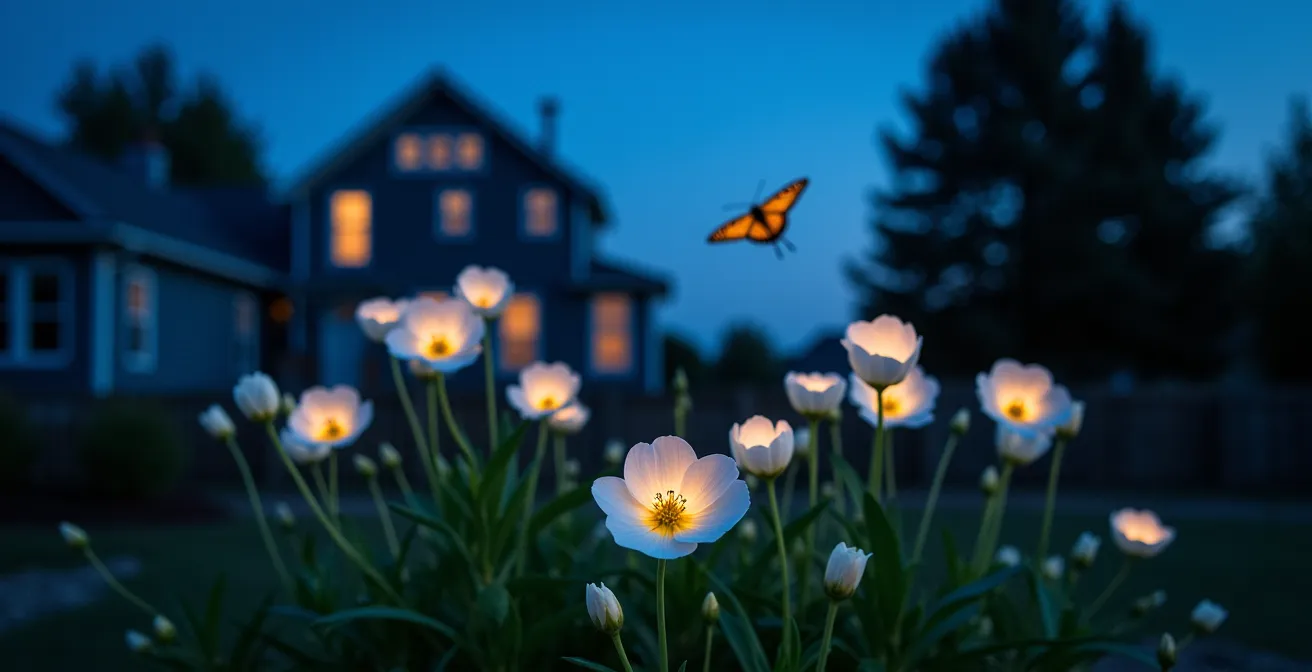
This strategic approach ensures there is always something on the menu. Research native plants in your area and their bloom times. By layering different species, you create a resilient, season-long buffet that will have your garden buzzing with activity for months on end. Focus on perennials to ensure your garden becomes more robust and established each year with minimal effort.
How to Incorporate Plants into Your Decor to Lower Blood Pressure?
While studies have shown that the presence of indoor plants can help reduce stress and lower blood pressure, the principles of rewilding invite us to think about “decor” in a more functional, ecological way. How can our decorative choices actively contribute to biodiversity? The answer lies in extending habitat to every available niche, including the most ornamental ones like window boxes and container gardens.
These small spaces are often overlooked, seen only for their aesthetic value. But when planted with the right native species, they become vital stepping stones for urban and suburban pollinators. A series of well-placed window boxes can form a pollinator corridor, allowing bees and butterflies to navigate a fragmented landscape of concrete and asphalt. A container of native milkweed on a sunny balcony can become a nursery for monarch caterpillars. Your decor becomes part of a larger ecological network.
Think of it as functional decoration. Instead of filling a pot with short-lived, water-guzzling annuals, plant a drought-tolerant native perennial like Lanceleaf Coreopsis or a compact variety of Switchgrass. These choices not only provide essential food and habitat but also connect your home aesthetically and functionally to the local environment. An ecogardening perspective suggests that if every home hosted just one or two native bee species in their yard or on their balcony, the collective impact on urban ecology would be immense.
This approach transforms a simple decorative act into a meaningful contribution to conservation. Your choice of plants for a hanging basket is no longer just about color and texture; it’s about providing a lifeline. The beauty you create serves a dual purpose, nourishing your own well-being and that of the local wildlife.
Bamboo vs Cork: Which Sustainable Floor Is Better for Pet Owners?
While choosing sustainable materials like bamboo or cork for your home’s interior is a commendable step, a truly holistic approach to eco-friendly living extends that same mindfulness to the world just outside your door. For pet owners, creating a backyard that is both a pollinator haven and a safe space for their furry companions can seem challenging, but it’s entirely achievable with a bit of planning.
The biggest point of conflict often revolves around the ground itself. Many people don’t realize that, according to Xerces Society data, an incredible 70% of native bee species are ground-nesters. These gentle, solitary bees dig tunnels in bare, undisturbed soil to lay their eggs. A yard that is entirely covered in thick turf or mulch eliminates this critical nesting habitat. At the same time, pets need space to run, and large areas of bare dirt can lead to muddy paws.
The solution lies in creating designated zones and embracing structural diversity. You can create pet-safe pathways using cedar mulch, which is naturally pest-resistant, while leaving other sections of the garden, particularly sunny, south-facing banks, as bare earth. Brush piles, fallen logs, and even stacked firewood provide essential overwintering and nesting sites for a huge variety of beneficial insects and are easily placed in corners of the yard away from pet play areas.
Your Action Plan: Creating Pet-Safe Pollinator Pathways
- Designate Zones: Map out your yard into active pet zones and quiet habitat zones. Use cedar mulch for pet pathways and play areas.
- Provide Bare Earth: Leave at least 30% of your garden bed edges as bare, un-mulched soil, especially in sunny spots, for ground-nesting bees.
- Build Habitat Piles: Create brush piles, log stacks, or rock piles in corners of your yard. These provide crucial shelter for bumblebees, beetles, and other wildlife.
- Offer Safe Water: Provide a shallow dish of water filled with pebbles or marbles. This gives pollinators a place to land and drink without the risk of drowning.
- Choose Pet-Safe Plants: When selecting native plants, cross-reference them with lists of plants that are non-toxic to dogs and cats to ensure a safe environment for everyone.
By thoughtfully designing your space, you don’t have to choose between your pet’s happiness and supporting biodiversity. You can create a rich, multi-layered habitat that works for everyone.
Key Takeaways
- Your lawn is a desert; replacing even a small part of it with native plants is the most impactful first step you can take.
- Most store-bought bee hotels are “ecological traps.” A functional one requires specific materials and annual cleaning to be safe for bees.
- Native plants provide complete lifecycle support and require less water, while “natural” pesticides can be just as deadly as synthetic ones.
Protecting Endangered Fauna and Flora: How to Spot Ethical Wildlife Tours That Help Conservation?
While thinking about global conservation efforts and ethical tourism is important, the most immediate and powerful action we can take to protect endangered fauna and flora begins right at our own doorstep. The decline of pollinators is not a distant problem happening in rainforests or faraway nature preserves; it is happening in our own neighborhoods. A sobering 2024 study in Nature Sustainability confirmed that many wild bee species face major declines, with common pesticides being a primary driver of this loss.
Your backyard, no matter its size, is a frontline in this conservation battle. By transforming it from a sterile green carpet into a living habitat, you are creating a crucial refuge in a fragmented landscape. You are actively rebuilding a small piece of the ecosystem that has been lost to development and agriculture. This local action has a global impact. A network of rewilded backyards creates corridors for wildlife, strengthens the resilience of local pollinator populations, and contributes to greater biodiversity on a landscape scale.
This philosophy of personal stewardship is the very heart of the rewilding movement. As the experts at Today’s Homeowner put it:
Rewilding transforms outdoor spaces into havens for local wildlife while providing a more sustainable and low-maintenance alternative to traditional gardening. By providing a haven for valuable species, you contribute to the preservation of local biodiversity.
– Today’s Homeowner, How to Rewild Your Lawn and Property Guide
The shift from gardener to steward is profound. It’s a move away from imposing our will on the land and a move towards a partnership with nature. It’s about celebrating the “messiness” of life—a fallen log, a patch of bare earth, a plant nibbled by a caterpillar—and understanding it as a sign of a healthy, functioning ecosystem.
You have the power to turn your property into a force for ecological good. Start small, replace a patch of lawn, add a clump of native flowers, and watch. The life that returns will be the greatest reward and the motivation to do even more. Begin your rewilding journey today and become a vital part of the solution.