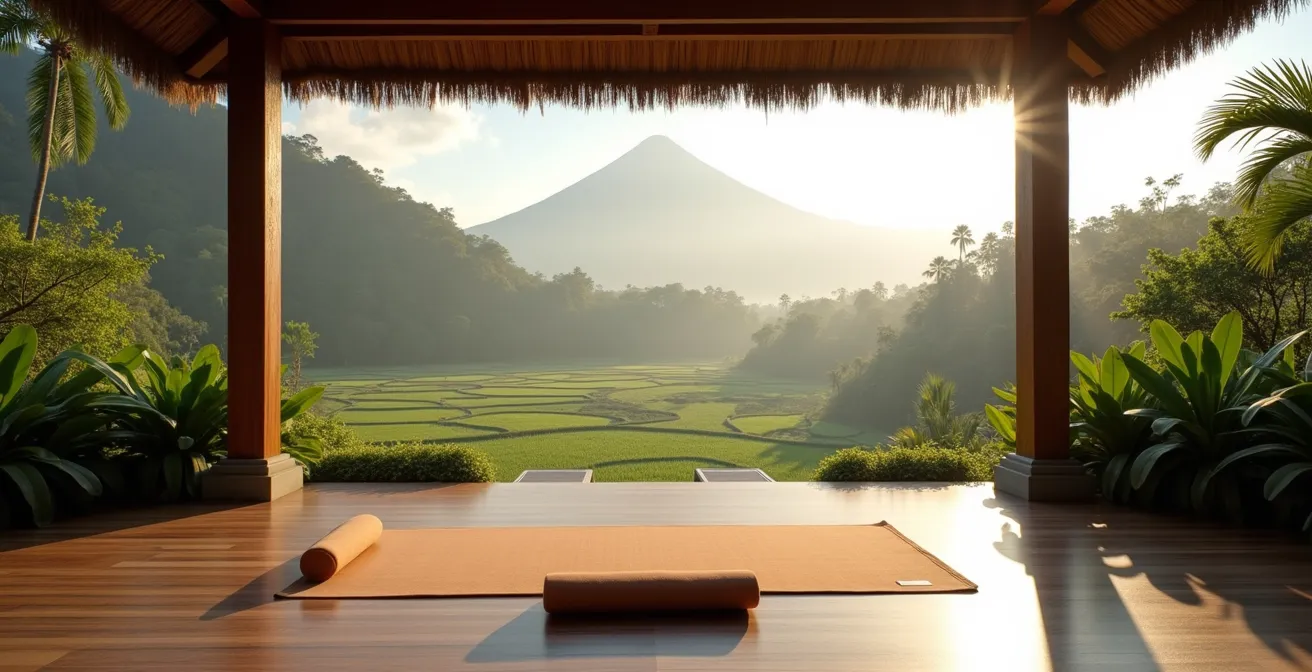
Choosing a Bali retreat based on Instagram photos is a recipe for disappointment; a true nervous system reset requires a clinical approach, not a picturesque one.
- The energetic signature of a location matters: Sidemen calms an over-activated system, while Canggu can help reactivate a frozen one.
- Vetting a “guru” is about verifying safety protocols and trauma-informed credentials, not just spiritual charisma.
- The “healthy” raw food diet can backfire; a gradual transition starting with cooked local dishes is essential to avoid “Bali Belly.”
Recommendation: Diagnose your nervous system’s current state (over-activated vs. shut-down) before you even look at a retreat, then use that as your primary filter for location, facilitator, and daily practices.
The feeling is familiar for so many of us. A deep, cellular exhaustion that no amount of sleep can fix. A constant, low-grade hum of anxiety. You’re burned out, and the call of Bali—with its promise of lush greenery, spiritual awakening, and deep healing—feels like the only answer. So you start scrolling. You see infinity pools bleeding into the jungle, vibrant smoothie bowls, and serene yogis in perfect poses. You book the prettiest, most popular retreat, hoping it will be the magic bullet.
But this is where the healing journey often goes wrong. The common advice—”go to Ubud,” “do yoga,” “eat raw”—is not just generic; it can be counterproductive for a genuinely dysregulated nervous system. The spiritual heart of Bali can be a vortex of traffic and tourism. A charismatic guru without proper training can do more harm than good. A sudden switch to raw, exotic foods can land you in a clinic, derailing your entire purpose for being here. The truth is that Bali is not a monolith, and healing isn’t a one-size-fits-all package.
What if the key wasn’t finding the most beautiful retreat, but the most precise one? This guide is built from years of on-the-ground experience in Bali’s wellness landscape. It bypasses the superficial to offer a clinical framework. We will treat your retreat choice not as a vacation, but as a targeted intervention for your nervous system. The real secret to a profound reset lies in understanding your own inner state and matching it to the specific energetic signature of a place, a guide, and a practice.
This article will guide you through this targeted selection process. We’ll explore how to find true silence, vet your teachers with precision, choose a location that matches your nervous system’s needs, navigate the practicalities of food and visas without stress, and finally, how to integrate the calm of Bali back into your life at home. This is your path to a reset that lasts.
Summary: How to Find a Genuinely Restorative Bali Retreat
- Why Ubud Is Crowded and Where to Find Real Silence?
- How to Verify a Guru’s Credentials Before Committing to a Month?
- Canggu vs Sidemen: Which Vibe Supports Deep Healing?
- The Raw Food Mistake That Sends 30% of Tourists to the Hospital
- How to Extend Your Visa on Arrival Without Spending a Day at Immigration?
- How to Incorporate Plants into Your Decor to Lower Blood Pressure?
- How to Carve Out a Silence Corner in a Busy Family Home?
- Building a Holistic Lifestyle: How to Increase Healthspan by 10 Years Through Daily Micro-Habits?
Why Ubud Is Crowded and Where to Find Real Silence?
The first image that comes to mind for a “Bali spiritual journey” is almost always Ubud. For decades, it has been the epicenter of wellness on the island. But that reputation has come at a cost. The central streets are now choked with traffic, the sounds of construction often drown out the gamelan music, and the sheer density of tourists can be a source of sensory overload—the very thing you’re trying to escape. For a nervous system already in a state of high alert, this environment can be more triggering than healing.
The goal is not just auditory quiet, but neurological silence. This is an environment with minimal social pressure and sensory input, where your system can finally down-regulate. This kind of silence is rarely found on the main streets of Ubud anymore. It has retreated to the island’s fringes and overlooked valleys. The key is to look beyond the famous names and seek out places where the pace of life remains tethered to the old ways of Bali.
Consider Sidemen Valley, located about 90 minutes from Ubud. Here, development is intentionally minimal. Accommodations are woven into the fabric of active rice fields, not clustered in tourist hubs. As one visitor noted, the area successfully preserves its tranquility, offering the “silence and stunning views” that facilitate a meditative state. This is a place where you can hear the birds and the flow of water, and the most significant view is the majestic Mount Agung. Other alternatives for the silence-seeker include:
- Munduk: Nestled in the northern highlands at nearly 4,000 feet, this area offers a cool climate, stunning waterfall hikes, and a profound sense of being enveloped by nature.
- Tejakula or Amed: For those who find the ocean calming, these northern and eastern coastal villages offer a world of difference from the southern beaches, with quiet snorkeling spots and a slow, local pace.
- Outer Ubud areas: If you are set on Ubud, look for accommodations in villages like Keliki or Payangan, far from the central hub, where you can still find the rice paddy views and quiet of old Ubud.
Choosing these locations is the first step in designing a retreat that prioritizes genuine rest over a busy itinerary. It’s about finding a place where your nervous system can finally exhale.
How to Verify a Guru’s Credentials Before Committing to a Month?
Once you’ve identified a tranquil location, the next critical step is choosing your guide. Bali is home to truly gifted healers, but it also attracts charismatic individuals who may lack the professional depth to handle the profound emotional and psychological processes that can surface during a retreat. A true guide’s role is not to entertain or impress, but to create a fiercely protected space for your healing. Committing to a month-long immersion is a significant investment of time, money, and emotional vulnerability. Vetting your facilitator is non-negotiable.
Move beyond testimonials and Instagram followers. Your inquiry should be clinical. Start by asking direct questions about their framework for safety. How do they handle strong emotional releases or projections within the group? A quality facilitator will have clear protocols and will speak about creating a “safe, focused environment” with explicit boundaries and professional supervision. They should be able to articulate how they manage group dynamics to ensure that one person’s process doesn’t disrupt another’s.
As the HUOMN Retreat Center states in its guidelines, a serious program is distinct from a casual vacation:
Our wellness program is a highly structured and immersive healing experience. This is not a casual retreat or holiday. It is designed for individuals who are ready to make real, lasting changes.
– HUOMN Retreat Center, 7-Day Neurogenic Reset Program Guidelines
This sentiment should be the standard. Look for facilitators with certifications in trauma-informed care, somatic experiencing, or other recognized therapeutic modalities, especially if you are working with deep-seated stress or trauma. Finally, ask if you can “test drive” the experience. Reputable centers often offer day passes or single workshops. This allows you to assess the teaching style, the energy of the group, and your own sense of safety before making a long-term commitment. Trust the signals from your body; if something feels off, it probably is.
Canggu vs Sidemen: Which Vibe Supports Deep Healing?
Choosing a location is not merely about finding a quiet spot. It’s about matching the “energetic signature” of a place to the specific state of your nervous system. A burned-out professional might be in a state of sympathetic activation (fight-or-flight, anxiety, restlessness) or in a dorsal vagal shutdown (frozen, disconnected, depressed). Each state requires a different environment to find balance. The stark contrast between Canggu and Sidemen illustrates this principle perfectly.
Canggu, with its vibrant surf scene, co-working spaces, bustling cafes, and social wellness events, has a high-energy, activating signature. For someone stuck in a “frozen” or disconnected dorsal vagal state, this social energy and physical activity can be a gentle catalyst for reconnection and expression. It provides external stimulation that can help pull them out of shutdown. However, for someone in a hyper-aroused, anxious state, Canggu’s constant buzz could be intensely overwhelming and counterproductive.
Sidemen, on the other hand, offers an energetic signature of deep calm and introspection. The environment is dominated by the vast, green tapestry of rice terraces and the grounding presence of Mount Agung. With minimal nightlife and social distraction, it is an ideal container for a nervous system in sympathetic overdrive. The neurological silence here allows the system to down-regulate, to feel safe, and to begin its restorative process. The expansive views can facilitate meditative states and a sense of perspective, as noted by visitors who find that the “fabulous views of Agung” are a core part of the healing.

This table helps clarify which location best serves different nervous system states, with Ubud’s outer areas offering a potential middle ground.
| Location | Best For | Nervous System State | Key Features |
|---|---|---|---|
| Canggu | Social connection, expression | Frozen/dorsal vagal needing activation | Beach access, co-working spaces, active wellness scene |
| Sidemen | Introspection, nature immersion | Overactivated/sympathetic needing calm | Rice terraces, Mount Agung views, minimal nightlife |
| Ubud (outer areas) | Balanced healing | Mixed states | Retreat centers, cultural activities, nature access |
Before you book, perform a self-assessment. Are you feeling agitated and overstimulated, or numb and withdrawn? Let the answer guide you not to the most popular town, but to the one whose very vibration supports the healing you need.
The Raw Food Mistake That Sends 30% of Tourists to the Hospital
The vision of a Bali wellness journey is often intertwined with images of vibrant, raw, plant-based cuisine. While the island’s tropical fruits and vegetables are incredible, a sudden and total switch to a raw food diet is one of the most common mistakes visitors make, often leading to the infamous “Bali Belly.” Your gut microbiome is accustomed to your home environment, and overwhelming it with unfamiliar bacteria—even “good” bacteria—can lead to severe gastrointestinal distress. In fact, between 30% and 70% of travelers may be affected by gastrointestinal illness, a statistic that can derail any healing intention.
The water used to wash raw vegetables is a primary culprit. While reputable retreats use filtered water, it’s a critical point to verify. A safer and more traditional approach is to acclimatize your digestive system gradually. The wisdom of Balinese cuisine itself offers the perfect solution: start with cooked foods. Warm, nourishing dishes like Jukut (a Balinese vegetable soup) or steamed vegetables are gentle on the stomach and allow your gut biome to adapt slowly.
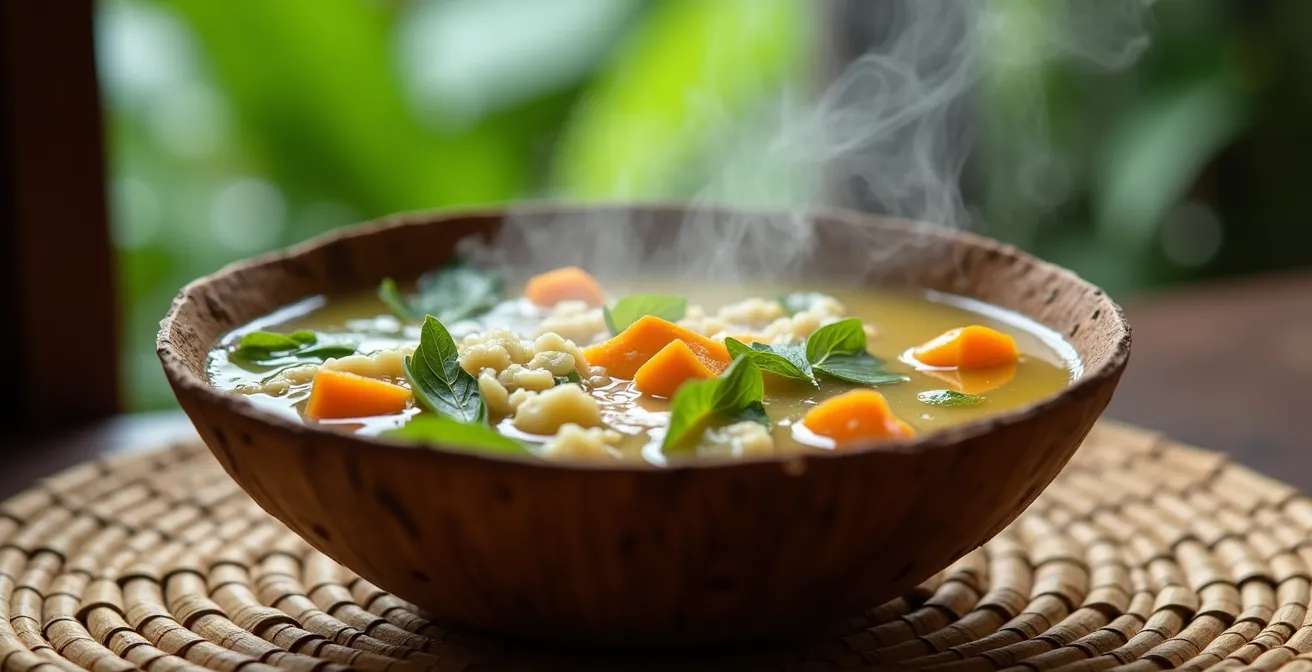
A smart food strategy is a cornerstone of a successful retreat. It ensures your body’s energy is devoted to nervous system regulation, not fighting off a digestive crisis. Before you commit to a retreat, inquire about their food philosophy and their options for those with sensitive digestion.
Your Action Plan: Safe Food Transition Protocol
- Week 1 Acclimatization: Start your stay with primarily cooked vegetables, warm soups like Jukut, and rice to allow your gut biome to adjust.
- Initial Food Choices: Strictly avoid raw salads and any uncooked vegetables that may have been washed in tap water during your first few days.
- Fruit Selection: Stick to fruits with thick, peelable skins that you peel yourself, such as bananas, mangoes, papayas, and oranges.
- Water Verification: Explicitly ask and confirm that the retreat kitchen uses filtered or bottled water for all food preparation, including washing produce and making ice.
- Gradual Introduction: After a week, if you feel well, you can begin to slowly introduce small amounts of high-quality fermented foods like local Brem (rice wine) or well-prepared Jamu (turmeric drink) to support gut health.
How to Extend Your Visa on Arrival Without Spending a Day at Immigration?
Deep healing doesn’t adhere to a 30-day timeline. Often, you’ll find that just as you’re beginning to unwind, your initial visa is nearing its expiration date. The thought of navigating Indonesian immigration—a process that can be time-consuming and stressful—is enough to pull anyone out of a zen state. Fortunately, extending your Visa on Arrival (VoA) for an additional 30 days can be a smooth, hands-off process if you plan correctly.
The key is to use a reputable visa agent. This is standard practice for most long-term visitors in Bali and is well worth the cost (typically around $50-60 USD). An agent handles the paperwork, submission, and scheduling, leaving you with only one required task: a brief visit to an immigration office for biometrics (fingerprints and a photo). The entire process removes the uncertainty and hours spent in waiting rooms. Here is a reliable timeline to follow:
- Day 20 (after arrival): Contact a licensed and well-reviewed visa agent. Ask other expats or your retreat center for recommendations.
- Day 25: The agent will arrange to collect your passport. Ensure you have digital and physical copies of your passport and visa before handing it over.
- Day 35-40: The agent will notify you of your scheduled biometrics appointment. These are usually quick and efficient.
- After Biometrics: The agent will collect your passport with the new extension and return it to you.
For those who feel their journey may extend beyond 60 days, it is wise to consider a different visa from the start. The Indonesia Digital Nomad Visa (B211A) is an excellent alternative. It allows for a 60-day stay initially and can be extended up to a total of 180 days without leaving the country. The application can often be completed online before you arrive, providing peace of mind and eliminating the need for mid-retreat visa runs. Planning your visa strategy in advance is a crucial act of self-care, ensuring that bureaucratic stress doesn’t disrupt your healing.
How to Incorporate Plants into Your Decor to Lower Blood Pressure?
The healing effects of a Bali retreat don’t have to end when you board the plane home. A powerful way to integrate the island’s calming essence into your daily life is through biophilia—our innate human connection to nature. The lush greenery of Bali is not just beautiful; it’s therapeutic. Research into what is known as the Biophilia Hypothesis shows that interacting with nature, even just by viewing plants, can measurably lower cortisol levels and blood pressure. The key is to consciously bring the patterns, scents, and life of the natural world into your personal space.
One of the most potent mechanisms at play is our brain’s response to natural fractal patterns. The repeating, self-similar patterns found in ferns, leaves, and flowers are signals of safety to our ancient nervous system. Viewing them can induce a state of relaxed awareness, similar to meditation. You can begin to re-create this effect at home by choosing specific plants, particularly those reminiscent of Bali’s flora.
Instead of randomly adding houseplants, be strategic. Create a small sanctuary that speaks to your senses and supports your nervous system. Here are some Balinese-inspired plants and how to use them for regulation:
- Areca Palms: Place these in main living areas. They are excellent air purifiers and their feathery fronds create soft, dappled light that mimics a forest canopy.
- Snake Plants: Ideal for the bedroom, as they are one of the few plants that release oxygen at night, improving air quality while you sleep.
- Frangipani (Plumeria): If your climate allows, place this near a window or meditation space. Its intoxicating scent is deeply linked to Balinese ceremony and can act as a powerful anchor for vagus nerve stimulation.
- Ferns: Position these at eye level where you often sit. The intricate fractal patterns of their leaves provide a perfect focal point for effortless stress reduction.
- Jasmine or Cempaka: The scent of these flowers is known to activate the parasympathetic “rest and digest” system. A small plant can fill a room with a calming aroma.
The goal is not to turn your home into a jungle, but to create intentional “pockets of nature” that serve as daily touchstones of calm, reminding your body of the peace you cultivated in Bali.
How to Carve Out a Silence Corner in a Busy Family Home?
Bringing the tranquility of a Balinese retreat back to a busy family home can feel impossible. The constant demands, noise, and activity are the antithesis of the “neurological silence” you worked so hard to cultivate. The solution is not to demand total silence from your household, but to create a small, sacred, and fiercely protected space for yourself—a “neurological cocoon.” This isn’t about aesthetics; it’s about creating a sensory deprivation zone where your nervous system can quickly reset, even in just 15 minutes.
Choose a low-traffic corner of your home. The physical space is less important than the consistency of its use and the boundaries around it. This corner becomes a predictable sanctuary. To make it effective, equip it with tools that specifically target sensory input reduction and deep pressure stimulation, which are known to calm an overstimulated system.
A powerful concept from Bali’s own Yoga Barn is the “temporal corner.” If you lack a dedicated physical space, you can create one in time. This involves scheduling specific, non-negotiable “silence hours” where a certain chair or area of a room becomes your quiet zone. The key is communicating these boundaries clearly and consistently, so your family understands that for this brief period, this space is sacred. Participants in such programs report that even 15 minutes in a temporally-defined quiet space can induce deep relaxation equivalent to much longer periods of solitude.
Action Plan: Creating Your Neurological Cocoon
- Sensory Input Reduction: Equip the space with high-quality noise-canceling headphones and a comfortable eye mask to block out auditory and visual stimulation.
- Deep Pressure Stimulation: Include a weighted blanket (around 15-20 pounds for an adult). The gentle, constant pressure signals safety to the body and helps release calming neurotransmitters.
- Threshold Ritual: Create a simple, 30-second ritual to signal the transition into your quiet time. This could be lighting a specific candle, applying an essential oil like lavender, or simply taking three deep, conscious breaths.
- Family Agreement: Set a timer for 15 minutes and establish a clear “Do Not Disturb” agreement with your family. This consistency is what builds the space’s power.
- Aromatic Anchor: Use a specific scent only in this corner, like frankincense or sandalwood in a diffuser. Over time, this scent will become a powerful neurological cue for your body to relax.
Key Takeaways
- A true wellness reset involves matching your nervous system’s state (over-activated vs. shut-down) to a location’s specific energetic signature.
- Vet facilitators based on their safety protocols and trauma-informed training, not just their charisma or popularity.
- Prioritize your digestive health by starting with cooked Balinese foods to prevent “Bali Belly” and allow your system to acclimatize.
Building a Holistic Lifestyle: How to Increase Healthspan by 10 Years Through Daily Micro-Habits?
The biggest risk after an incredible retreat is the “wellness crash”—the jarring return to your old life and habits, which can undo your progress within weeks. The ultimate goal of a Bali retreat is not to feel good for a month, but to use that time as a catalyst for building a lifestyle that promotes a longer healthspan—the years of your life lived in good health and vitality. The key is integration, not replication. As the post-retreat guidelines from the HUOMN program wisely state, “The goal is not to replicate Bali at home, but to integrate the feeling and the key learnings.”
Studies on retreat participants show a fascinating pattern. Those who implement a “tapering protocol” upon return maintain their wellness benefits three times longer than those who jump straight back into their full schedules. This involves creating buffer days between your return and work resumption, setting realistic expectations with loved ones about your re-engagement, and most importantly, focusing on one single micro-habit.
Don’t try to integrate everything at once. The pressure to maintain a two-hour morning routine of yoga, meditation, and journaling is a recipe for failure. Instead, identify the one keystone habit from your retreat that had the most profound impact on your sense of well-being. Was it five minutes of morning sun exposure? A specific breathing technique? The scent of a particular flower? Focus solely on embedding that single, simple habit into your daily life for the first 30 days. Only once it becomes automatic should you consider adding another.
Your Action Plan: Post-Retreat Integration
- Weeks 1-2 (The Keystone): Maintain your one keystone habit from the retreat. Do it every day, no matter how small it seems. This is your anchor.
- Weeks 3-4 (The Sensory Anchor): Add a sensory practice. Use the scent, sound, or taste from your retreat for a few moments each day to instantly trigger the relaxation response.
- Weeks 5-6 (Retreat Moments): Schedule two 15-minute “retreat moments” into your week, using your neurological cocoon and anchor techniques.
- Weeks 7-8 (The Second Habit): Only now, after your first habit is automatic, should you layer in a second micro-habit from your retreat experience.
- Track Consistency, Not Perfection: The goal is not to be perfect but to be consistent. If you miss a day, simply begin again the next. This compassionate approach is vital for long-term success.
This journey from burnout to balance is a conscious, deliberate process. It begins with choosing wisely in Bali and continues with integrating those lessons with compassion at home. To apply these principles effectively, the next logical step is to get a personalized assessment of which retreat style and location would best serve your unique needs.