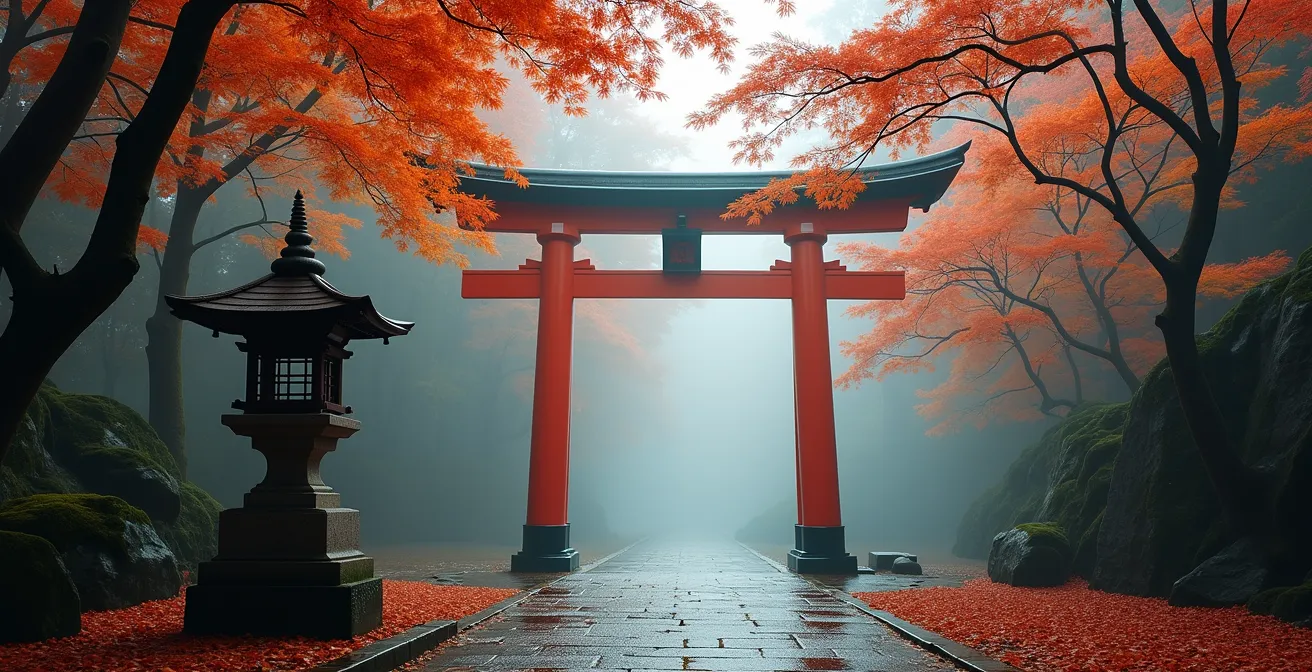
The fear of committing a cultural faux pas in Japan stems from not knowing the ‘why’ behind the rules; understanding the core principles of purity, respect, and harmony is the true solution.
- Rituals like hand washing are not about hygiene, but spiritual purification (kiyomeru) before entering a sacred space.
- Etiquette in public spaces is driven by the concept of not bothering others (meiwaku), which explains rules around phone use and bathing.
Recommendation: Approach each tradition not as a rule to be followed, but as a chance to participate in a silent conversation about respect that has been spoken for centuries.
The thought of visiting Japan fills the heart with images of serene temples, delicate cherry blossoms, and profound history. Yet for the polite traveler, this excitement is often shadowed by a quiet anxiety: the fear of unintentionally causing offense. You’ve heard the advice to “be quiet” or “bow,” but these instructions feel incomplete. They are the ‘what’ without the ‘why’, leaving you to mimic actions without understanding the deep cultural currents that guide them. This shallow understanding is the very source of the potential for a faux pas.
Many guides will offer lists of dos and don’ts, covering everything from chopstick placement to public bathing. While helpful, they often fail to connect these rules to the foundational pillars of Japanese society. The true key to respectful travel lies not in memorizing a hundred prohibitions, but in grasping a few core concepts. It’s about understanding the silent language of rituals, where every gesture is a word and every action tells a story of purity, gratitude, and communal harmony. It’s the difference between seeing a hand-washing fountain and recognizing a station for spiritual purification, or `kiyomeru`.
But what if the true path to respect wasn’t about avoiding mistakes, but about actively understanding the meaning behind the traditions? This guide abandons the simple checklist approach. Instead, it offers an interpretation of the cultural mindset that underpins Japanese etiquette. We will explore the spiritual logic that separates a shrine from a temple, the philosophy of hospitality that defines a ryokan, and the profound symbolism that can turn a simple meal into a statement of respect or a grave insult. By the end, you will not just know how to act; you will understand why, transforming your journey from a tourist’s visit into a pilgrim’s experience.
To help you navigate these rich cultural landscapes, this article is structured to answer the most pressing questions a respectful traveler might have. Each section decodes a specific aspect of Japanese tradition, providing both the practical steps and the cultural insight needed to engage with them authentically.
Summary: A Guide to Respectful Travel in Japan
- Why You Clap at Shrines but Bow at Temples?
- How to Navigate a Public Bathhouse Without Offending Locals?
- Ryokan vs Western Hotel: Is Sleeping on Tatami Worth the Back Pain?
- The Chopstick Error That Mimics a Funeral Rite
- How to Use Forecast Maps to Chase the Sakura Front Northward?
- UNESCO Site vs Hidden Gem: Which Offers a More Authentic Historical Experience?
- The Phone Etiquette Mistake That Enrages Actors and Audience Alike
- Discover Heritage and Learn Arts: How to Plan a Cultural Trip That Educates the Whole Family?
Why You Clap at Shrines but Bow at Temples?
One of the most common points of confusion for visitors is the distinction between a Shinto shrine and a Buddhist temple. They may seem similar, but their rituals are fundamentally different, and mixing them up is a frequent mistake. The key lies in understanding their purpose. A Shinto shrine is a gateway to the realm of the kami (gods or spirits), and the actions performed are meant to announce your presence and gain their attention. In contrast, a Buddhist temple is a place for quiet reflection and paying respects to the Buddha, where silence is the highest form of reverence.
At a Shinto shrine, the ritual is an active communication. After purifying yourself at the temizuya basin, you approach the main hall, bow twice deeply, and then clap your hands twice. This clap is not applause; it’s a signal to the kami. You then hold your hands together in prayer before finishing with one final, deep bow. This entire sequence is known as ‘nirei nihakushu ichirei’, or “two bows, two claps, one bow.” It’s a formula that demonstrates clear intent and respect.
At a Buddhist temple, the atmosphere is one of serene contemplation. There is no clapping. Instead, you approach the altar, place your hands together in the gassho position (palms together at chest level), and offer a silent prayer with a gentle bow. The act is internal and personal. Clapping here would be as disruptive as shouting in a library. This simple difference—clapping to be heard by a kami versus bowing in silent deference to the Buddha’s teachings—is the essence of navigating these sacred spaces correctly. As an official guide to Nara’s sites points out, observing these basic rules is a clear sign of respect for both the beliefs and the other worshippers around you.
Your Etiquette Audit Checklist: Shrine vs. Temple
- Hand Purification (Temizuya): First, rinse your left hand. Then, your right hand. Finally, pour water into your cupped left hand to rinse your mouth (do not drink from the ladle). Tip the ladle to wash the handle.
- Shrine Protocol (Shinto): Bow twice. Clap twice. Hold hands in prayer. Bow once more. This is the nirei nihakushu ichirei sequence.
- Temple Protocol (Buddhist): Place hands in gassho (palms together). Bow once gently. Offer a silent prayer. There is no clapping.
- Offering Incense (Temple): If incense (osenko) is available, light a stick, let the flame extinguish by waving your hand (do not blow it out), and place it in the large burner. Waft some smoke towards yourself for purification.
- Exiting: When leaving the grounds of either a shrine or temple, it is customary to turn and offer one final bow towards the main hall as a parting gesture of respect.
How to Navigate a Public Bathhouse Without Offending Locals?
The Japanese onsen (hot spring) or sento (public bath) is a cornerstone of the culture, a place for relaxation, community, and purification. For a visitor, however, it can be a source of intense anxiety. The fear of breaking an unwritten rule is palpable. The guiding principle here is twofold: absolute cleanliness before entering the bath and maintaining the serene, quiet atmosphere for others. This is a physical manifestation of the concept of kiyomeru (purification) and a social expression of avoiding meiwaku (bothering others).
Before you even touch the hot water of the main bath, the washing ritual is mandatory and meticulous. You will find a row of small stools, faucets, and buckets. This is your station. You must sit on the stool and thoroughly wash and rinse your entire body with soap. Only after you are completely free of soap suds are you permitted to enter the shared bath. The small towel provided is for washing and modesty when walking around; it must never enter the bathwater. Most people place it on their head or on the side of the tub.
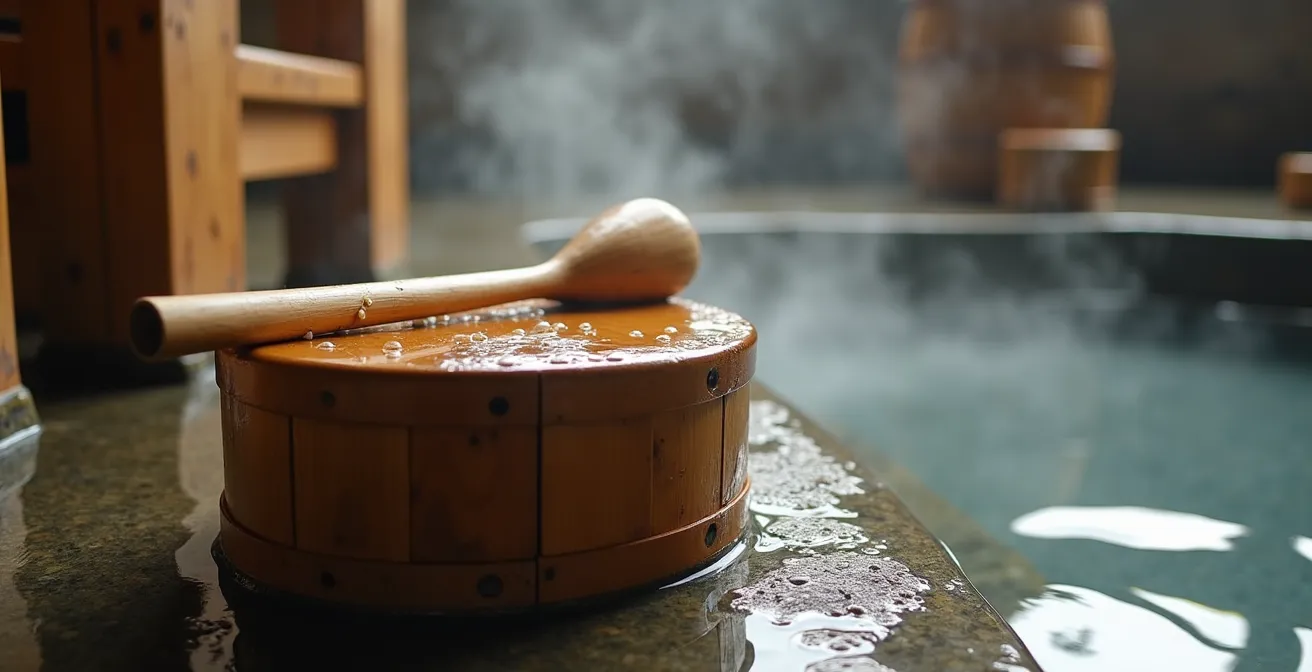
Once in the bath, the rules are simple: move slowly, speak in low voices if at all, and do not swim or splash. This is a space for quiet soaking, not recreation. Your conduct should contribute to the tranquility, not detract from it. Remember, you are sharing a deeply restorative experience. By following these steps—washing thoroughly outside the bath and maintaining a peaceful demeanor inside it—you are not just following rules; you are participating in a cherished ritual of communal well-being and showing profound respect for the local culture.
Ryokan vs Western Hotel: Is Sleeping on Tatami Worth the Back Pain?
Choosing between a traditional ryokan and a Western-style hotel is more than a question of bedding; it’s a choice between two entirely different philosophies of accommodation. The Western hotel offers familiar, standardized comfort. A ryokan, however, offers an immersive cultural experience built around the concept of omotenashi—a form of anticipatory hospitality where your needs are met before you even ask. The question of “back pain” from a futon on a tatami mat often misses the point: the firmness is designed to align the spine, and the experience is about much more than just sleep.
In a ryokan, your room is a fluid, multi-purpose space. During the day, it’s a living area with a low table. While you are at dinner, the staff will enter and lay out your futon. This transformation is part of the service. The service itself is deeply personal; you will often be assigned a dedicated attendant (nakai-san) who serves your in-room multi-course kaiseki dinner and ensures your comfort. This is the heart of omotenashi. It is a choreographed experience designed for your relaxation, from the welcome tea upon arrival to the yukata (cotton robe) you wear throughout the property.
For those concerned about comfort, there are ways to adapt. Many ryokans will happily provide an extra futon mattress (shikibuton) for more cushioning if you ask. The firm, buckwheat-filled pillows (makura) can also be adjusted. But to truly appreciate the ryokan, one must embrace the entire ritual. As the following comparison shows, you are trading the passive comfort of a hotel for the active, enriching experience of Japanese tradition.
The following table, based on information from an authoritative guide to Japan, breaks down the core differences in experience.
| Aspect | Ryokan | Western Hotel |
|---|---|---|
| Sleeping Surface | Futon on tatami (firm support) | Spring mattress (soft support) |
| Room Space | Multi-purpose with ma (empty space) | Fixed furniture layout |
| Service Style | Omotenashi (anticipatory hospitality) | On-request service |
| Meal Experience | In-room kaiseki dinner ritual | Restaurant dining |
| Cultural Immersion | Complete Japanese aesthetic experience | International standard comfort |
Ultimately, a ryokan stay is a performance in which you are the honored guest. While the futon may be an adjustment, the cultural immersion, the exquisite food, and the unparalleled service make it an unforgettable part of any trip to Japan.
The Chopstick Error That Mimics a Funeral Rite
Japanese dining etiquette is a subtle art form where small gestures carry immense weight. While many visitors are aware of basic chopstick rules, few understand the gravity of certain mistakes. The single most egregious error a foreigner can make is tate-bashi: sticking your chopsticks vertically into your bowl of rice. This action directly mimics the incense sticks offered to the deceased at a Japanese funeral and is therefore a powerful and unsettling symbol of death. It is the ultimate dining taboo and is guaranteed to cause offense.
This is just one of several chopstick behaviors to avoid. Others include passing food from your chopsticks directly to another’s (another funeral rite), stabbing food (sashi-bashi), hovering indecisively over dishes (mayoi-bashi), or resting your chopsticks across your bowl (watashi-bashi). A dedicated chopstick rest (hashioki) is always provided for this purpose. These rules are not arbitrary; they are expressions of gratitude and respect for the food, the chef, and one’s dining companions.
Proper dining etiquette extends beyond just chopsticks. According to a guide on Japanese traditions, a meal is a complete ritual framed by specific phrases. Before eating, you place your hands together, bow slightly, and say “Itadakimasu” (I humbly receive). This expresses thanks to everyone and everything involved in bringing the food to you. After the meal, you do the same and say “Gochisousama deshita” (Thank you for the feast). Mastering this simple sequence, combined with avoiding critical chopstick errors, elevates a meal from simple consumption to an act of cultural respect.
Top 5 Chopstick Taboos to Avoid
- Tate-bashi: Never stick chopsticks vertically in rice. This mimics funeral incense and is extremely offensive.
- Sashi-bashi: Avoid stabbing or spearing food. It shows impatience and poor manners; use a pinching motion instead.
- Mayoi-bashi: Do not hover indecisively over dishes. Decide what you want to pick before moving your chopsticks.
- Watashi-bashi: Never rest your chopsticks across the rim of your bowl. Use the provided hashioki (chopstick rest).
- Yose-bashi: Do not pull plates or bowls closer to you with your chopsticks. This is considered greedy and impolite.
How to Use Forecast Maps to Chase the Sakura Front Northward?
Experiencing Japan’s cherry blossoms (sakura) is a pilgrimage for many travelers. But the blossoms are famously ephemeral, a perfect embodiment of the Japanese concept of mono no aware—a gentle sadness for the transience of beauty. The peak bloom (mankai) can last just a few days before the petals begin to fall in a flurry known as sakura fubuki (cherry blossom blizzard). To maximize your chances of seeing them, you must think like a sakura chaser, using forecast maps and flexible travel to follow the bloom as it moves up the country.
The “sakura front” (sakura zensen) is the northward progression of the bloom, meticulously tracked and forecasted by the Japan Meteorological Corporation. The bloom typically begins in southern Kyushu in late March and reaches Hokkaido by early May. The critical window is the period of roughly 7-10 days from the first opening of flowers (kaika) to full bloom. Your strategy should be to position yourself just ahead of the predicted mankai date for a given region.
Experienced sakura chasers use the Japan Rail Pass and the Shinkansen (bullet train) as a veritable time machine. A common strategy is to start in the south (e.g., Fukuoka) and follow the front north through Kansai (Kyoto, Osaka) and on to Tokyo. If you miss the main wave of the popular Somei Yoshino cherry trees, you can extend the season by heading to higher altitudes in the Japan Alps or further north to the Tohoku region. Some later-blooming varieties like the yaezakura (double-blossom cherries) can offer stunning displays well into May, rewarding the flexible traveler.
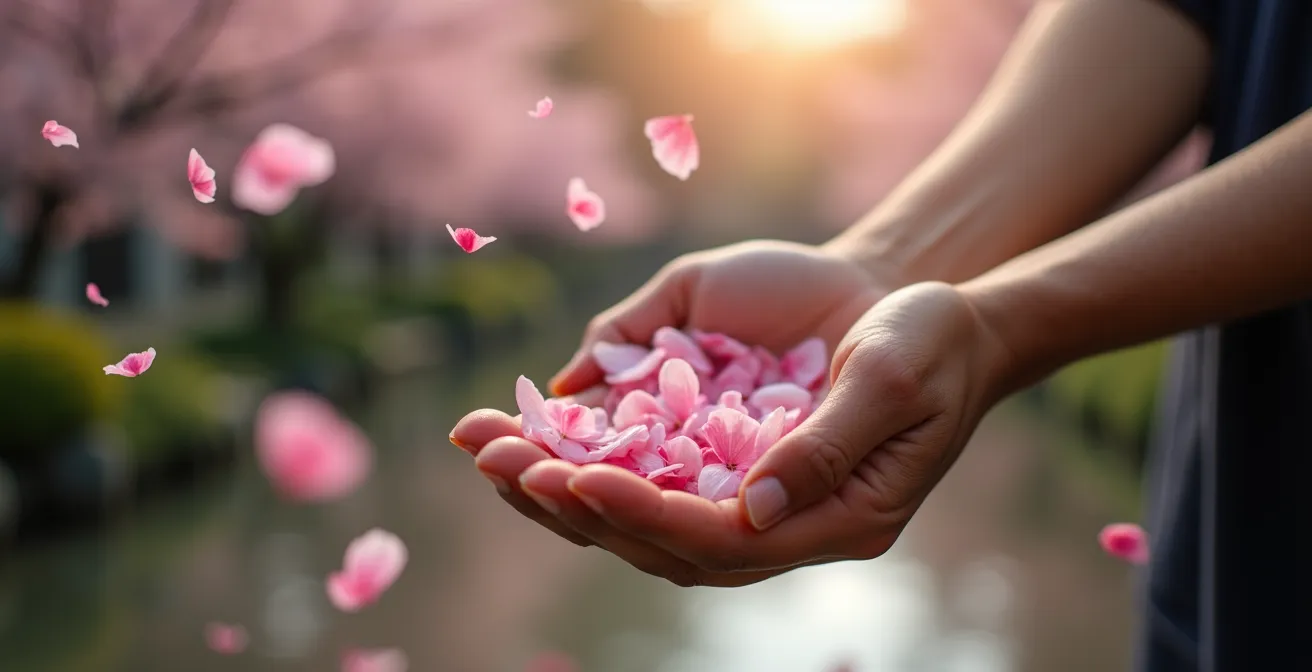
Chasing the sakura is not just about seeing flowers; it’s an active participation in a nationwide celebration of fleeting beauty. It requires planning, flexibility, and an appreciation for the fact that you are trying to catch a beautiful, transient moment. By using the forecast maps as your guide and the Shinkansen as your vehicle, you can turn a game of chance into a successful and deeply meaningful quest.
UNESCO Site vs Hidden Gem: Which Offers a More Authentic Historical Experience?
The traveler to Japan is faced with a difficult choice: flock to the world-renowned UNESCO World Heritage Sites like Kinkaku-ji (The Golden Pavilion) or seek out the lesser-known temples and shrines that dot the country. While UNESCO sites offer undeniable grandeur and historical significance, this fame often comes at the cost of overwhelming crowds, which can diminish the sense of peace and spirituality one hopes to find. The truly “authentic” experience often lies not in choosing one over the other, but in adopting a smarter approach to both.
Major sites are famous for a reason. They are repositories of immense cultural and artistic value. As the prestigious Aman Kyoto resort notes, they can arrange guided tours to these prominent sites for the most “meaningful and memorable experiences possible.” A guide can provide context that brings a crowded space to life. However, for an unguided visitor, the sheer volume of people can make quiet contemplation impossible.
Whether exploring Kamigamo, one of the oldest Shinto shrines in Japan, the incredible dry gardens of Ryoan-ji Temple or glittering Kinkaku-ji, Aman Kyoto offers to arrange a guide tour to the most culturally prominent sites in Kyoto for the most meaningful and memorable experiences possible.
– Aman Kyoto Resort, Kyoto’s Temples & Shrines Experiences
A highly effective strategy is the “buffer zone” approach. Instead of just visiting the main attraction, explore the surrounding historical neighborhoods. Near the famous Kiyomizu-dera in Kyoto, for example, lie dozens of smaller sub-temples, local shrines, and traditional workshops that see a fraction of the visitors. This is where you can find authenticity: the quiet moss garden, the scent of incense in a small hall, the friendly nod from a resident monk. By visiting the main site early in the morning to avoid the worst crowds and then spending the rest of your time exploring its periphery, you get the best of both worlds: the iconic landmark and the peaceful, personal discovery.
The Phone Etiquette Mistake That Enrages Actors and Audience Alike
In a society that values group harmony and avoiding public disturbance (meiwaku), the misuse of a mobile phone is a significant breach of etiquette. While this is true in many cultures, it takes on a special intensity in Japan, especially in quiet, shared spaces like temples, theaters, and public transport. The most infuriating mistake is not just a ringing phone, but the loud, artificial click of the camera shutter sound. It is considered deeply intrusive and disrespectful.
This aversion to shutter sounds is so ingrained that Japanese phones historically had a feature where the shutter click could not be disabled, to prevent surreptitious photography. While this has changed, the cultural expectation has not. When visiting a temple, a museum, or watching a traditional performance like Kabuki, your phone should be on “manner mode” (マナーモード). As explained by a Kyoto travel guide, this often goes beyond a simple silent setting; it is a specific mode designed to mute all operational sounds, including the shutter. Forgetting this is seen as a sign of disregard for the experience of everyone around you.
Furthermore, one must be hyper-aware of photography rules. As the official Kyoto Travel Guide plainly states, you must not take pictures where it is prohibited. Many temple interiors, especially those containing delicate artworks or sacred objects, strictly forbid photography to protect the artifacts and maintain a reverent atmosphere. Remember that these are active places of worship, not just tourist attractions. The constant clicking of cameras can disrupt prayers and ceremonies. By silencing your phone completely and respecting photography restrictions, you are not just being polite; you are actively contributing to the preservation of a sacred and peaceful environment for all.
Key Takeaways
- Purity is Paramount: Rituals at shrines and baths are not for hygiene but for spiritual purification (kiyomeru) before entering a sacred or shared space.
- Harmony Above All: Japanese etiquette is built on avoiding nuisance to others (meiwaku). Your actions should always consider the comfort and peace of those around you.
- Gratitude is a Ritual: Phrases like “Itadakimasu” transform a meal into an act of thanks, acknowledging the entire chain of life and labor that brought it to you.
Discover Heritage and Learn Arts: How to Plan a Cultural Trip That Educates the Whole Family?
A family trip to Japan can be more than a vacation; it can be a living classroom for heritage and art. The key is to transform sightseeing from a passive activity into an interactive quest. Instead of simply dragging children from one temple to another, engaging them in a hands-on pursuit can foster a genuine appreciation for the culture. One of the best ways to do this is by starting a goshuincho collection.
A goshuincho is a special accordion-style book for collecting goshuin—unique, artistic calligraphy stamps given at temples and shrines. Each goshuin is hand-drawn by temple staff and serves as a memento of your visit. As highlighted in a guide on temple etiquette, this turns temple-hopping into an exciting treasure hunt. Children learn how to respectfully approach the temple office, present their book, and receive a beautiful piece of art. It creates a personalized, tangible souvenir of their journey while teaching them the rhythm of respectful interaction.
Beyond the temples, you can create a “Master Artisan” (Shokunin) trail. Japan’s dedication to craft is legendary, and many regions offer workshops where families can learn ancient arts. This provides a direct connection to the philosophy of making things with heart and skill. Planning an itinerary that balances major sights with these hands-on experiences can create a deeply educational and memorable trip for everyone.
Ideas for a Shokunin (Master Artisan) Trail:
- Visit Echizen to participate in traditional washi papermaking, using techniques that are over 1,500 years old.
- Experience a Mashiko pottery workshop, where you can learn the philosophy of mingei (folk craft) firsthand.
- Attend a beginner’s chado (Way of Tea) ceremony that focuses on the four core principles: harmony, respect, purity, and tranquility.
- Book a kintsugi workshop to learn the art of repairing broken pottery with gold, a powerful lesson in finding beauty in imperfection.
To put these principles into practice, the next logical step is to begin planning your journey with these cultural nuances in mind, ensuring your visit is not only enjoyable but also deeply respectful of the traditions you have come to admire.